
How to Check Whether an Old Sofa Is Suitable for Donation
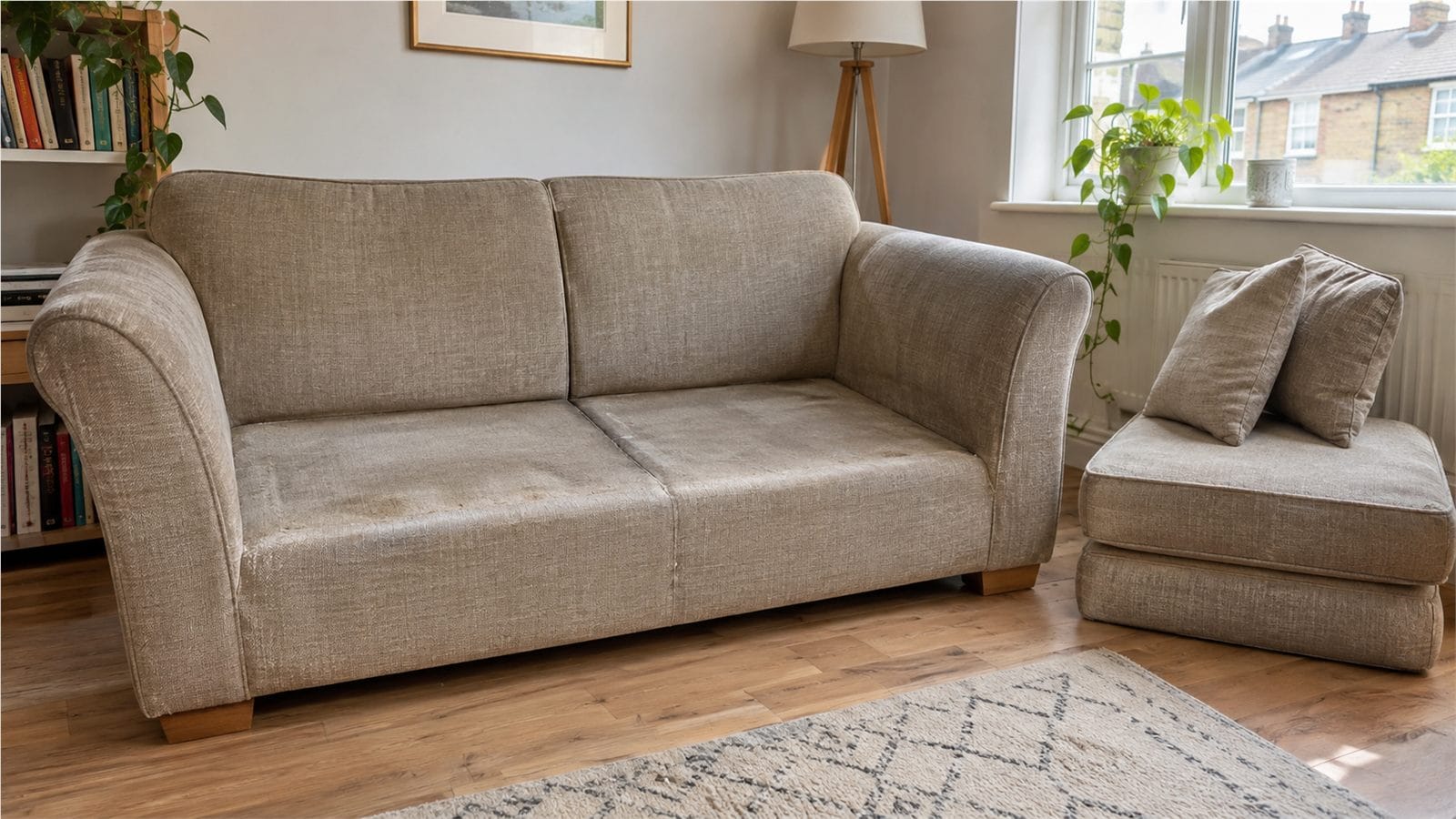
Giving away a sofa can keep a useful piece of furniture in circulation, but “it still looks all right” is not a complete condition check. A recipient needs an item that is clean, sound and suitable to pass on. Upholstered furniture also has labelling requirements that can affect whether a charity can accept it. Looking at these points before arranging transport saves an awkward refusal at the door.
This guide is about deciding whether a sofa is a realistic donation candidate. It does not promise that a particular charity has space for it. Acceptance depends on the organisation, the actual item and its current capacity. If the sofa is unsuitable for reuse, there are other routes to investigate rather than leaving it outside a shop.
Examine the whole sofa in good light
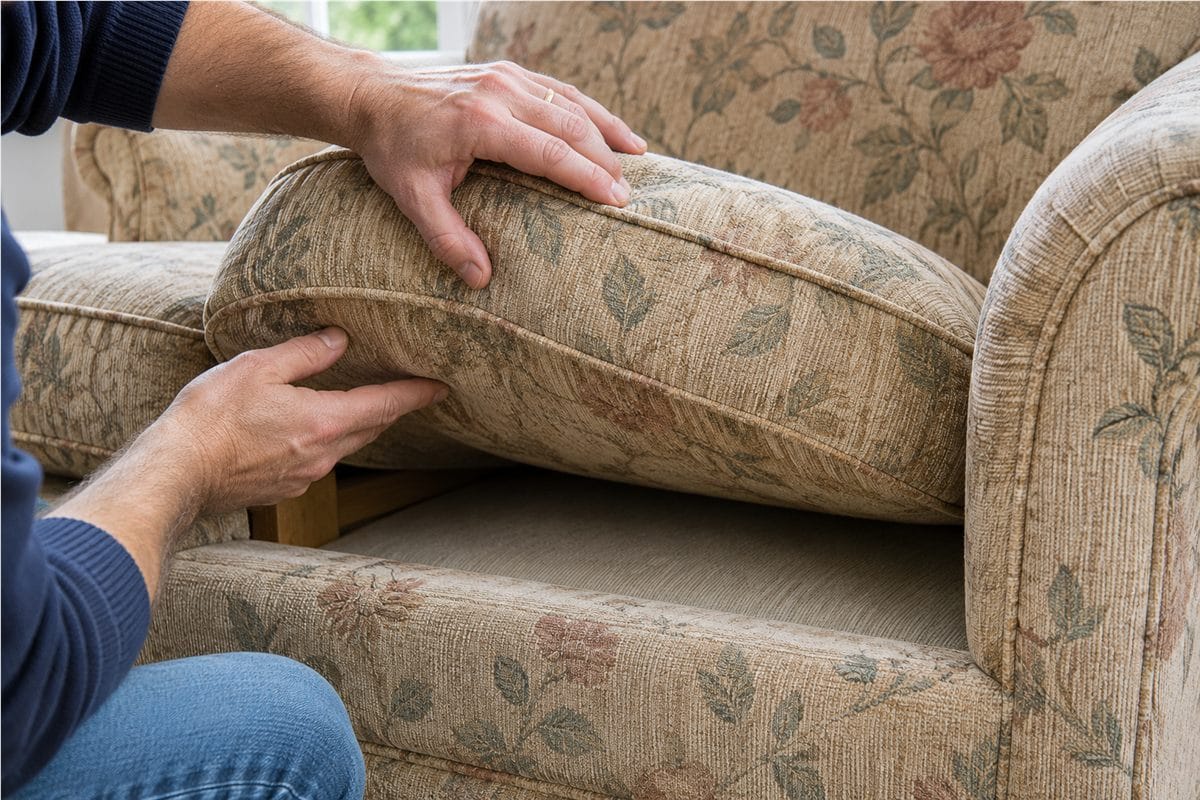
Move cushions and inspect the seating, arms, back and base. Look for tears, stains, broken springs, sagging support, missing feet and obvious signs of damp storage. Sit on the sofa as it would be used. If the frame shifts or a cushion collapses, note the defect honestly. A recipient may decline an item whose damage is hidden by a throw or carefully arranged cushions.
Check every removable section of a corner sofa or sofa bed. A missing connector or mechanism can make a large item unusable even if the fabric is clean. Take photographs from the front, side and back, plus close-ups of any flaws. When asking a charity, show the faults as clearly as the attractive parts. The organisation can then decide whether the sofa fits its own reuse policy.
Smoke, pet and storage odours are harder to show in a photograph. Mention them. An item that has been kept in a damp garage may carry a smell even after the fabric looks dry. Do not assume a charity will clean or repair the sofa after collection. British Heart Foundation’s condition guidance explains that donated goods need to be saleable to support its shops and collection costs.
Find the permanent fire safety label
Check beneath the sofa, under removable cushions and on the rear or underside of the frame for a permanent fire label. Do not confuse it with a shop price tag or a care label that only explains how to clean the fabric. A compliant fire label is a key part of upholstered furniture reuse. North London Waste Authority’s sofa guidance states that upholstered furniture needs a fire label to be reused. Leicester City Council’s reuse scheme gives practical examples of where a permanent label may be found and says an item without one is directed to a bulky waste route instead.
Photograph the label so its wording is readable. For a sofa made of separate upholstered pieces, ask the receiving organisation what labelling it needs on each part. Do not cut a label from another item or attach a loose tag to make the sofa appear compliant. The label must belong to the piece being offered.
If you cannot find a label, check carefully once more rather than assuming it has gone. It may be tucked beneath a cushion or fixed underneath. If it is missing, tell the charity before arranging collection. The recipient is in the best position to say whether it can take the item, and false reassurance wastes everyone’s time.
Check that the item is complete and usable
For a modular sofa, count the sections and make sure the connectors are present. For a sofa bed, explain whether the mechanism works and whether the mattress is included. If cushions have removable covers, check that none is missing. A matching set may be more useful than several incomplete pieces, but each charity has its own needs.
Measure the width, depth and height. Include the dimensions of each section if it separates. This is not a test of whether the sofa is worth donating; it helps a recipient plan transport and decide whether its vehicle or shop can take the item. Photograph the narrowest doorway, stairs or lift if the route may be difficult. A free collection still needs a physically workable way to move the sofa out.
Do not disassemble upholstered parts that were not designed to come apart. You may damage the frame or expose materials that need different handling. If legs are removable, keep all screws and fittings in a labelled bag and tell the recipient what you have done. A sofa that arrives without its fittings may be difficult to reuse.
Ask a named recipient before setting the sofa aside
Contact a local furniture reuse charity or shop with the photographs, dimensions and label image. Give a truthful account of condition and access. Ask whether it takes sofas of that type, whether it offers collection and how long it expects the item to remain at the property. Do not book another clearance on the assumption that the donation will definitely happen; wait for an acceptance or set a fallback date.
Some shops may be temporarily full or may not need the style or size you offer. A refusal does not mean the sofa has no use. You can try another organisation or a direct local giveaway, provided the item is genuinely suitable and you describe it accurately. If the piece is damaged or lacks the needed label, do not repeatedly present it as a charitable donation to different recipients hoping nobody checks.
Keep the sofa indoors and dry until the handover. Leicester City Council’s reuse scheme specifically asks donors to keep items indoors before collection. A sofa left outside can become wet and unsaleable even if it was in good condition when you first offered it.
Make a direct giveaway clear and fair
If someone agrees to take the sofa directly, provide the same condition details you would give a charity. State the dimensions, whether it separates, the access route and any known defects. Agree who will carry it and when. A photograph from a flattering angle is not enough for a person who may hire transport or travel across London.
For a shared property or an inherited home, confirm that the person giving it away is authorised to do so. If family members have not finished deciding what stays, mark the sofa pending. Moving a large item away is hard to reverse simply because a recipient arrives promptly.
Choose a disposal route when donation is unsuitable
A sofa with a broken frame, significant damage or no acceptable label may still need a legitimate removal route. North London Waste Authority describes council bulky collections and reuse and recycling centres as options for non-reusable sofas in its area. The precise arrangement, charges and site rules depend on the borough. Check the local authority for the property’s postcode rather than using a neighbouring borough’s instructions.
If the sofa is part of a larger load, describe its dimensions and condition when asking about furniture disposal in London. The collection provider can discuss acceptance and the carrying route for the actual piece. Do not assume that “furniture disposal” automatically includes repair, dismantling or charity placement. Those are separate questions.
Avoid leaving the sofa on the pavement while you work out the route. It can obstruct access, become wet and make reuse even less likely. Keep it at the property until the recipient or collector has confirmed a date and a suitable pickup arrangement.
A quick decision before the sofa leaves
Use a final four-part check. Is the frame and upholstery in a condition another household could reasonably use? Is the permanent fire label present and legible? Are all sections and fittings accounted for? Has a specific recipient accepted the item and agreed how it will be collected? If any answer is uncertain, resolve it before calling the sofa a donation.
This approach takes a few minutes longer than placing an advert saying “free sofa”, but it treats the recipient fairly. It also makes the fallback route clear if the sofa cannot be reused. The goal is a real second home for a sound item, not an unwanted problem passed on to someone else.