
LONDON HOUSE CLEARANCE
House Clearance
in London
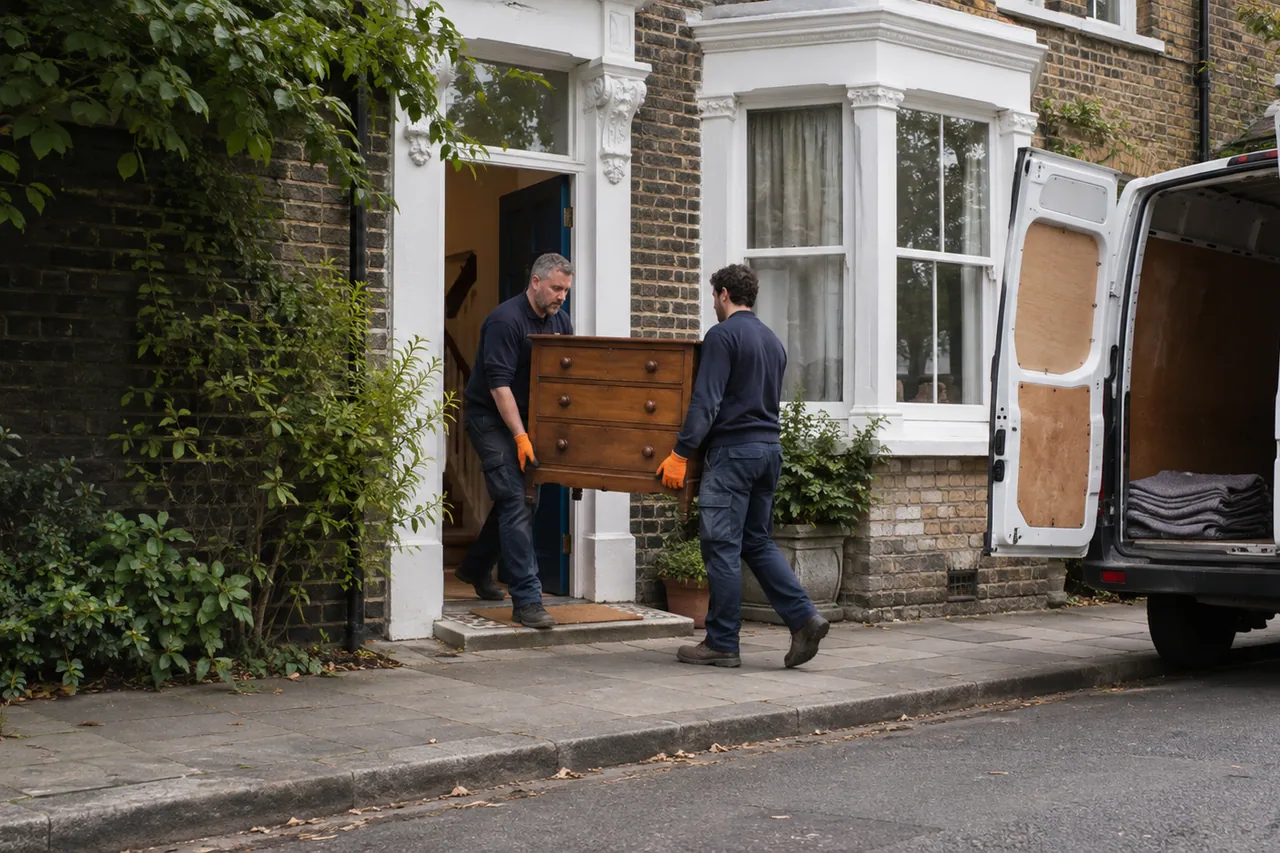
We collect unwanted furniture, appliances and household contents from London homes, with carrying, loading and removal arranged around the agreed clearance.
- Single rooms or whole properties
- Furniture and household contents
- Carrying and loading by our team
YOUR HOUSE CLEARANCE, EXPLAINED
The service at a glance.
What does our house clearance service include?
We collect unwanted furniture, household goods, clothing, books and agreed appliances from London homes. The clearance can cover selected items, one room or the contents of a property. We discuss the load and access before collection, then carry and load the items included in the agreed work.
How do we arrange a collection from your home?
We start with your postcode and a description of the rooms and items to clear. The amount and type of waste inform the quote. Access, stairs and bulky objects are discussed before the visit, so the collection arrangements reflect the actual property rather than a standard room count.
ROOMS & CONTENTS
One room or a fuller property clearance.
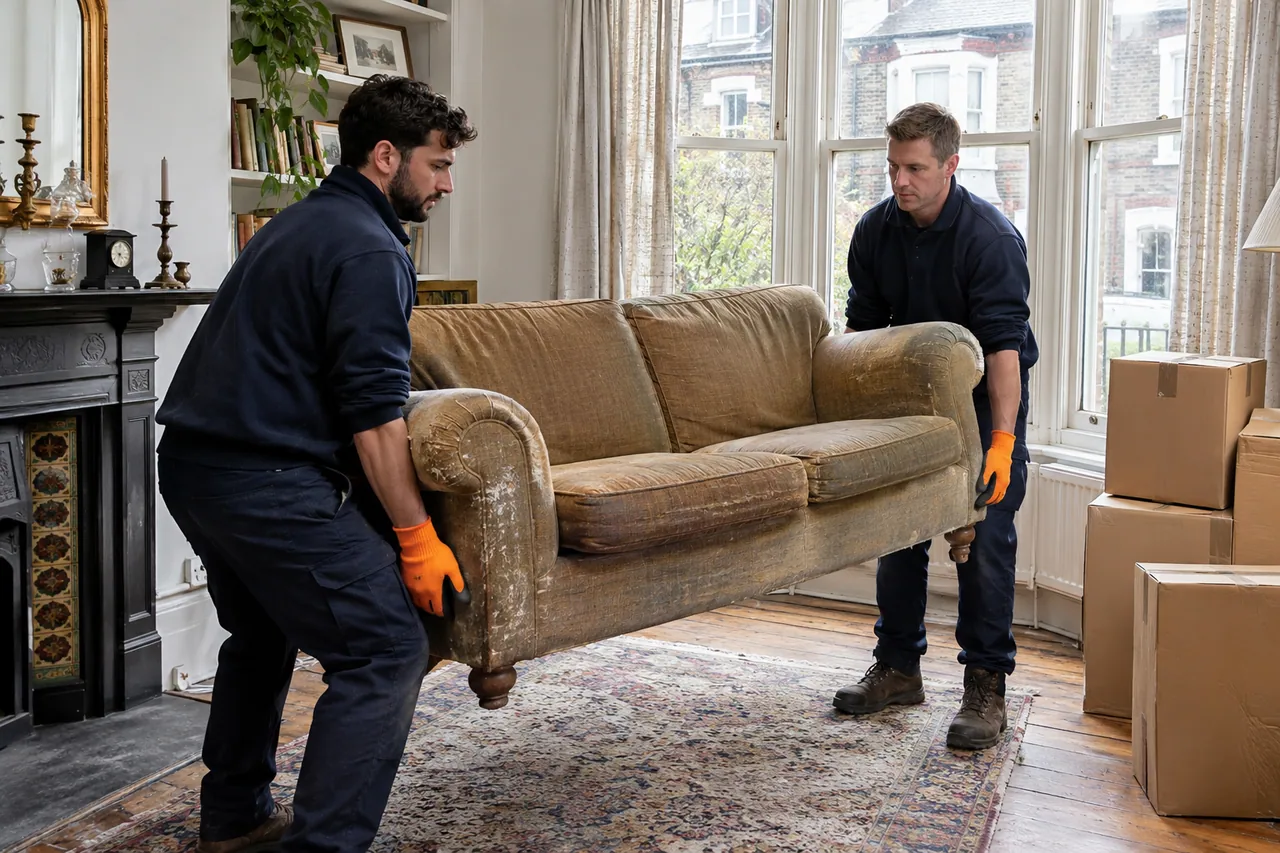
Rubbish Begone provides house clearance in London for furniture, household belongings and other accepted waste that is no longer needed. Our work covers the removal itself: carrying the agreed items from the property, loading them into a collection vehicle and arranging their onward disposal. A clearance can involve a few bulky pieces or contents spread across several rooms.
We define the job around the items to remove, not simply the number of bedrooms. A furnished sitting room, boxed belongings and a large wardrobe present different loads and access requirements. The enquiry gives us a starting point for discussing the amount, material mix and collection arrangements. Anything that is staying in the property remains outside the agreed clearance.
WHAT WE REMOVE
The household items included in a clearance.
Our collection includes the household categories below, subject to the particular items and access being confirmed. We distinguish bulky furniture from loose contents and identify appliances separately. That allows the description of the clearance to reflect what will actually be carried and loaded, rather than treating every bag, box and large object as the same type of waste.
| Category | Typical items | Collection detail |
|---|---|---|
| Living-room furniture | Sofas, armchairs, chairs, tables and bookcases | We discuss the number and size of pieces, including any difficult doorway or turning point. |
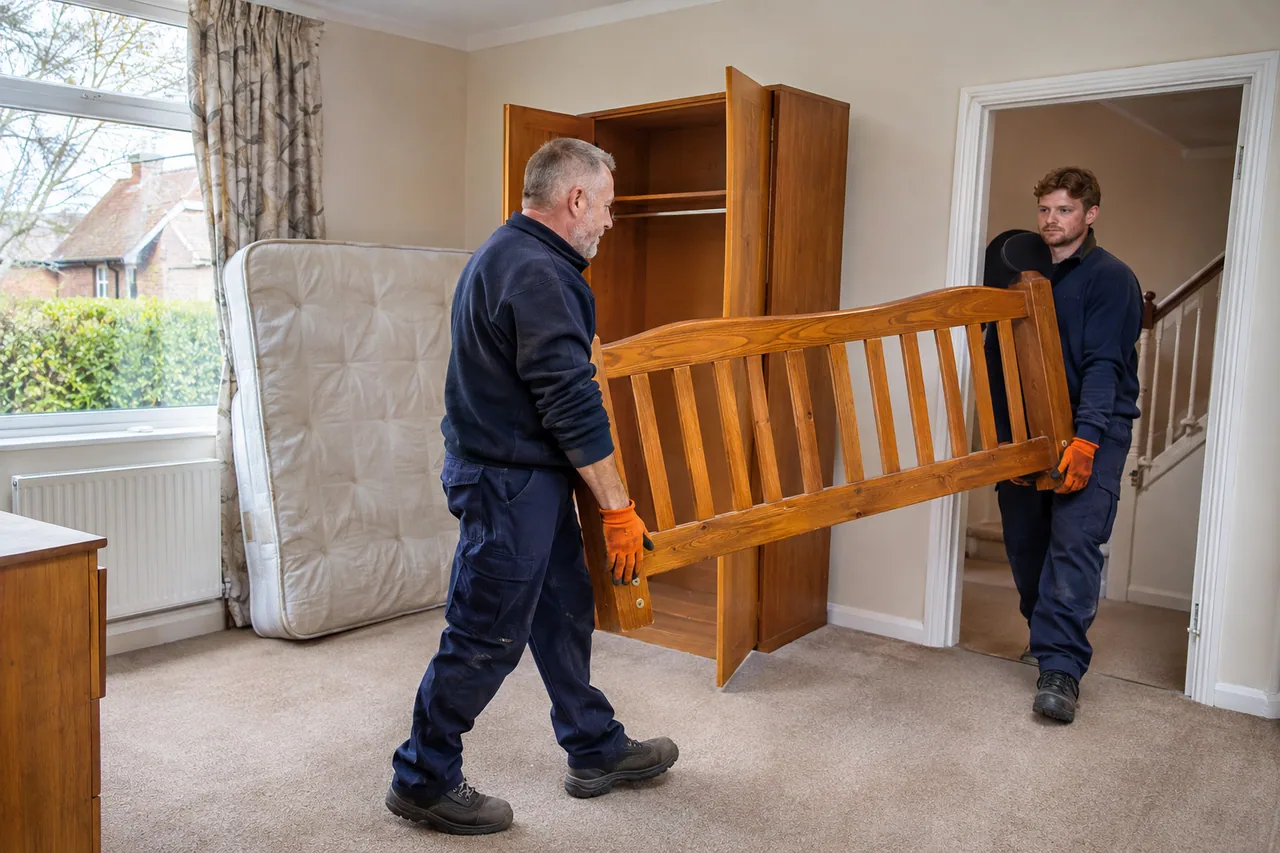
| Bedroom furniture | Beds, mattresses, freestanding wardrobes and drawers | Large components and mattresses are identified individually when the collection is arranged. |
| Household belongings | Books, toys, clothing, curtains, linens and decorative items | We include the agreed bags, boxes or loose contents in the description of the load. |
| Kitchen contents | Dishes, small household goods and agreed appliances | Appliances are listed separately so acceptance and collection arrangements can be confirmed. |
| Electrical equipment | Household electronics and agreed larger appliances | We discuss the actual item rather than assuming every electrical object has the same handling route. |
| Other household loads | Mixed clutter and additional accepted items | We confirm the material mix before including unusual items in an ordinary house clearance. |
BULKY FURNITURE
Beds, wardrobes and the route out.
A partial clearance gives us a defined list of rooms or items to remove while the rest of the property remains in use. Our team works to that agreed scope. For a fuller clearance, the enquiry needs to describe contents across the property, including bulky furniture, stored belongings and any appliances that are being included.
Bedroom loads often combine a mattress with furniture of very different shapes. We assess the items as a collection rather than assuming that everything will fit through the same route. Any need to dismantle furniture, reach a restricted storage space or handle a particularly awkward object must be confirmed with the team; it is not automatically included merely because an item appears on a list.
THE COLLECTION
From the item list to the loaded vehicle.
The clearance moves from a description of the contents to an agreed collection and removal. Each stage has a different purpose: establishing the scope, confirming access and availability, carrying the accepted items and taking the load away. The collection discussion connects those stages to the actual rooms and items involved.

Describe the contents
We receive the postcode, the rooms involved and an item list. Photographs can help explain bulky furniture and mixed contents. The enquiry also identifies appliances, unusual materials and anything that needs a separate discussion before it can be included.

Agree the collection
We discuss the amount and type of waste, the quote and the available collection slot. The property details matter here: floor level, stairs, doorway restrictions and the position of the vehicle help define the collection that is being arranged.

Carry and load
Our team removes the items covered by the agreed clearance and carries them to the collection vehicle. The job follows the confirmed scope, so retained furniture, personal belongings and other contents that are not included are not treated as part of the load.

Remove the load
The collected items leave the property for the appropriate onward handling and disposal arrangements. Recycling is pursued where possible. The materials and condition of the collected items inform the onward handling, with reuse considered where suitable.
PROPERTY ACCESS
Carrying from the room to the van.
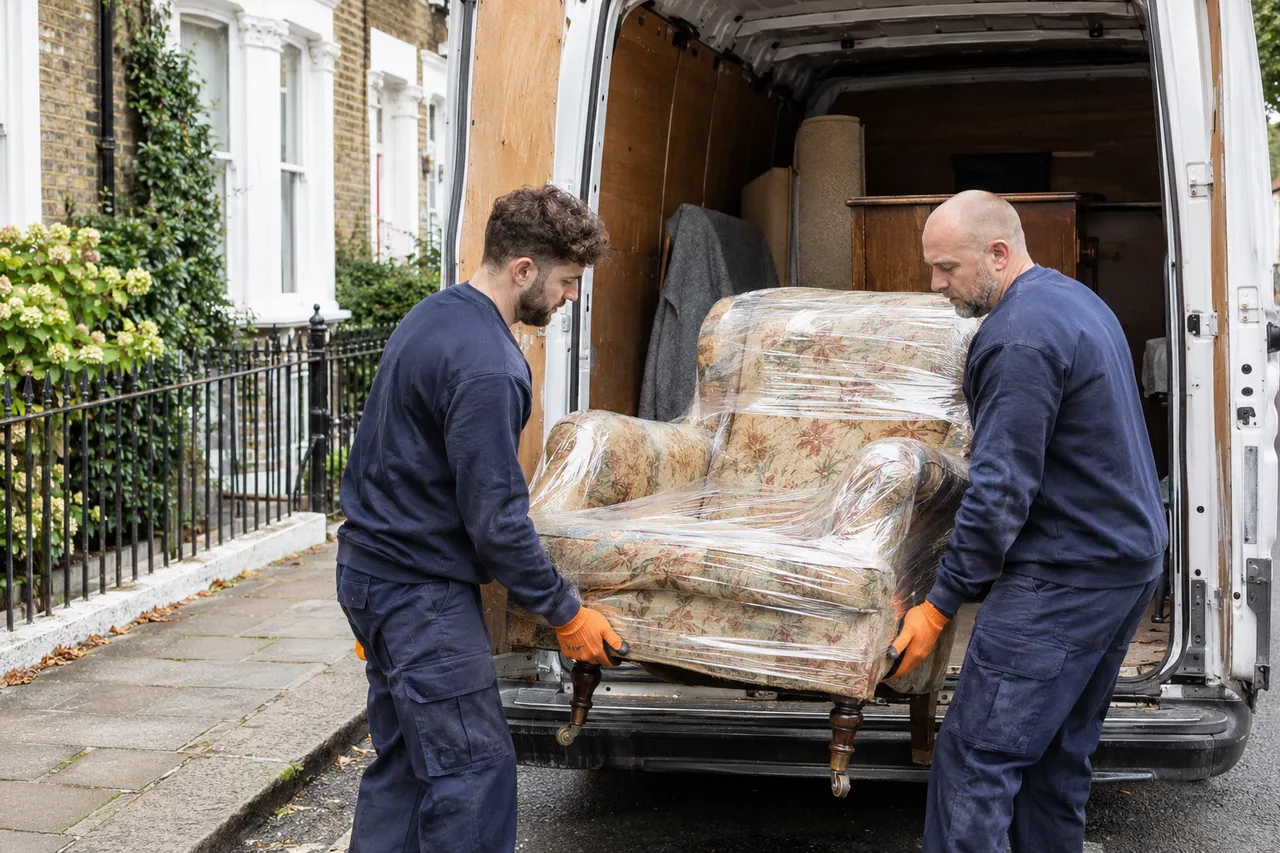
We arrange access as part of the collection discussion. An upper-floor flat, a terraced house with a narrow hall and a property with a longer carrying route need different information before a visit can be confirmed. Our team needs a clear description of how the agreed items will move from their current position to the vehicle.
The access discussion is especially important for wardrobes, mattresses and large seating. Door widths, corners and changes of level can affect the handling of a bulky piece. Parking or loading restrictions also need to be raised when the job is arranged. We confirm what can be accommodated rather than treating every address as a ground-floor collection beside an unrestricted parking space.
| Access detail | What we discuss | How it informs the collection |
|---|---|---|
| Upper floors | Floor level, stair access and whether a lift is available | We discuss the carrying route before confirming the collection arrangements. |
| Large furniture | Approximate dimensions, doorways and tight turns | The team can assess whether further handling arrangements need to be agreed. |
| Vehicle access | Where loading can take place and any known restrictions | The enquiry reflects the route between the property and collection vehicle. |
| Occupied properties | Which rooms and belongings are included in the clearance | Our work remains focused on the agreed items while retained contents stay outside the load. |
THE HOUSEHOLD LOAD
Vehicle space follows the actual contents.
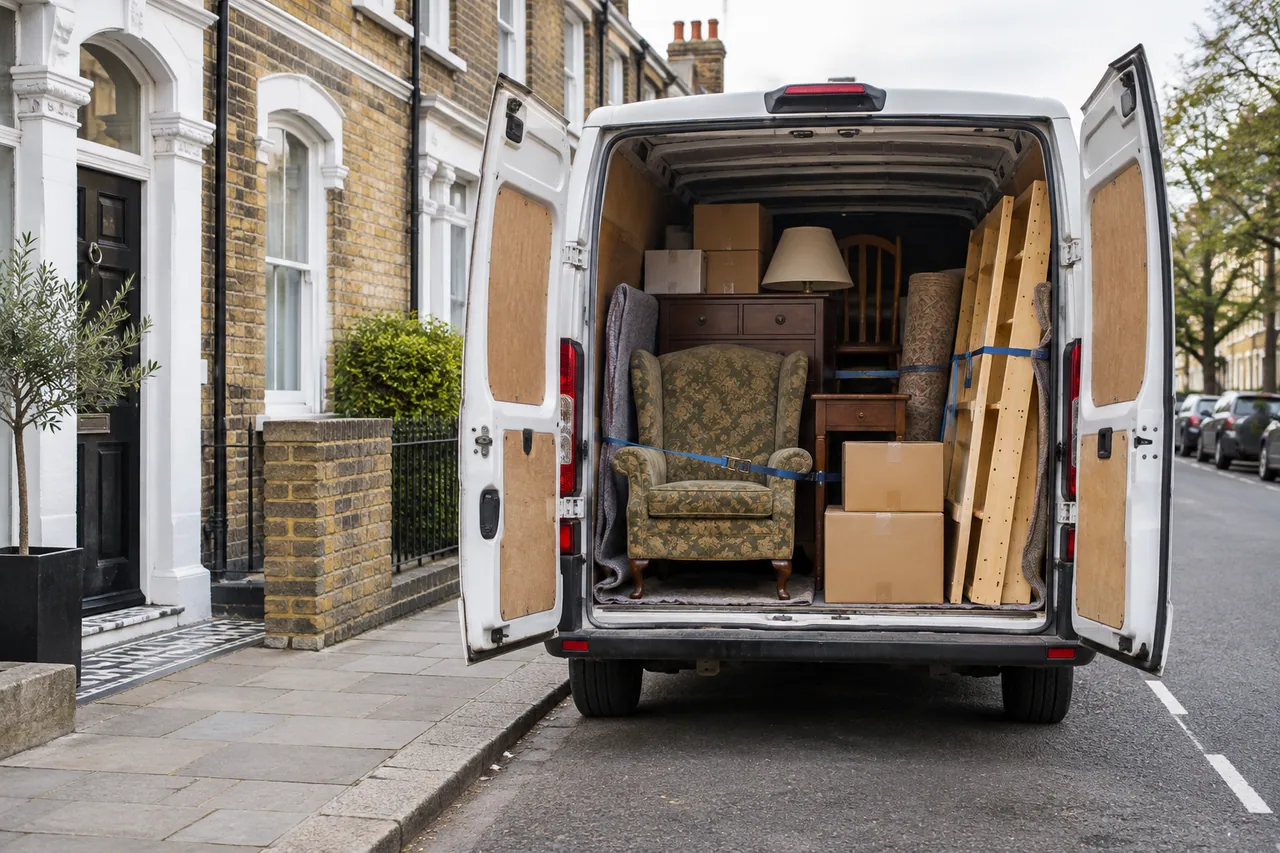
Vehicle space is planned around the contents being collected. A sofa, a freestanding wardrobe and boxes of household goods occupy space differently, even when they come from the same room. We discuss the scale of the actual load and the type of items rather than asking the customer to select a van solely from a picture.
Our collection team discusses the vehicle requirements against the amount, shape and type of the items. Bulky furniture needs sufficient usable space, while dense items also need their weight considered. Vehicle availability and suitability are confirmed as part of the collection arrangements, with any particular restrictions raised before the visit.
WASTE HANDLING
Different contents. Appropriate onward handling.
House contents often contain several waste streams in a single collection. Furniture, textiles, cardboard and electrical items are not interchangeable materials. We discuss what is present so the accepted load and its disposal arrangements can be considered together. We arrange recycling or reuse where possible, depending on the materials and condition of the contents.
Our ordinary house clearance excludes hazardous, medical and food waste. Asbestos, chemicals, paint and other potentially hazardous materials must not be assumed to form part of the household load. If an unusual substance or regulated item is mentioned, its collection needs to be confirmed separately before it is included. The team confirms whether an unusual item can be included before a collection is arranged.
| Waste stream | What is identified | Handling arrangement |
|---|---|---|
| Furniture and mixed household goods | Condition, material and the agreed items in the load | Appropriate disposal, with reuse or recycling where possible. |
| Cardboard and textiles | The contents being cleared, including packed belongings | Identified as part of the material mix rather than described only as room contents. |
| Appliances and electronics | The individual item and its collection requirements | Acceptance and the relevant handling route are confirmed for the actual equipment. |
| Hazardous, medical or food waste | Material outside the ordinary house-clearance service | Excluded from the standard load; no specialist collection is assumed. |
THE AGREED CLEARANCE
Remove the unwanted contents. Retain what stays.
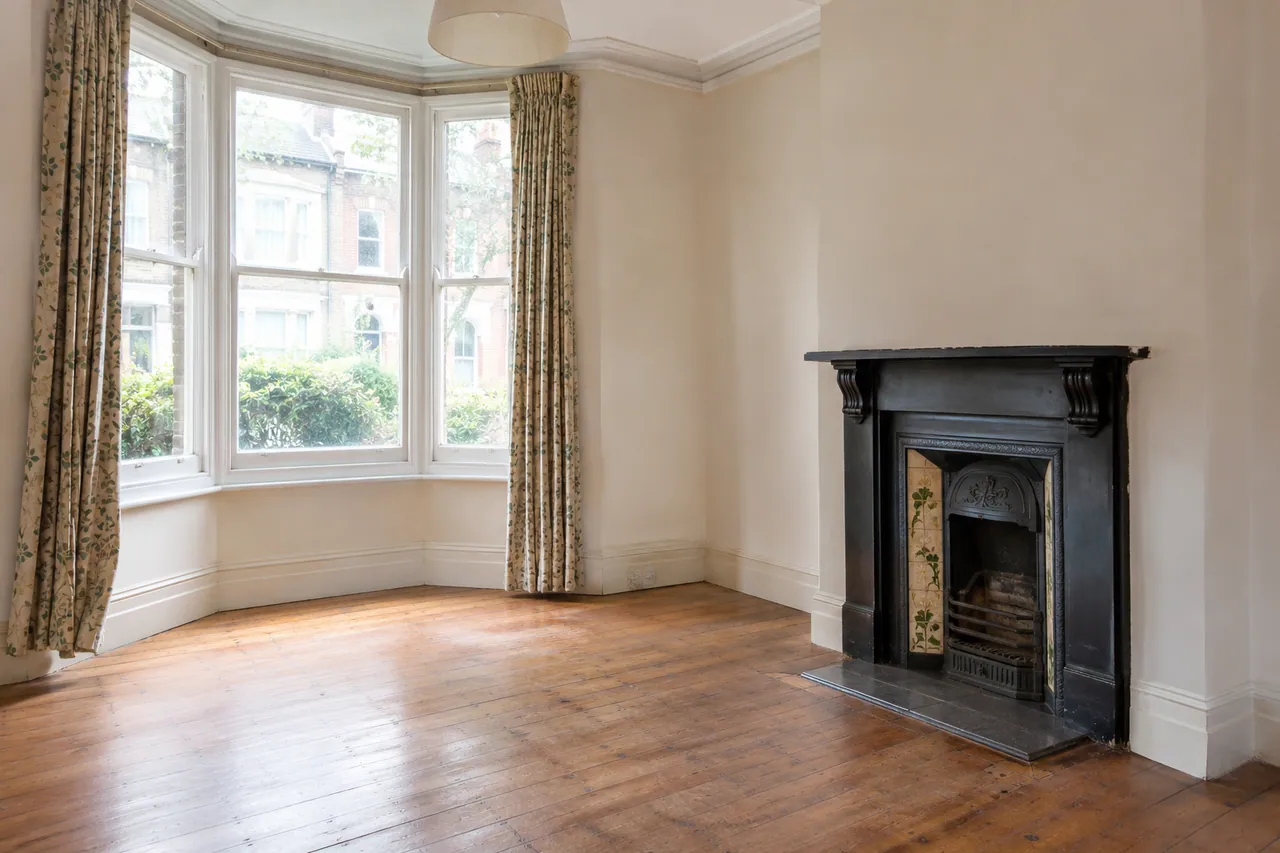
Our clearance is organised around the unwanted contents that have been agreed for removal. For a property being emptied, that scope needs to distinguish furniture and belongings from fixtures, retained items and anything that is not part of the collection. The enquiry should also identify contents in separate storage areas rather than assuming that an entire building and every outbuilding are included.
The result is the removal of the agreed load from the property. A removal quote should not be read as a promise of building work, decoration or a separate deep-cleaning service. Where a collection involves only a few bulky pieces, the rest of the home can remain furnished. Our furniture disposal overview describes that related collection option, while garden clearance covers a different material stream that needs to be identified in an enquiry.
THE QUOTE
What determines a house clearance quote?
House clearance pricing is based on the volume and type of items being removed. A room count on its own does not describe a load accurately: a bedroom may contain a bed and wardrobe, or a much larger quantity of stored belongings. We use the collection description to discuss the actual work rather than publishing a price band that may not match the property.
Access and collection details help us understand the job being quoted. They should be discussed alongside the contents, especially where there are upper floors, bulky pieces or a restricted loading position. Any additional items or special requirements need to be raised so the team can confirm their place in the collection. The team can then explain the quote for the agreed collection and confirm whether a suitable slot is available.
| Pricing factor | What it covers | Why it matters |
|---|---|---|
| Volume of contents | The items across the rooms being cleared | We discuss the actual load rather than assuming a standard amount per bedroom. |
| Type of items | Furniture, loose belongings, appliances and material mix | Different contents create different collection and disposal requirements. |
| Bulky or awkward pieces | Large dimensions and any handling question | We confirm the item and any additional arrangements before treating it as an ordinary collection. |
| Access and loading | Floor level, carrying route and known parking restrictions | The collection description reflects the property and vehicle access. |
| Collection scope | Partial clearance, several rooms or a fuller property load | The quote discussion identifies what is included and what remains outside the agreed work. |
HOUSE CLEARANCE QUESTIONS
Before we arrange your collection.
Can you clear selected rooms without emptying the whole house?
Yes. Our house clearance service can cover selected items, an individual room or a fuller property load. We discuss which rooms and belongings are included before arranging the collection. Furniture and personal contents that are staying in the property remain outside that agreed scope, rather than being included simply because they are nearby.
Do you remove beds, mattresses and freestanding wardrobes?
These are among the household furniture categories described by Rubbish Begone. The enquiry should identify the actual pieces and the route out of the property. A large wardrobe or bed component may need a separate handling discussion. Any dismantling requirement must be confirmed with the team rather than assumed to be included.
How do you distinguish the contents to remove from belongings that stay?
We work from the items and rooms covered by the agreed clearance. The collection discussion needs to make that boundary clear, particularly in an occupied or partly furnished home. If the scope changes or further contents are added, those items need to be raised with the team before they become part of the load.
Can you collect furniture from an upper-floor flat?
Upper-floor collections need the floor level and carrying route to be discussed when the job is arranged. Stairs, lifts, narrow landings and bulky furniture all affect the access description. Our team can confirm the arrangements for the particular property; we do not promise that every item can be removed through every route.
Are fridges and other household electrical items included?
Household appliances and electronics can be included once the actual items and collection requirements have been confirmed. We identify each appliance separately in the enquiry. Any need for disconnection or specialist handling must be discussed before booking, so the collection is arranged around the equipment that is actually being removed.
What happens to furniture and household waste after collection?
The agreed load is carried away for the appropriate onward handling and disposal. Rubbish Begone describes recycling and reuse where possible. The outcome depends on the materials and condition of the items, so we do not promise that a particular piece will be donated, resold or recycled. We discuss the materials and disposal arrangements for the actual load.
Can a full house clearance be arranged for the same day?
Same-day house clearance is offered subject to availability. We need to discuss the contents, access and scope before confirming whether a suitable collection can be arranged. A request for the same day does not itself reserve a slot or establish that an entire property can be cleared within a fixed number of hours.
YOUR COLLECTION ENQUIRY
Let’s discuss the contents and access.
Tell us about your house clearance
Open our booking form to arrange your collection.
Continue to our booking form to confirm your items and contact details.
ARRANGE YOUR CLEARANCE
A clear scope. A collection that fits.
Speak to the team about the furniture, household contents and access at your London property.