
LONDON CLEARANCE SERVICES
Office Clearance in London
We collect unwanted office furniture and agreed equipment from London workplaces. The service covers the identified contents, carrying and loading, with building access and the collection scope discussed before the visit.
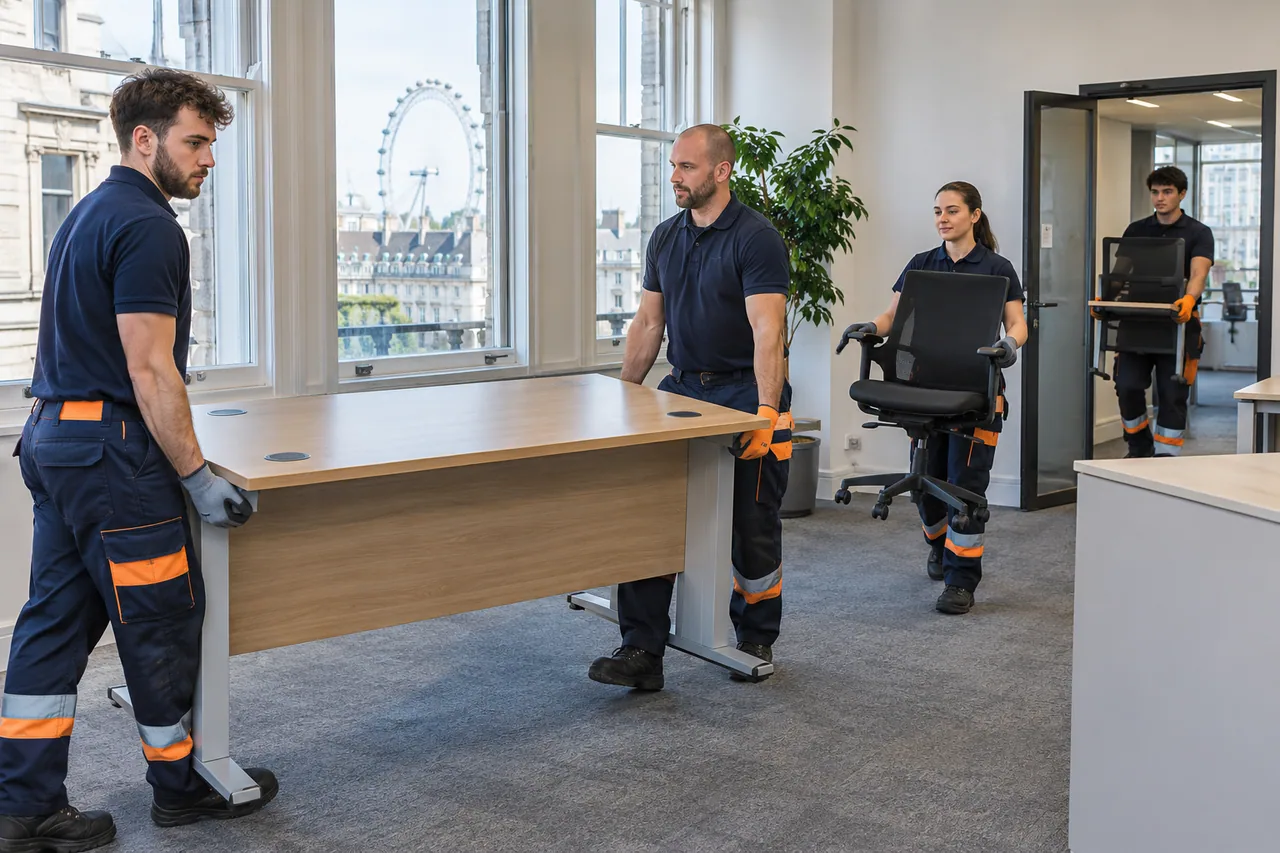
How our office clearance works
We start with the site postcode and an outline of the office contents. The collection discussion then covers access, the load, timing and the price for the agreed removal. If an evening or weekend visit is requested, ask about the available arrangements. A preferred time in an enquiry is not confirmation that a team or loading bay has been reserved.

Define the office contents
List furniture and equipment by area, separating items to retain from the pieces to remove.

Review building access
We discuss entry, floors, lifts, internal carrying and the loading point with the relevant site contact.

Agree scope and visit
The team confirms the work and collection arrangements, including outstanding equipment or data questions.

Collect the agreed load
We carry and load the accepted items, then remove them for suitable onward waste handling.
Office contents removed around your workplace
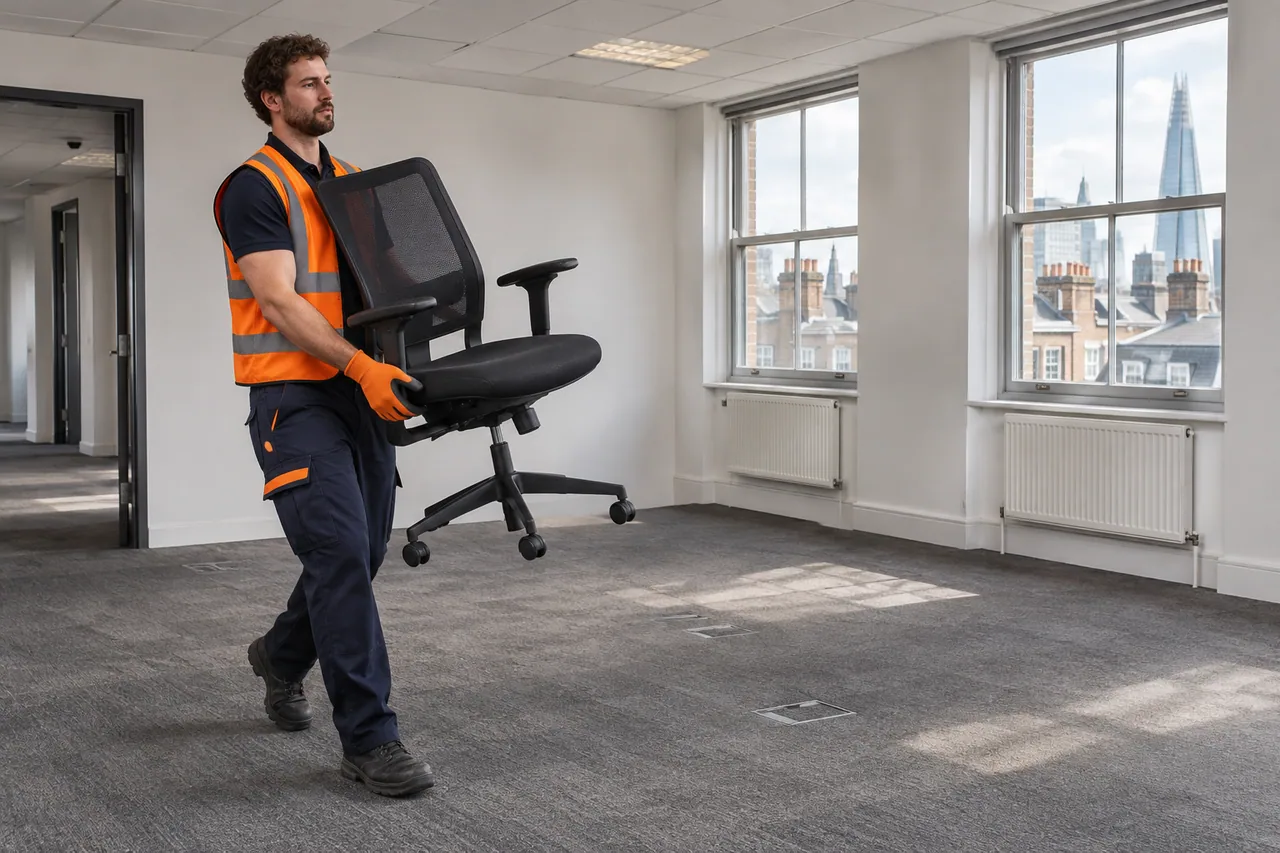
Rubbish Begone provides office clearance for businesses relocating, changing a workspace or removing furniture and equipment they no longer use. We discuss the desks, seating, storage and electrical items included in the job, then arrange collection around the actual building. A clearance can cover selected workstations, a storage room or a wider set of office contents. The item list determines the scope rather than the floor area alone.
We distinguish removable office belongings from fixtures and systems serving the building. A freestanding cabinet and an installed air-conditioning unit do not involve the same work. Although our office service lists a broad range of equipment, collection does not automatically include technical disconnection, dismantling a fixed installation or altering the premises. Those questions need resolving with the team before the removal is agreed.
Desks, seating and storage units
We identify furniture by type and quantity. A group of chairs, several desk sections and full-height cabinets create different carrying and loading requirements. Photographs of each area help show the scale of the job. Where similar furniture is staying, the retained pieces need distinguishing from the items to remove so a partial clearance remains clearly defined.
| Office category | Typical contents | Information for collection |
|---|---|---|
| Workstations | Desks, tables and removable desk sections | Quantity, dimensions and whether assembled. |
| Seating | Office chairs, meeting chairs and reception seating | Number of pieces and their location in the building. |
| Storage | Freestanding filing cabinets and shelves | Size, weight concerns and whether contents remain inside. |
| IT equipment | Computers, monitors and printers | Listed separately, including any data-handling requirement. |
| Paper and packaging | Agreed non-confidential paper and cardboard | Volume and whether mixed with other office waste. |
| Installed equipment | Items requiring disconnection or detachment | Work beyond collection must be clarified first. |
Planning a collection in a working building
An office address may involve reception procedures, security doors, a goods lift and a shared loading area. We discuss the building contact and the route the collection team can use. Where a managing agent or reception team controls entry, those arrangements should be included in the enquiry. We do not assume that unrestricted access follows automatically from a company address.
For an occupied workplace, the scope can identify the rooms or zones being cleared while other areas remain in use. The team needs to know where the unwanted furniture is located and whether the route is shared with staff or visitors. This is a practical collection discussion, not a promise that any quantity can be removed with no interruption whatsoever. The arrangements reflect the building and the amount being moved.
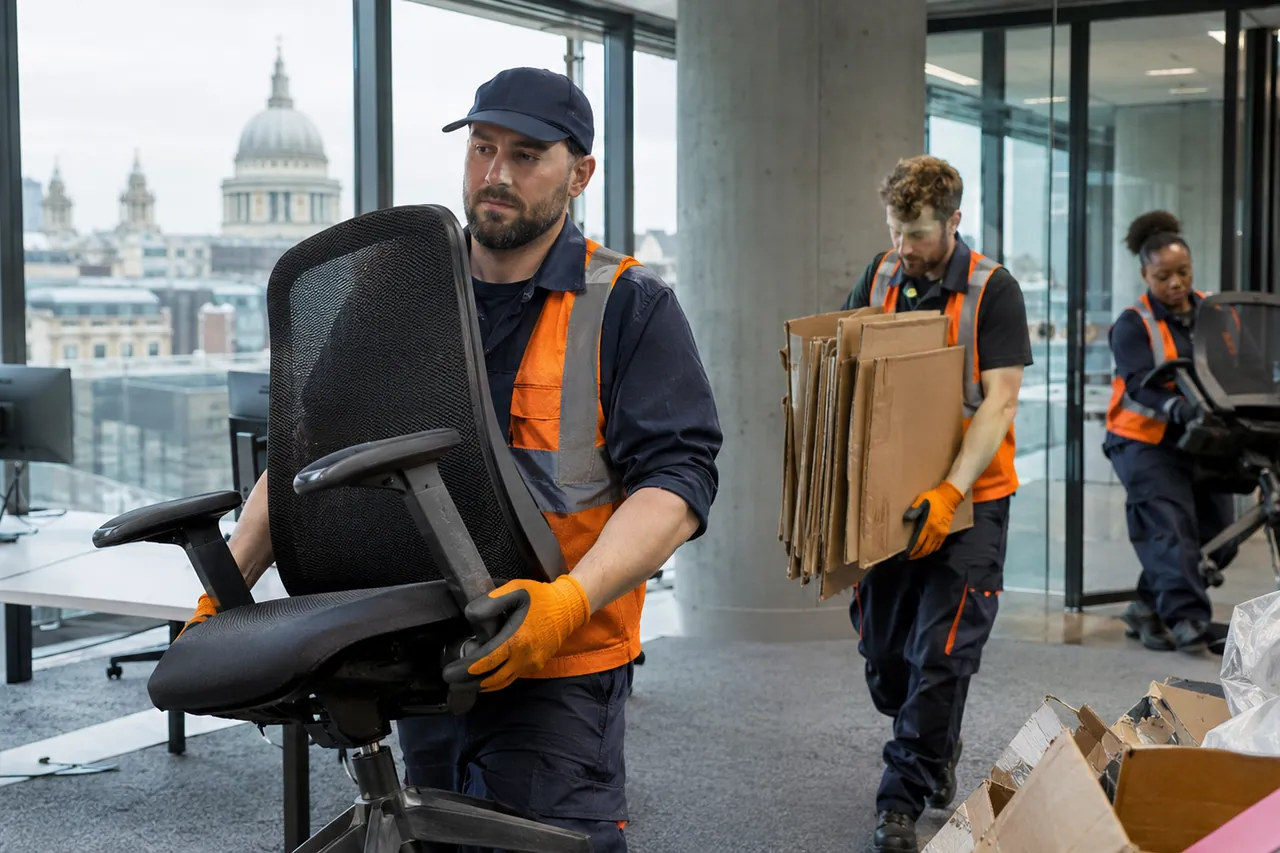
Floors, lifts and loading arrangements
Furniture dimensions matter alongside lift availability. A lift that serves the floor may still be too small for a long desk or large cabinet. We ask about usable access rather than treating a lift symbol as a complete carrying plan. Stairs and narrow turning points also need identifying where they affect the pieces being collected.
| Building detail | What we need to discuss | Purpose |
|---|---|---|
| Reception and security | Contact person, entry route and access arrangements | Establishes how the team reaches the collection area. |
| Floor and lift | Floor level, lift dimensions and availability | Allows bulky furniture movement to be discussed. |
| Internal route | Corridors, doors and any restricted zones | Defines the path from each area to the exit. |
| Loading area | Permitted position and any booking restrictions | Connects building access to vehicle loading. |
Computers, printers and confidential contents

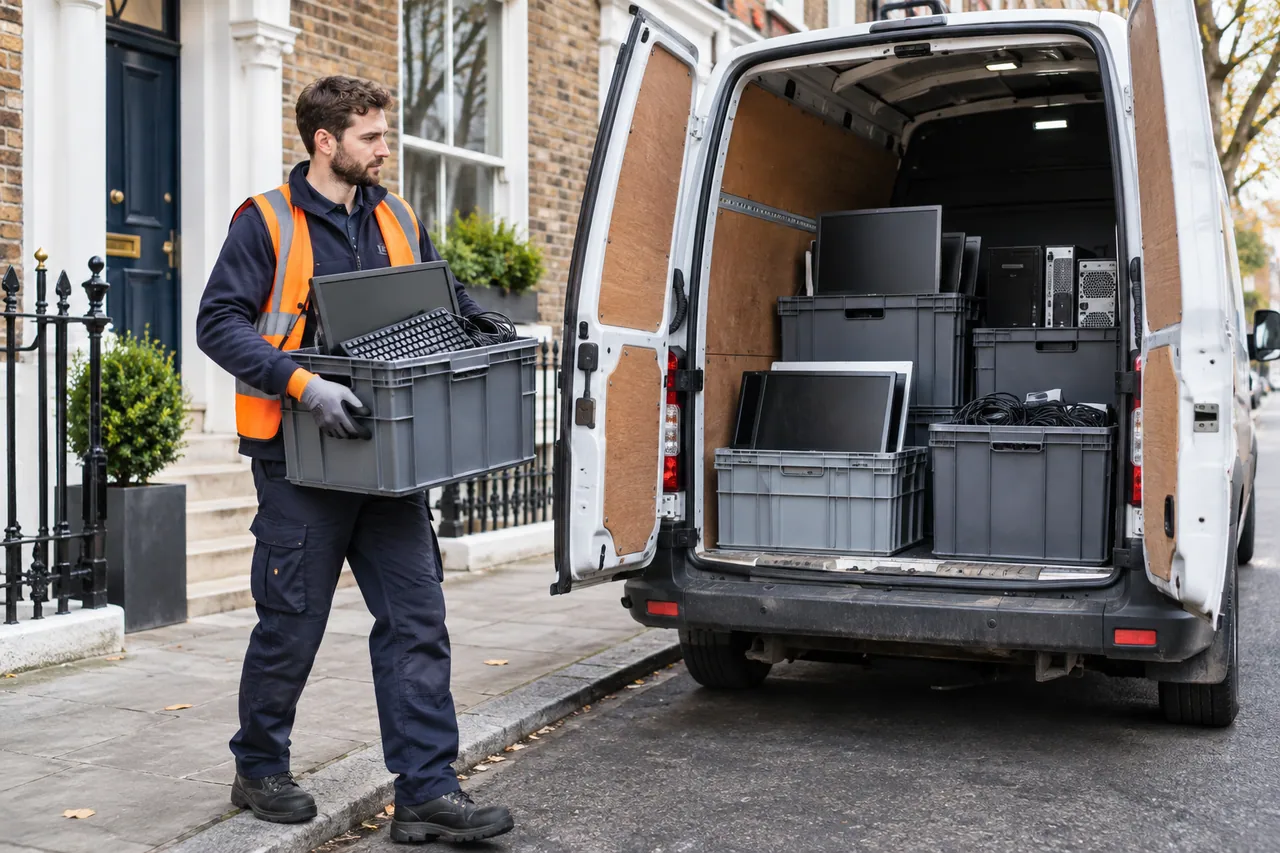
Our office service includes collection of agreed computers, printers and other IT equipment. We identify electrical items separately from desks and chairs because their onward handling differs. Data-bearing devices also require a specific conversation. Describe the equipment and the data treatment required before the visit rather than assuming a general furniture clearance includes a particular erasure method or certificate.
The same distinction applies to paperwork. Removal of agreed paper waste should not be mistaken for a confidential document destruction contract. If sensitive records are involved, explain the requirement and ask the team to confirm the available arrangement. The method and any documentation for sensitive material need to be confirmed for the particular collection. The agreed service must reflect what is actually confirmed for the equipment or documents.
Collection and onward handling
The removal covers the office contents included in the scope. Materials may include timber panels, metal cabinets, upholstered chairs, cardboard and electrical equipment. We seek recycling or reuse where appropriate, but do not give every item the same destination or assume a single treatment outcome for all the materials. The material and condition of the contents affect the available handling route.
| Office waste stream | Detail identified | Handling boundary |
|---|---|---|
| Furniture | Main materials, large sections and condition | Removal is not a guarantee of resale or donation. |
| Electrical equipment | Device types and quantities | Identified separately from general office furniture. |
| Data-bearing devices | Required security treatment | Method and evidence need explicit confirmation. |
| Paper records | Ordinary paper or confidential information | Confidential destruction is not assumed from a clearance quote. |
A quote for your office removal
The price discussion takes account of the quantity and type of contents and the carrying involved. Several compact chairs beside a ground-floor exit represent a different job from large cabinets across multiple upper floors. An item list sets out the desks, seating, storage and equipment included in the quote, while the building details explain the carrying work.
If the clearance changes after the quote, the scope needs reviewing. This includes extra rooms, additional furniture, changes to the loading position or a lift becoming unavailable. A clear description helps the collection discussion remain accurate. It also prevents retained assets, staff belongings or equipment awaiting a decision from being treated as waste merely because they are in the same room.
| Quote factor | Information discussed | Why it matters |
|---|---|---|
| Contents | Counts, photographs and component sizes | Establishes the actual office load. |
| Access | Floors, lifts and distance to loading | Defines the carrying and loading work. |
| Equipment | Electrical devices and special requirements | Distinguishes equipment handling from ordinary furniture. |
| Timing | Building restrictions and preferred date | Allows an available visit to be agreed realistically. |
What the business receives
The agreed unwanted contents are carried, loaded and removed from the specified areas. This does not automatically include a full office clean, refurbishment work, equipment disconnection or reinstatement of the premises. If those requirements arise during an enquiry, they need clarifying separately. We keep the collection scope focused on the removal work rather than promise a complete property handover package without defining it.

Office Clearance: collection and loading
Office clearance questions
Can you remove desks and chairs from several floors?
We can discuss a collection across more than one floor. Provide quantities by area, floor levels and lift or stair details. The quote needs to reflect the whole carrying route rather than treat the building as one ground-floor furniture pile.
Is IT disposal included with office furniture removal?
Agreed IT equipment can be discussed alongside office furniture. List computers, monitors and printers separately, and identify any data security requirement. The equipment collection and any data treatment must be understood before the job is agreed.
Do you offer confidential paper destruction automatically?
A general office clearance does not establish a confidential destruction arrangement. Describe sensitive paperwork and ask the team to confirm the service available. Do not assume that ordinary paper collection includes a particular shredding method or destruction certificate.
Can you work with our building reception?
We discuss the entry arrangements and site contact as part of planning collection. Tell us about reception procedures, security access and loading restrictions. The collection needs to be coordinated with the access actually available at your building.
Will you disconnect installed equipment?
Disconnection and detachment are not automatically included in carrying and removal. Identify installed items when enquiring. The team needs to clarify the required work and suitability before that equipment becomes part of the agreed collection.
Can you collect while some staff remain in the office?
We can discuss removal from specified areas in an occupied workplace. Explain the shared routes, retained workstations and timing restrictions. The collection plan depends on the contents and building, so uninterrupted operation is not guaranteed simply by submitting an enquiry.
What if we only need a storeroom cleared?
A selected storage area can be the focus of the collection. Describe its contents, any sensitive records and the route to the vehicle. Items elsewhere in the office remain outside the job unless they are included in the agreed scope.
Arrange your collection
Tell us about your office clearance
Open our booking form to arrange your collection.
Continue to our booking form to confirm your items and contact details.