
LONDON CLEARANCE SERVICES
Garden Clearance in London
We collect unwanted garden waste from London properties, carrying and loading the agreed materials for removal. Describe the cuttings, branches, bags and other outdoor items so we can arrange a collection around your garden and its access.
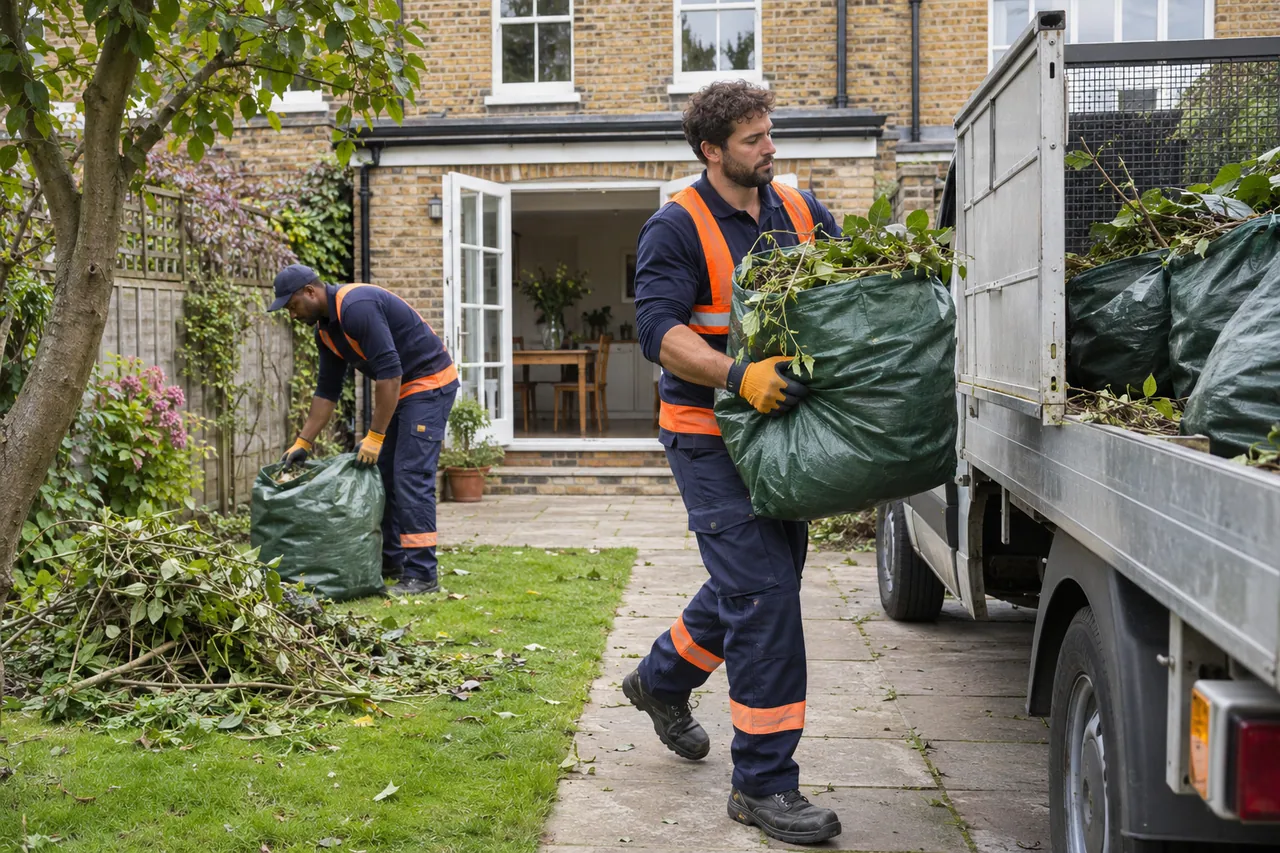
Collection of the waste from your garden
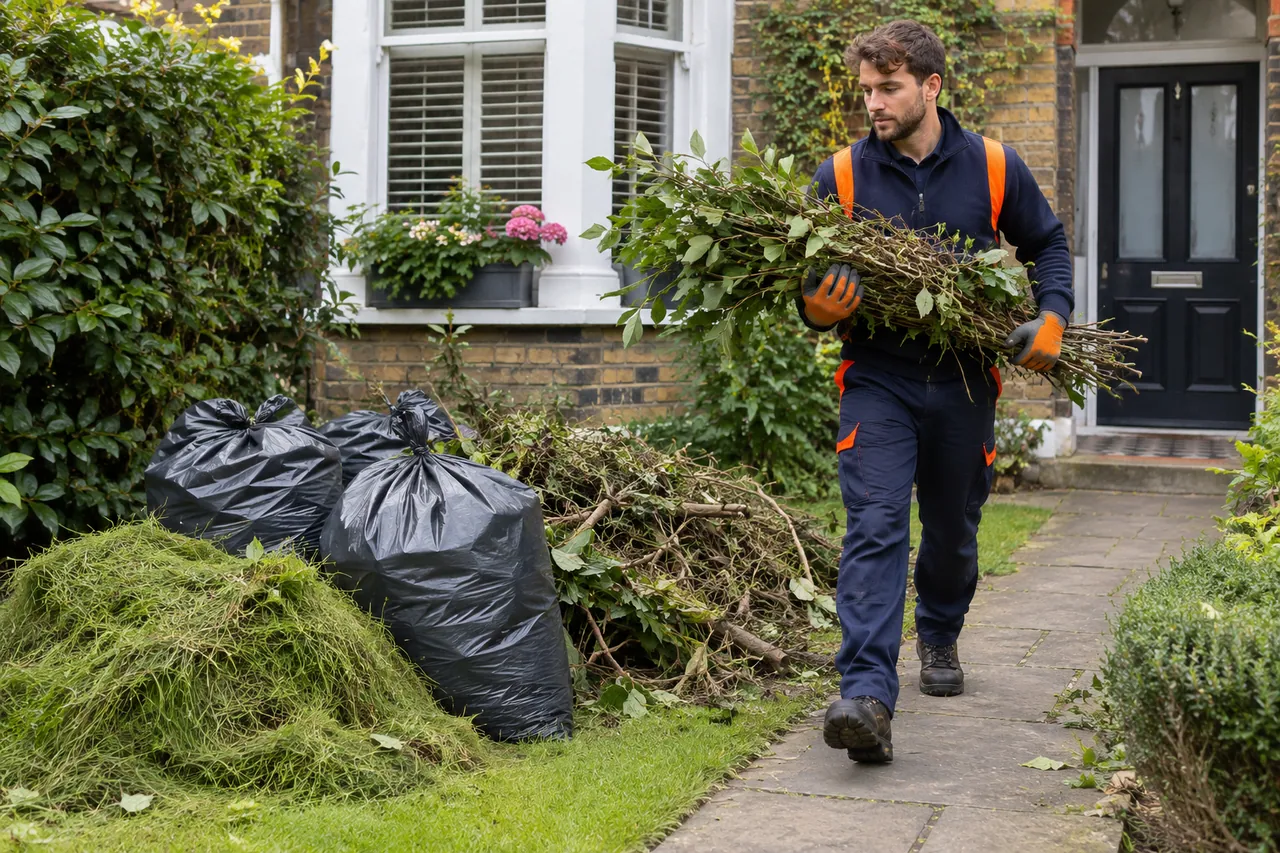
Rubbish Begone removes garden waste that has accumulated after outdoor clearing or routine garden work. Our service includes weeds, branches, dry plants, fallen leaves and empty gardening-soil bags. We organise the removal itself: identifying the material, discussing the carrying route, loading the accepted waste and taking it away. The collection can focus on a single pile or several agreed groups of waste.
The service is defined by the materials to leave the property. Cutting down a standing tree, landscaping a garden or carrying out a full gardening programme is not automatically part of a rubbish collection. We distinguish waste that is ready for removal from work that would create more waste. That makes the scope clear when the garden contains both planted areas to retain and unwanted materials.
Green waste and other outdoor items
We identify plant waste separately from furniture, broken containers and other non-green materials. A photograph showing a garden corner may include several different waste streams. Explaining the contents lets us discuss their acceptance and onward handling rather than describe the whole load as vegetation. Soil, rubble, chemicals and unidentified containers need a specific discussion and are not silently included with leaves and cuttings.
| Garden material | Examples in the enquiry | How we describe the collection |
|---|---|---|
| Weeds and dry plants | Removed plants gathered for disposal | The loose material and approximate pile size are identified. |
| Branches | Cut branches and woody garden debris | Length, bulk and the route out of the garden are discussed. |
| Leaves | Fallen leaves gathered loose or in bags | Bag count is accompanied by the actual contents and size. |
| Empty garden bags | Used gardening-soil bags and similar packaging | Packaging is identified separately from plant material. |
| Outdoor belongings | Unwanted garden furniture or other items | Acceptance is confirmed as an additional waste category. |
| Dense or unknown waste | Soil, rubble or unidentified containers | Requires clarification rather than a general green-waste assumption. |
Bringing the garden load out of the property
The distance between the waste and the collection vehicle matters. A pile at the front of a house has a different carrying route from branches behind a terraced property. We discuss side gates, shared passages, steps and any route through the home. The route needs to accommodate the waste as well as the people carrying it; a long branch may be awkward where a bag can pass easily.
For a garden reached through an indoor hallway, the collection discussion includes that route. Photographs can show narrow turns, doors and changes in level without relying on a written description alone. We do not assume that every garden has a wide rear gate or direct vehicle access. The agreed collection reflects the property you have, including the point where the vehicle can reasonably be loaded.
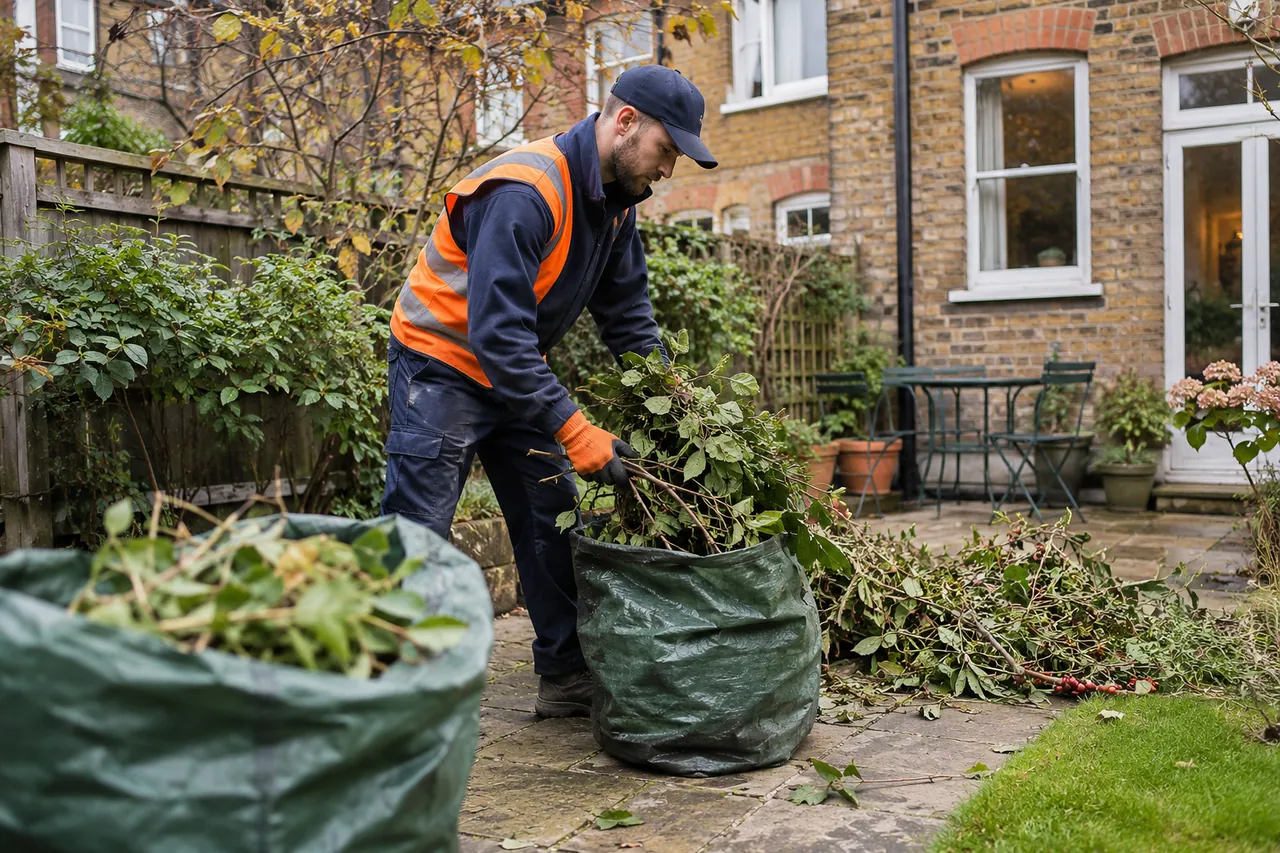
How your garden collection is arranged
We start with the postcode and a description of the waste, then discuss the quantity, route and desired date. The team confirms the collection arrangements with you. Same-day garden clearance can be requested where availability permits, but an enquiry is not a reserved slot. If the garden work is still producing cuttings, explain whether the stated pile represents the final load.

Identify the garden waste
Describe vegetation, bagged material and non-green items separately, with photographs of each collection area.

Discuss garden access
We establish the route from the pile, including gates, steps, shared paths and the proposed loading point.

Agree and collect
The team discusses the scope and quote, then carries and loads the accepted waste at the arranged visit.

Remove the load
The waste leaves the property for appropriate onward handling, with green material identified separately from other rubbish.
Bags, loose cuttings and long branches
We discuss how the waste is currently presented. A bag count is helpful where the bags are visible, but the same number of bags can contain very different materials. Dry leaves, wet vegetation and soil do not describe equivalent loads. Our enquiry therefore asks about contents as well as the apparent amount, especially where there are dense bags or material hidden below a lighter surface layer.
Long branches and bulky woody pieces also need identifying. The team needs to understand the largest pieces and the route they must travel. This page does not promise on-site tree surgery or unrestricted cutting of any branch to fit through a gate. Where additional work seems necessary, it is discussed before the collection rather than assumed to be included in carrying and loading.
| Presentation | Details we discuss | Collection consideration |
|---|---|---|
| Bagged cuttings | Number, bag size and contents | Establishes what the visible bags represent. |
| Loose pile | Overall dimensions and main materials | Explains the scale beyond a close-up photograph. |
| Long branches | Lengths and the narrowest route | Helps assess movement through gates and passages. |
| Several locations | Front garden, rear garden or separate piles | Defines all areas included in the agreed removal. |
Keeping planting and retained items separate
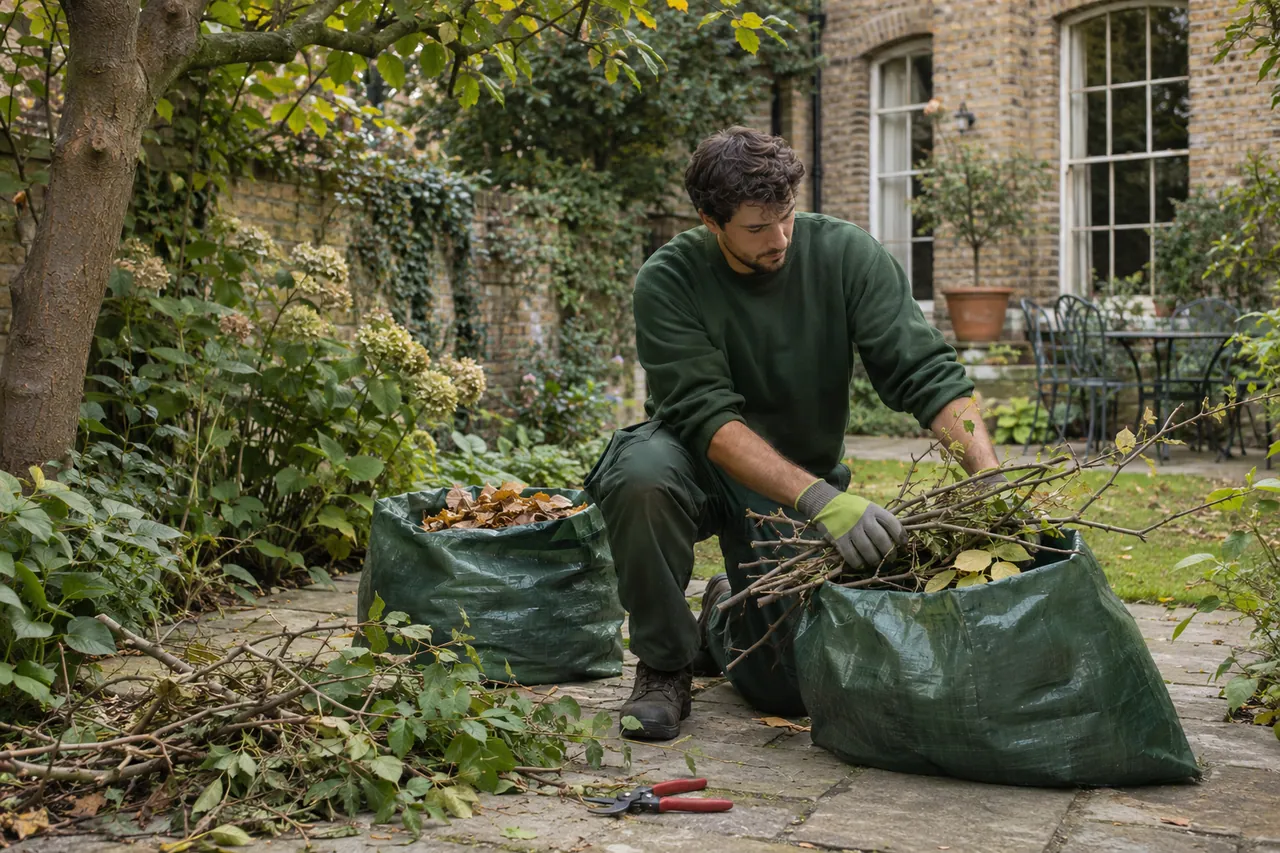
The clearance is organised around what you want removed. Plants that remain, stored tools, pots in use and furniture being retained are not part of the load simply because they are near the waste. We discuss the boundaries of the job where the garden contains both rubbish and useful belongings. That is particularly relevant to a shared outdoor area or a property where several people store items.
If an outdoor shed or garage also contains unwanted possessions, describe that as a separate part of the enquiry. We can discuss the combined removal without confusing stored household contents with green waste. The same principle applies to old garden furniture: identify its material and size so it is considered alongside, rather than hidden beneath, the description of branches and leaves.
Onward handling of garden materials
We aim to recycle appropriate waste wherever possible. The material mix determines the route available for the collected load. Plant matter, plastic packaging and furniture are different categories and should not receive an identical disposal promise. We do not claim that every mixed garden load becomes compost, or publish a single assumed recycling outcome to describe the service.
| Waste stream | What is established | Handling discussion |
|---|---|---|
| Plant material | Leaves, weeds, dry plants and branches | Identified as the green component of the collection. |
| Plastic packaging | Empty soil bags and similar items | Considered separately from organic garden matter. |
| Bulky outdoor items | Furniture and other accepted belongings | Material and dimensions inform the onward arrangement. |
| Specialist material | Chemicals, unidentified waste or dense debris | Acceptance and suitability require clarification first. |
Pricing your garden clearance
Our quote relates to the amount and type of garden waste and the work involved in collecting it. The team explains the price against the items and access described for your collection. Access, material density and bulky pieces can all distinguish one collection from another. The aim is to agree the scope and price for your actual waste.
We also discuss the requested timing and whether anything will change before collection. A pile photographed before another day of pruning may not represent the final job. Where more material is added, update the team so the removal can be discussed against the revised load. The same applies if a previously accessible gate or loading position will be unavailable on the day.
| Quote factor | Information for the team | What it establishes |
|---|---|---|
| Amount of waste | Whole-pile pictures and bag quantities | The scale of material leaving the garden. |
| Waste composition | Green material, packaging and bulky items | The streams involved in collection and disposal. |
| Carrying route | Gates, stairs, distance and internal access | The work between the waste and the vehicle. |
| Collection date | Preferred day and any garden-work schedule | Whether an available visit suits the completed load. |
Garden Clearance: collection and loading
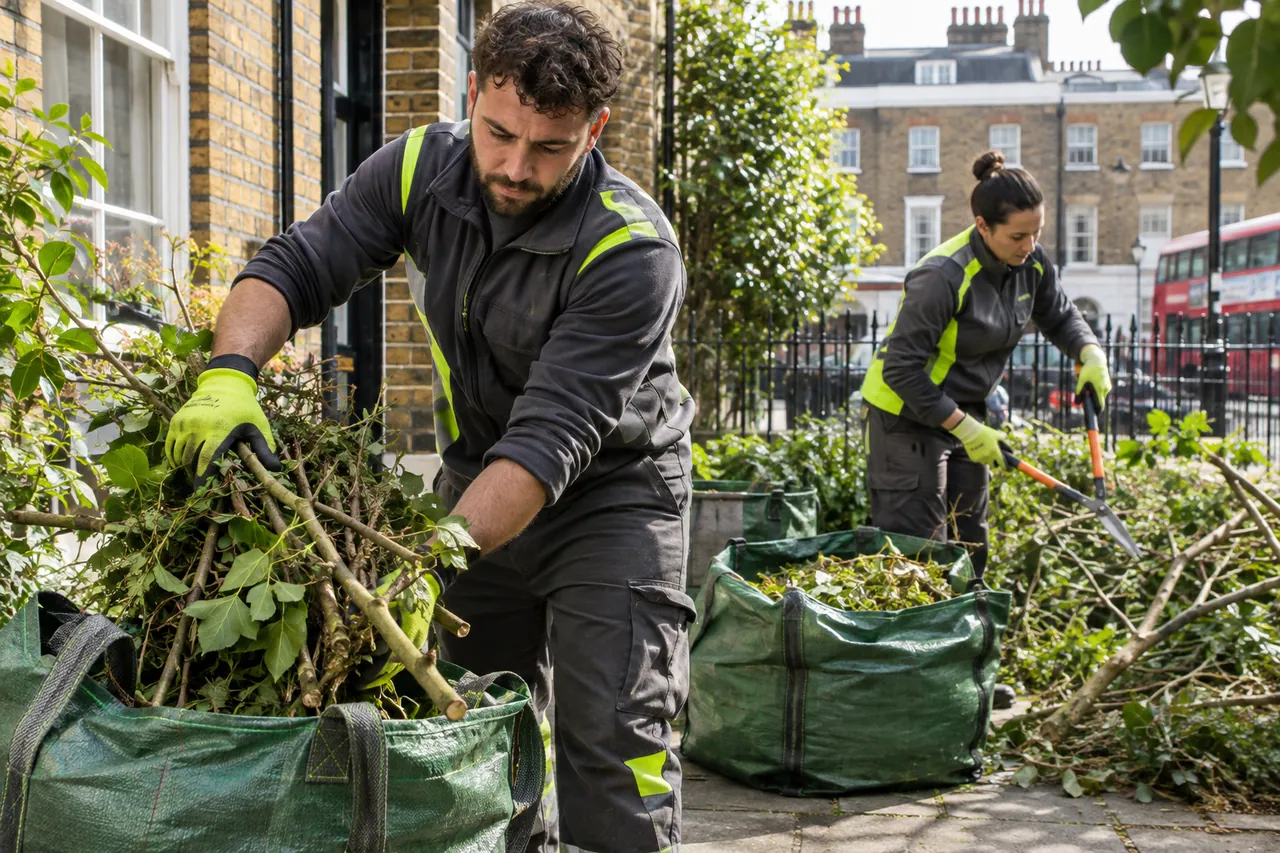
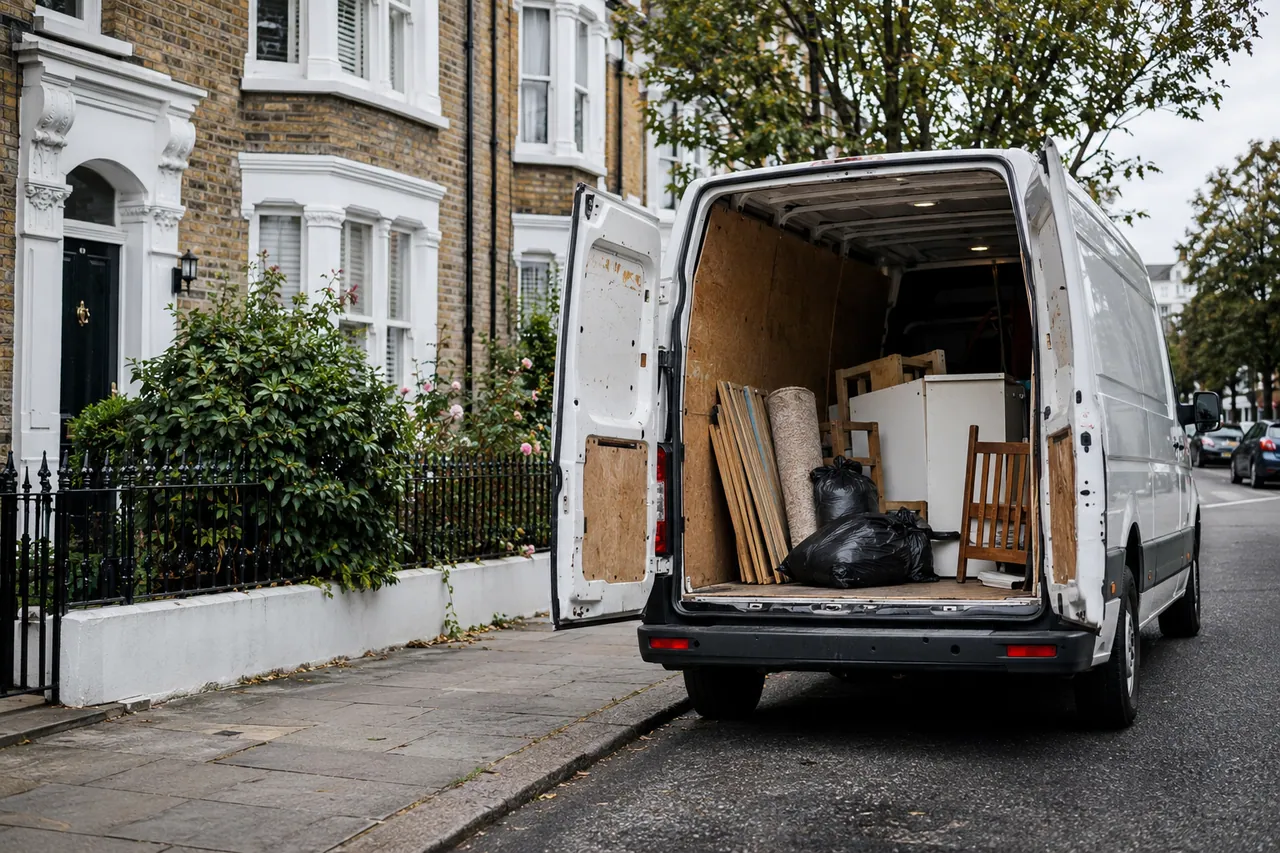
Collection vehicle and loading
Garden clearance questions
Do you collect weeds and fallen leaves?
Yes. Weeds, dry plants and fallen leaves are among the garden waste categories on our service. Tell us whether they are loose or bagged and describe the approximate amount. Other materials in the same pile need identifying separately.
Can you carry waste through a terraced house?
We can discuss a collection where the garden route passes through the property. Describe doorways, turns, steps and the largest pieces. Suitability depends on the actual route, so we do not assume that every branch or bulky object can be carried through any hallway.
Is gardening included with garden waste collection?
This service covers removal of the agreed waste. It does not automatically include pruning, landscaping or tree work. Explain whether the material is already cut and ready to remove, or whether you need work beyond carrying and loading clarified first.
Can old garden furniture go with the green waste?
Tell us which furniture pieces you want collected. We can discuss them as an additional category, with their size and material identified. They are not treated as organic garden waste, and their acceptance should be agreed with the team.
Will you collect bags containing soil?
Mention soil explicitly. A bag of dense soil is different from a bag of leaves, and acceptance needs confirming for the actual load. Do not describe it simply as garden bags or assume that all dense outdoor material is included with cuttings.
Can you collect after my gardener finishes?
Discuss the expected finish date and final amount with the team. We can consider an available collection around that schedule. If the pile grows after the quote, the updated quantity needs discussing before it is treated as part of the booked removal.
What happens after the garden waste is loaded?
We remove the accepted load for onward waste handling and pursue recycling where appropriate. Identifying green material separately from packaging and furniture helps describe the disposal arrangements. We do not promise a single treatment outcome for every mixed garden load.
Arrange your collection
Tell us about your garden clearance
Open our booking form to arrange your collection.
Continue to our booking form to confirm your items and contact details.