
LONDON CLEARANCE SERVICES
Shop Clearance in London
We remove agreed unwanted contents from London shops and venues. The collection is planned around the retail items, the route out of the premises and the loading arrangements, whether you are clearing selected areas or a larger set of contents.
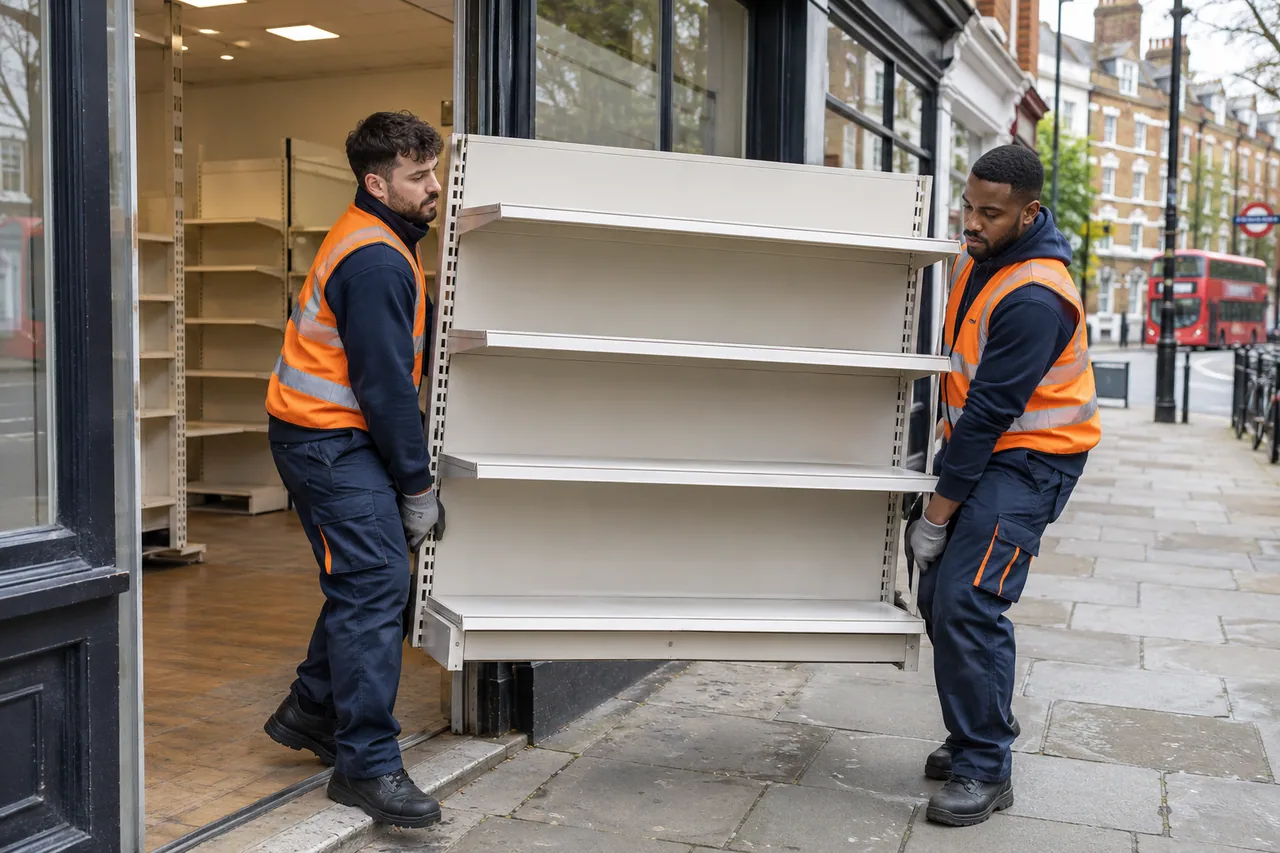
How we arrange a retail collection
The enquiry starts with the location and unwanted contents. We then discuss access, any operating restrictions and the price for the agreed removal. A preferred date can be considered alongside available visits. If the business needs an evening or weekend collection, ask about that arrangement rather than assume that every slot is immediately available for every size of clearance.

Define the removal areas
Identify unwanted displays, furniture, packaging and other contents while making retained stock and fixtures clear.

Review retail access
We discuss the service entrance, shared routes, floors and available loading position at the premises.

Agree the collection
The team confirms the load, price and visit arrangements, including any work beyond straightforward removal.

Carry and remove
We load the accepted contents and take them away for appropriate onward handling of the separate material streams.
Removal of unwanted retail contents
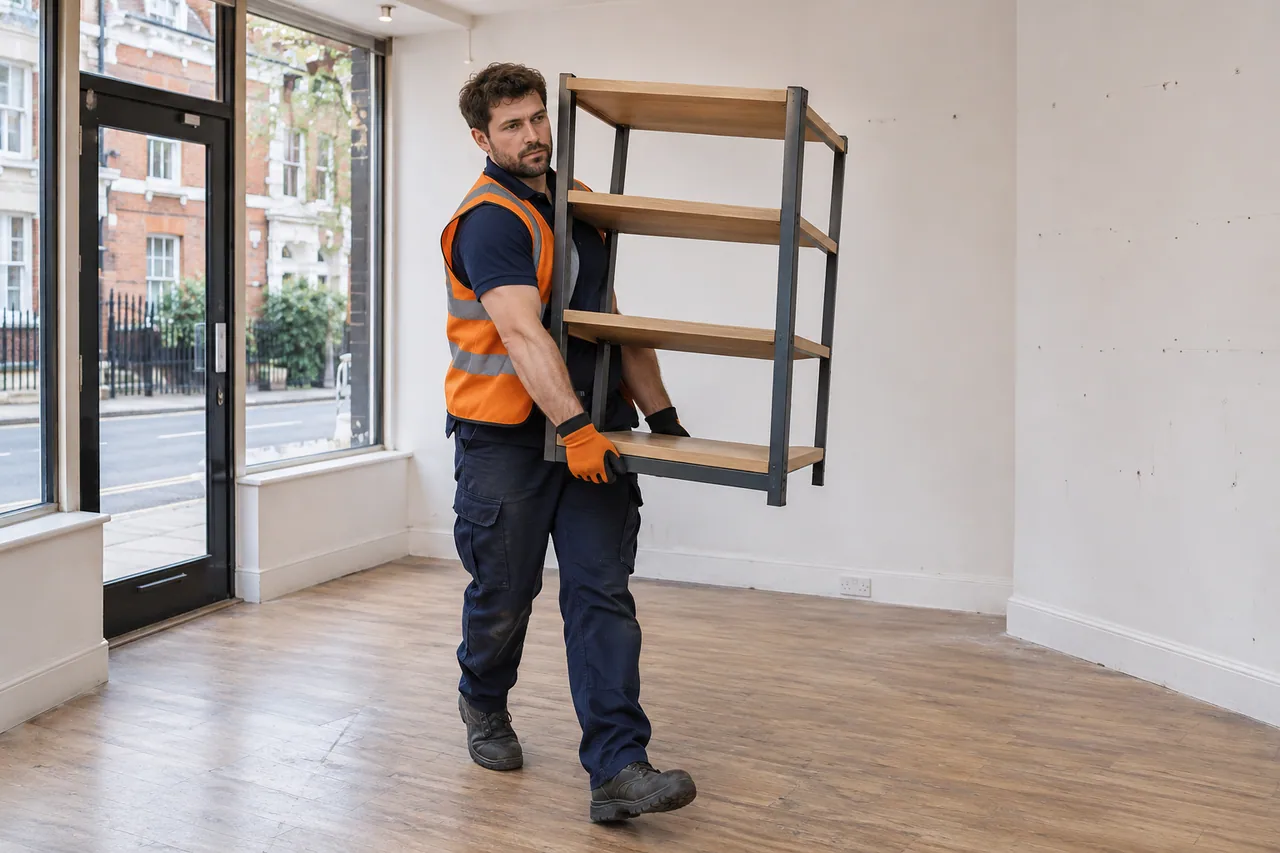
Rubbish Begone provides shop clearance for businesses changing their premises, replacing furniture or removing accumulated contents. Our service also covers discussion of venue clearance. We define what is leaving before the visit: removable displays, freestanding furniture, packaging and other accepted items are identified separately from stock or fixtures being retained. A closed shop is not automatically an instruction to remove everything inside it.
The service covers collection and removal of the agreed load. We discuss carrying, vehicle loading and onward disposal rather than require your staff to transport bulky items themselves. Where the job involves fixed installations or equipment connected to building services, the work needs clarifying separately. A retail clearance quote should not be mistaken for a full strip-out, demolition or reinstatement contract.
The contents included in your shop clearance
The item list establishes the job more accurately than the shop’s floor area. A small stockroom with dense contents can involve a different load from a larger sales floor holding lightweight displays. Photographs help show the main areas, but a description is still needed where stock, packaging and equipment are mixed together. We distinguish each category before treating it as accepted waste.
| Retail contents | Examples for discussion | Detail to provide |
|---|---|---|
| Freestanding furniture | Chairs, tables, desks and storage units | Quantity, approximate size and current location. |
| Display items | Removable shelves, stands and display furniture | Whether freestanding, dismantled or attached to the property. |
| Packaging | Cardboard, wrapping and empty boxes | Amount and whether mixed with other waste. |
| Store-room contents | Agreed unwanted business belongings | Identify retained stock separately from rubbish. |
| Electrical equipment | Office devices and other agreed electrical items | Device type and any disconnection or data requirement. |
| Refit materials | Waste from changes to the shop interior | Materials need describing for the appropriate collection. |
Identifying what stays in the premises
Retail spaces frequently contain similar items with different purposes. Some shelving may be removed while other units remain; stock awaiting a decision may sit beside empty packaging. We discuss those boundaries so the removal is based on your item list. Landlord-owned equipment, display assets and personal belongings should not become part of the load simply because they occupy the same area.
For a partial clearance, tell us which room, storage zone or display group is included. The collection can be discussed around a defined part of the premises without implying a complete shop closure. If the scope changes during planning, update the team before the visit. Extra stockroom contents or additional fixtures need considering in the quantity and handling discussion.
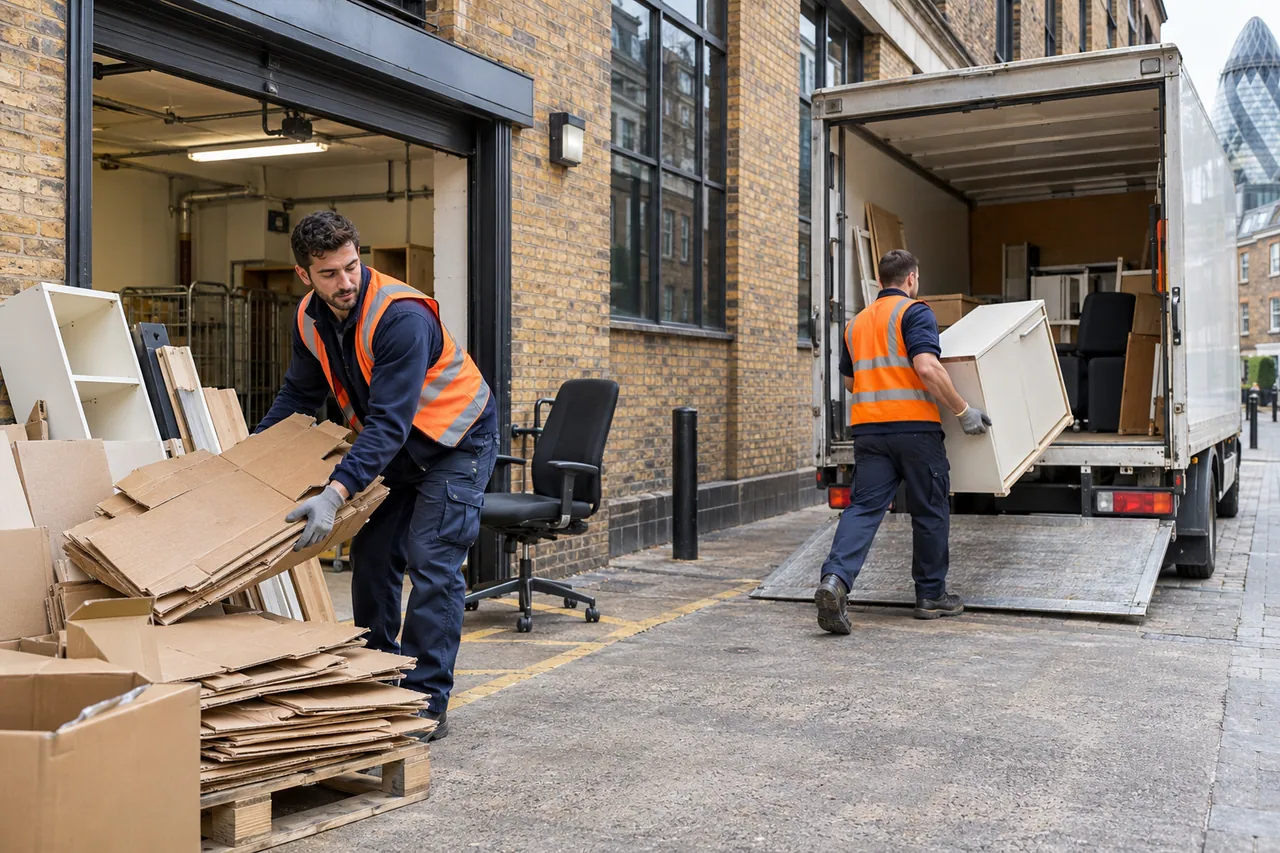
Access through the shop or service entrance
A high-street frontage, shopping-centre unit and rear-access shop each present different loading arrangements. We discuss which entrance is available, how far the items are from the vehicle and whether a service corridor or goods lift is involved. The collection plan should reflect the permitted route rather than assume that the vehicle can stop immediately outside the shopfront.
| Access feature | Information discussed | Collection implication |
|---|---|---|
| Service entrance | Route, door size and controlled access | Establishes how bulky contents leave the premises. |
| Shared corridors | Other users and any restrictions | Helps define the practical carrying route. |
| Basement or upper floor | Stairs, lifts and item dimensions | Furniture access needs checking beyond the street address. |
| Loading position | Delivery bay, stopping rules and permitted times | Connects the carrying work with vehicle loading. |
Displays, fixtures and work beyond collection
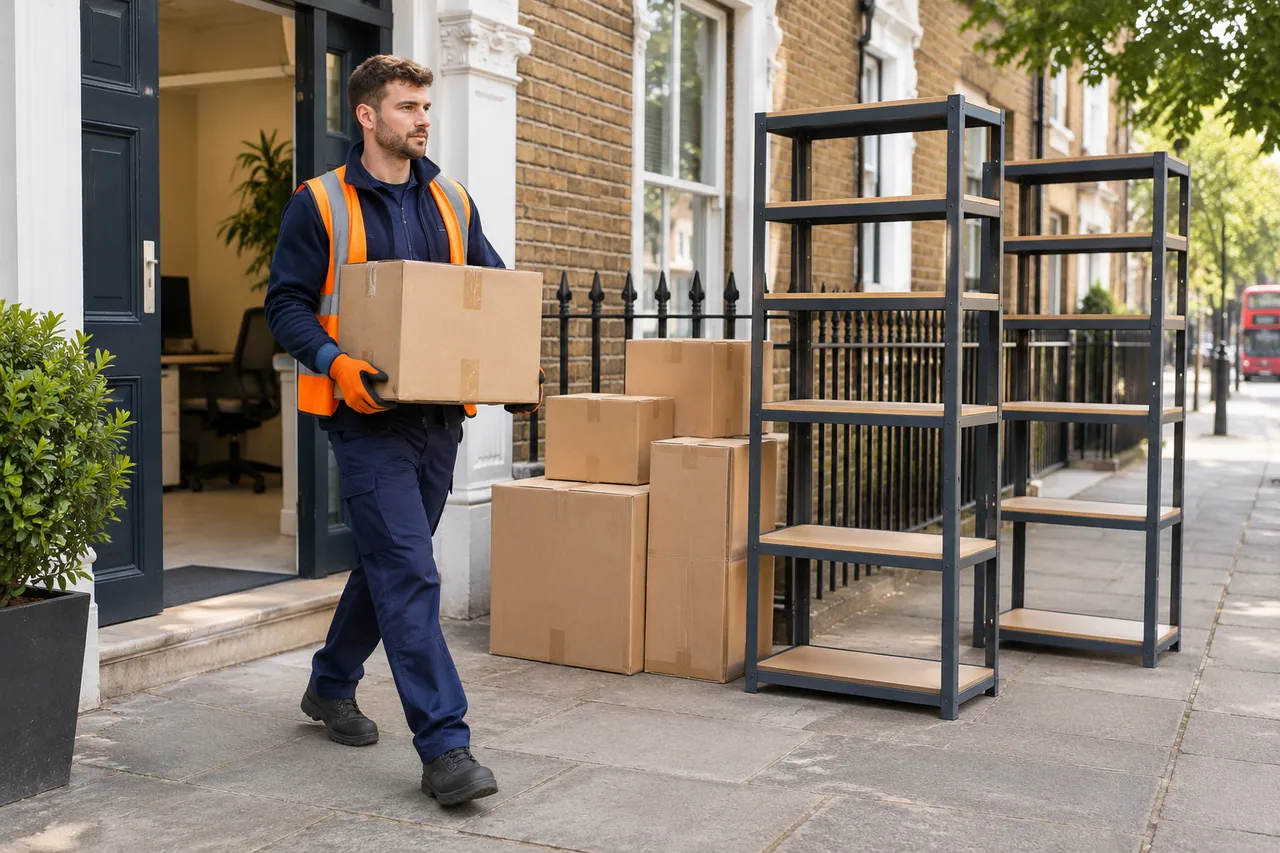
A freestanding display and a wall-fixed fitting involve different tasks. We need to know which you have. Where dismantling or detachment is necessary, describe that requirement before the quote. We do not imply that electrical isolation, structural changes or removing every installed unit is included in an ordinary shop contents collection.
The same applies when refurbishment waste is present. Removed panels, flooring or heavy debris should be listed as such rather than concealed within general shop rubbish. We can discuss an appropriate refurbishment collection alongside retail belongings. Identifying the streams makes the scope clearer and avoids treating a finished contents removal as an unlimited building-site clearance.
Different retail materials, appropriate handling
We remove the accepted load and arrange onward waste handling. Recycling or reuse is pursued where suitable for the material, condition and available route. A mixed shop clearance may contain timber, metal, upholstery, cardboard and electrical equipment. Those components cannot all be assigned one guaranteed outcome before the contents have been identified.
| Waste stream | Information established | Boundary of the arrangement |
|---|---|---|
| Retail furniture | Materials, dimensions and condition | Removal is not an automatic resale or donation service. |
| Packaging | Cardboard and other material mix | Distinct from bulky furniture and specialist waste. |
| Electrical items | Equipment type and any data-bearing parts | Treatment beyond physical collection needs confirming. |
| Refit or unusual waste | Construction materials or unknown contents | Acceptance and handling require specific discussion. |
Quoting for the shop contents
Our quote considers the actual amount and type of waste, along with carrying and loading. The team explains the price against the items and access described for your collection. A few display stands near a service door and a basement full of heavy contents are different removal jobs. The enquiry should describe those differences so the discussion is useful.
The agreed scope identifies what the collection includes and the access available. If a delivery changes the loading area or additional contents are added, tell the team. A quote for selected furniture is not a promise to clear all stock, fixtures and rubbish later found at the premises. Keeping the job defined also helps distinguish a one-off shop clearance from regular commercial waste collection.
| Quote detail | What we ask about | Reason |
|---|---|---|
| Contents and quantities | Item list and whole-area photographs | Defines the scale and material mix of the removal. |
| Large pieces | Display dimensions and assembly | Explains carrying and loading requirements. |
| Premises route | Floors, entrances and distance to the vehicle | Identifies the work involved at the address. |
| Required timing | Trading constraints and preferred collection date | Allows realistic arrangements to be discussed. |
The result of the agreed clearance
The unwanted items included in the collection are carried out, loaded and removed from the specified areas. Remaining fixtures, stock and other retained belongings stay outside that scope. A contents clearance does not automatically include professional cleaning, a landlord handover certificate or reinstatement of the shop interior. If a wider requirement exists, it needs discussing rather than being inferred from the word clearance.
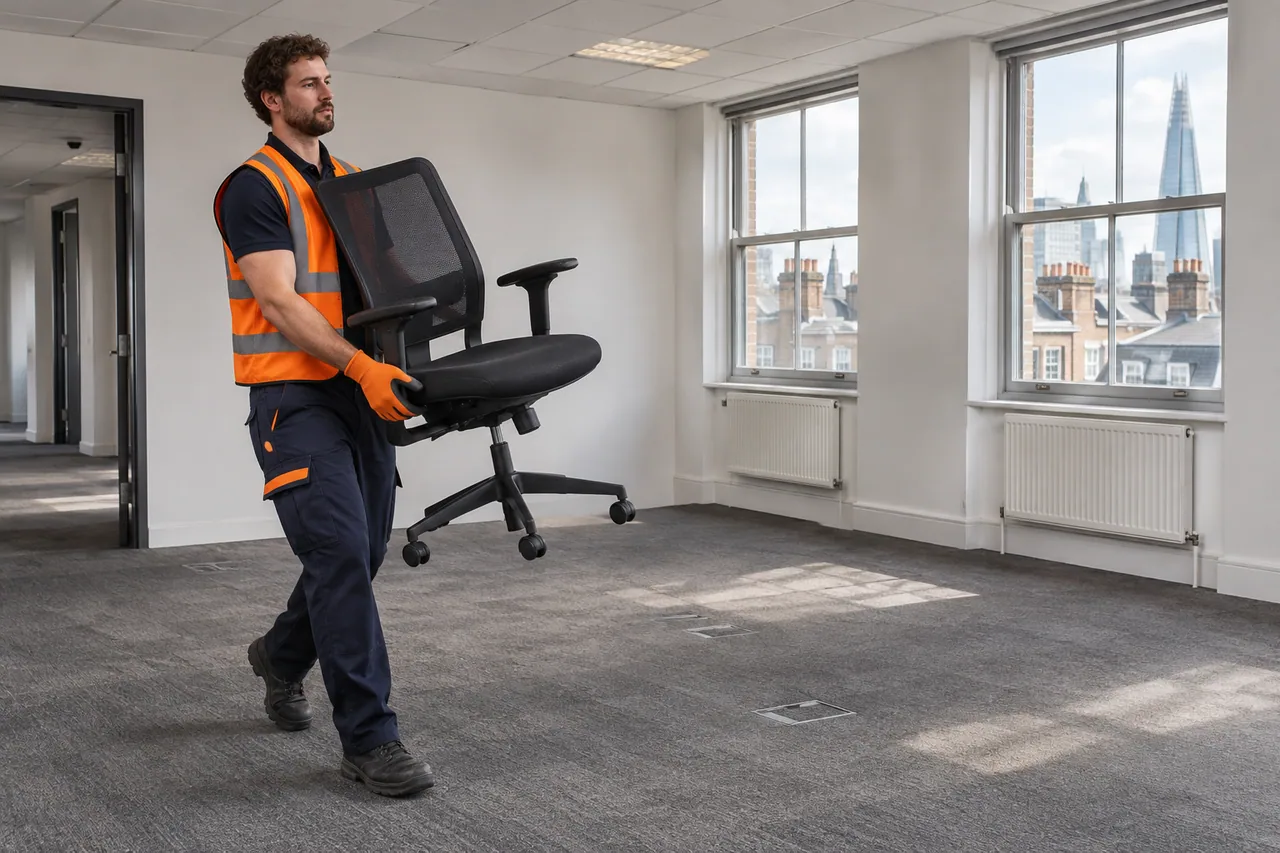
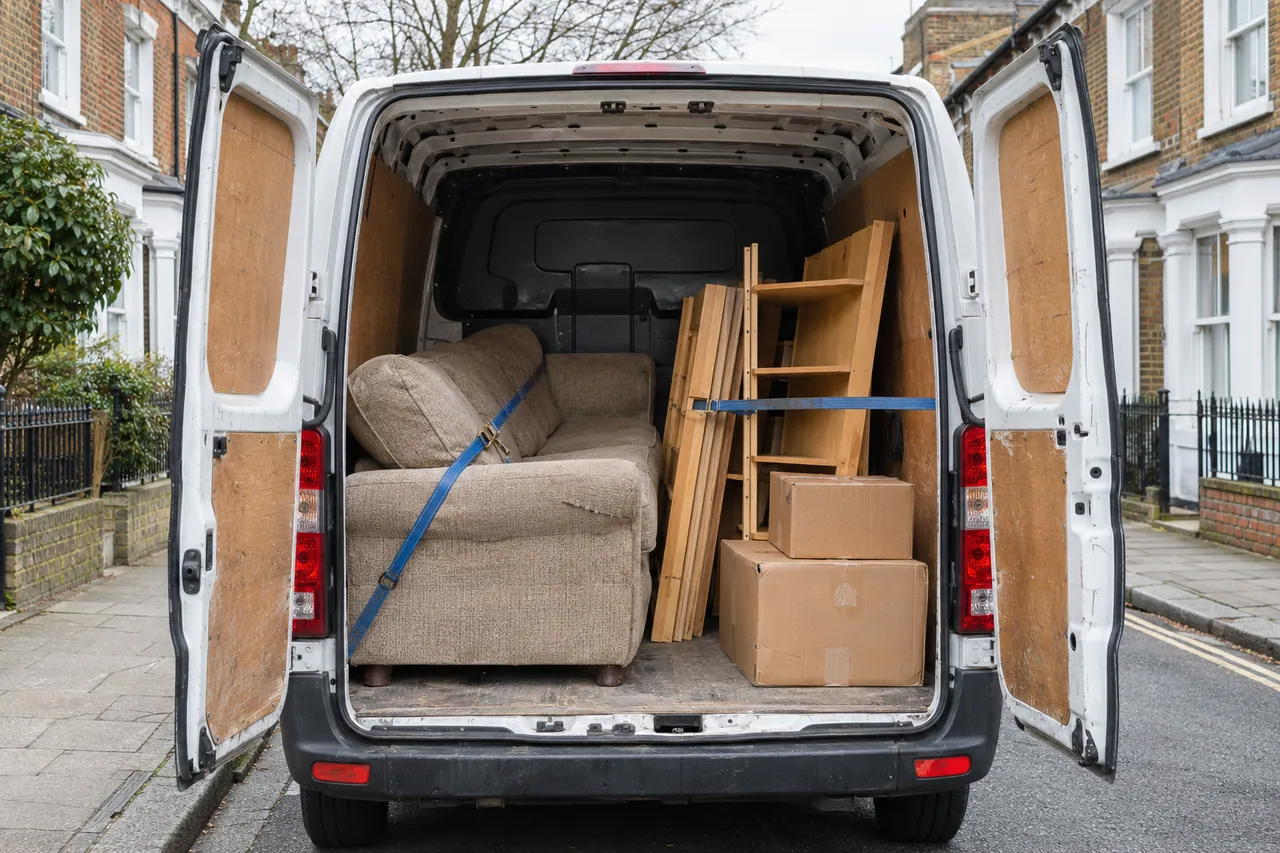
Shop Clearance: collection and loading
Shop clearance questions
Can you clear only our stockroom?
Yes, we can discuss removal from a selected area. Identify the unwanted contents and distinguish stock or equipment to retain. The scope can focus on that room without treating the rest of the shop as part of the collection.
Do you remove freestanding shop displays?
Describe the displays, their dimensions and whether they are freestanding or fixed. We discuss acceptance and the carrying route before agreeing the visit. Detachment or dismantling should be clarified rather than assumed from a general contents-removal quote.
Can you work through a shopping-centre loading bay?
Tell us about the bay, access controls, booking process and permitted times. The collection discussion needs to reflect those restrictions. An address within a centre does not itself confirm that a loading slot or service route is available.
Does shop clearance include a complete strip-out?
The service described here is collection of agreed unwanted contents. A complete strip-out may involve installed equipment, fixed fittings and building work beyond carrying and loading. Explain those requirements so the team can clarify what can be arranged.
Can refit waste be removed with old furniture?
List both the furniture and the refit materials. The team can discuss a combined load or the appropriate collection scope. Heavy debris and removed building materials need identifying separately from ordinary retail belongings and packaging.
Is confidential business paperwork included automatically?
Ordinary collection should not be assumed to include confidential document destruction. Describe sensitive records and the treatment you require. Any secure handling arrangement needs explicit confirmation before those records become part of the job.
Can a public venue request this service?
Our shop service also refers to venue clearance. Describe the venue contents and access in the enquiry. The team can discuss suitability and the collection scope for that location rather than assume every venue has identical waste or loading arrangements.
Arrange your collection
Tell us about your shop clearance
Open our booking form to arrange your collection.
Continue to our booking form to confirm your items and contact details.