
LONDON CLEARANCE SERVICES
Builders Clearance in London
We collect agreed building waste from London renovation and construction projects. The service covers carrying, loading and removal of the materials identified for collection, with the load and access discussed before the visit.

Materials included in the collection
We record the main waste categories separately. That helps define the work and avoids treating every renovation load as general bagged rubbish. A builder clearing offcuts from a finished room may have different requirements from a contractor removing loose rubble from a ground-floor work area. Both can be discussed through the same enquiry, but the collection arrangements reflect the particular site.
| Waste category | Examples to identify | Collection detail |
|---|---|---|
| Rubble and masonry | Broken bricks, concrete and mortar debris | Describe the amount and whether loose or bagged; weight affects suitability. |
| Timber | Boards, lengths and wooden offcuts | Give the longest dimensions and identify projecting fixings. |
| Metal | Offcuts and removed metal components | Explain unusual weight, sharp edges or awkward shapes. |
| Tiles and ceramics | Broken wall tiles and floor tiles | Identify these separately from lighter mixed waste. |
| Plasterboard | Board offcuts and removed sheets | Tell us it is present so the handling arrangement can be discussed. |
| Mixed debris | Packaging and other agreed building waste | Describe the contents; an unidentified mixed pile needs clarification. |
Building waste removal around the actual site
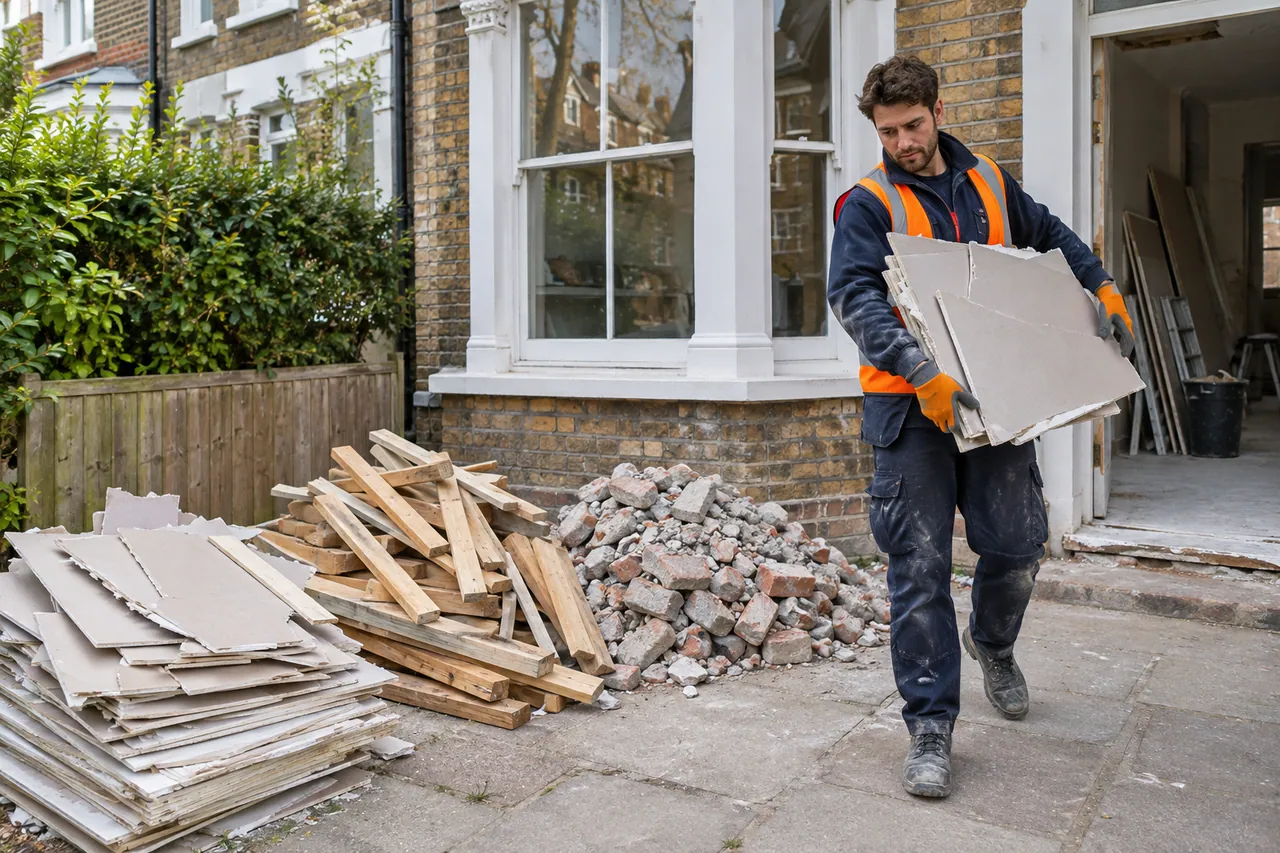
Rubbish Begone provides builders clearance for contractors, property owners and businesses with unwanted materials left by building work. We remove waste that is ready for collection, including rubble, timber, metal, plasterboard, old tiles and other agreed debris. The job can be a single accumulated pile or several waste streams from different parts of a property. We establish what is being collected before arranging the vehicle and visit.
Our collection is organised around the material, not the apparent size of the pile alone. Broken masonry can be dense even when it occupies little space. Long timber and light packaging may take up more room without the same weight. We discuss those differences when quoting, so a photograph of mixed waste is supported by a description of what is beneath the visible surface.
From the work area to the collection vehicle
The carrying route forms part of the job description. We discuss the floor where waste is stored, any stairs, the distance to a suitable stopping point and whether access runs through an occupied property. Collection from a front driveway differs from removal through a narrow corridor from a rear extension. Photographs of the route help explain those practical differences alongside photographs of the waste.
We identify materials that require a separate discussion before collection. An unknown board, sealed container or suspected hazardous material is not automatically included because it is on a building site. Describe it before the visit rather than adding it to an agreed rubble load. Our builders service is not a substitute for specialist assessment of unidentified materials, and the quote needs to reflect the waste we can actually accept.
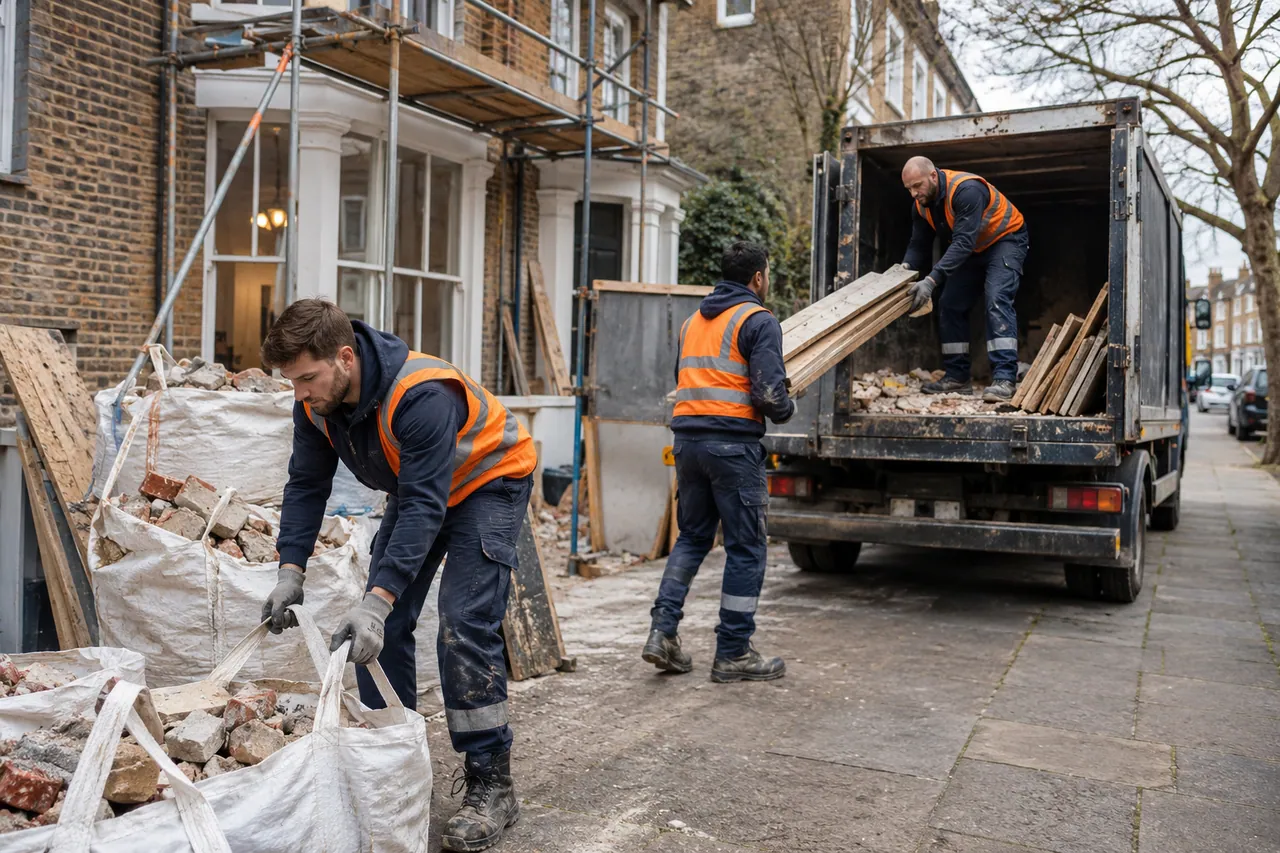
How we organise builders clearance
The collection starts with the site postcode, material description and access details. We then discuss the scope and price. An enquiry about an urgent pile does not reserve a vehicle by itself: the visit is agreed with the team. Same-day requests can be considered subject to availability and the suitability of the load.

Describe the materials
Send the site postcode, approximate quantities and photographs showing the whole pile, including dense or awkward waste.

Agree the collection
We discuss the materials, access, price and available visit arrangements before treating the job as booked.

Carry and load
The collection covers the agreed waste, with the carrying route and loading point forming part of the planned work.

Remove the site waste
We transport the collected materials for onward waste handling, with recycling pursued where appropriate to the waste stream.
Access details that change the work
Our team needs the route from the waste to the vehicle to be understood. We ask about a site entrance, shared passage, temporary obstruction or restricted delivery area where it affects collection. We do not assume that a vehicle can stop directly beside every London property. Where parking or loading arrangements need resolving, these are discussed before the visit rather than left implicit in the address.
| Site detail | What the enquiry covers | Effect on the collection |
|---|---|---|
| Upper-floor work | Floor level, stairs and the location of waste | The carrying task differs from ground-floor loading. |
| Rear access | Alley, side passage or route through the building | Width, distance and turns affect movement of bulky pieces. |
| Loading position | Available stopping point and restrictions | Vehicle access must be discussed for the actual property. |
| Active work area | Where ongoing work and collection overlap | The agreed pile needs to be identifiable during the visit. |
Separate rubble, bulky pieces and lighter waste

A clear load description allows us to discuss removal without making assumptions about vehicle capacity. We ask whether rubble is already bagged, how many piles are involved and whether there are long boards or bulky removed units. There is no universal number of bags that represents every building job: bags differ in size and contents, and a nominal full load does not describe the weight of dense material.
If the project produces additional waste after the quote, the collection scope needs updating. We can discuss a later visit or revised load, but do not represent an earlier estimate as unlimited clearance of everything generated by continuing work. This matters particularly where demolition, deliveries and fitting work are happening on different days and the visible pile is changing between enquiry and collection.
Handling different construction materials
We arrange onward disposal for the waste collected and seek recycling where the material and receiving route permit. Timber, metal, masonry and plasterboard do not all present the same handling requirements. Identifying the streams in advance is more useful than promising one recycling outcome for a mixed load. We discuss the collected materials and appropriate disposal route as part of the removal arrangement.
| Material stream | Information recorded | Scope of our service |
|---|---|---|
| Mineral waste | Rubble, tiles and concrete content | Collection and transport of the accepted dense material. |
| Wood and metal | Main materials and unusual components | Removal with the agreed construction load and suitable onward handling. |
| Plasterboard | Whether present and approximate quantity | Specific discussion rather than hiding it within general debris. |
| Unknown or hazardous items | Description and any available identification | Acceptance requires clarification; no blanket inclusion is assumed. |
A quote for the building waste you have
The quote considers the amount and type of waste together with the carrying and loading involved. The quote reflects the material mix, amount and loading work for the site. A small, heavy pile and a larger pile of lightweight offcuts are different jobs. The same applies to material beside a vehicle access point compared with material upstairs behind a long route through a house.
Your collection discussion establishes what is included, where it is located and whether there are access restrictions. Where the contents are not clear enough to confirm, we explain what further information is needed. The purpose is to agree the removal work before it starts, rather than use a low headline price that bears no relation to the site.
| Quote factor | Detail needed | Why it is relevant |
|---|---|---|
| Quantity | Whole-pile photographs and approximate amounts | Establishes the scale of removal rather than one visible corner. |
| Material mix | Dense waste, boards, metal and lighter debris | Different materials affect loading and disposal arrangements. |
| Carrying | Floors, distance and narrow routes | Defines the labour involved in reaching the vehicle. |
| Timing | Desired collection date and site constraints | Allows the team to discuss a suitable available visit. |
What remains outside the agreed clearance
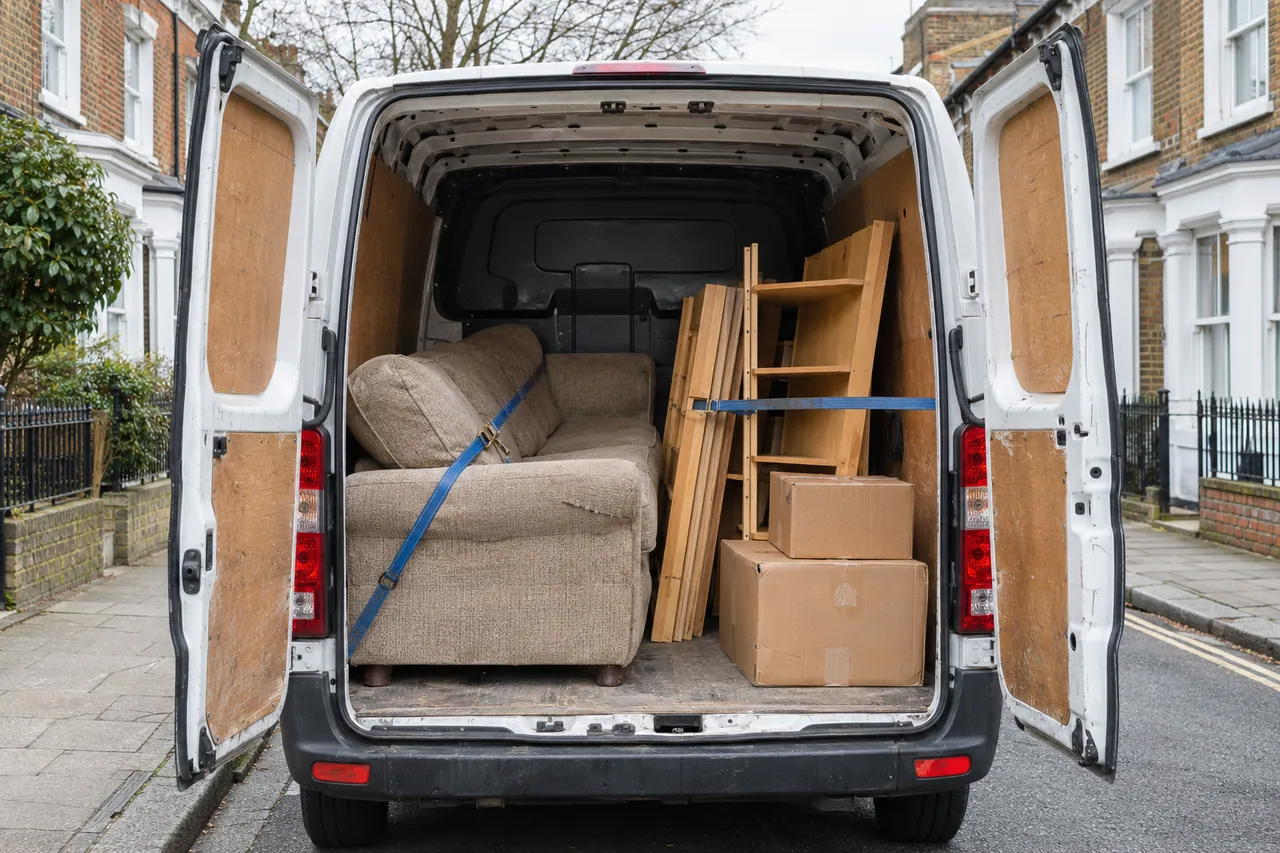
Our builders clearance removes the waste identified for the visit. It does not imply demolition, structural work or making unidentified hazardous materials safe. Retained tools, building supplies and fixtures are kept outside the removal scope. If furniture or other property contents also need removing, describe them separately; we can discuss the appropriate service rather than quietly treating every object on site as building waste.

Builders Clearance: collection and loading
Builders clearance questions
Can you collect rubble as well as timber?
Yes. Our builders service includes rubble and timber among the accepted waste categories. We discuss their quantities separately because dense masonry and long wooden pieces create different loading requirements. Describe both when requesting the quote, including whether rubble is loose or bagged.
Is plasterboard part of your service?
Plasterboard is listed within our builders clearance service. Tell us it is present and describe the amount. We discuss the handling arrangement for that stream rather than assume it can be included without identification in a mixed debris pile.
Can you clear waste from a rear extension?
We can discuss collection from that work area. The side passage, internal route, steps and distance to the vehicle need describing. A rear extension address alone does not establish whether the route is suitable for all the pieces in the load.
Do you remove waste while building work continues?
We can arrange removal of an agreed accumulated load during a project. Identify the pile and requested timing. Any waste produced after the scope is agreed needs discussing, so the visit is not mistaken for unlimited clearance of an active site.
Can I request same-day builders clearance?
Yes, ask the team about availability. The materials, location and access still need checking before a visit is agreed. Submitting a local enquiry does not confirm a collection slot or guarantee that a vehicle is available that day.
Do you dismantle the structure being renovated?
This page covers collection and removal of building waste. Demolition, structural alterations and specialist treatment of unknown materials are not automatically included. Explain any work beyond carrying and loading so its suitability can be clarified before collection.
What should my builders clearance enquiry include?
Provide the postcode, types and approximate amounts of waste, photographs of the whole pile, floor level and route to the loading point. Include any long, very heavy or unidentified pieces. Those details allow the discussion to focus on the actual collection.
Arrange your collection
Tell us about your builders clearance
Open our booking form to arrange your collection.
Continue to our booking form to confirm your items and contact details.