
Which Garage Containers Need Identification Before Disposal?
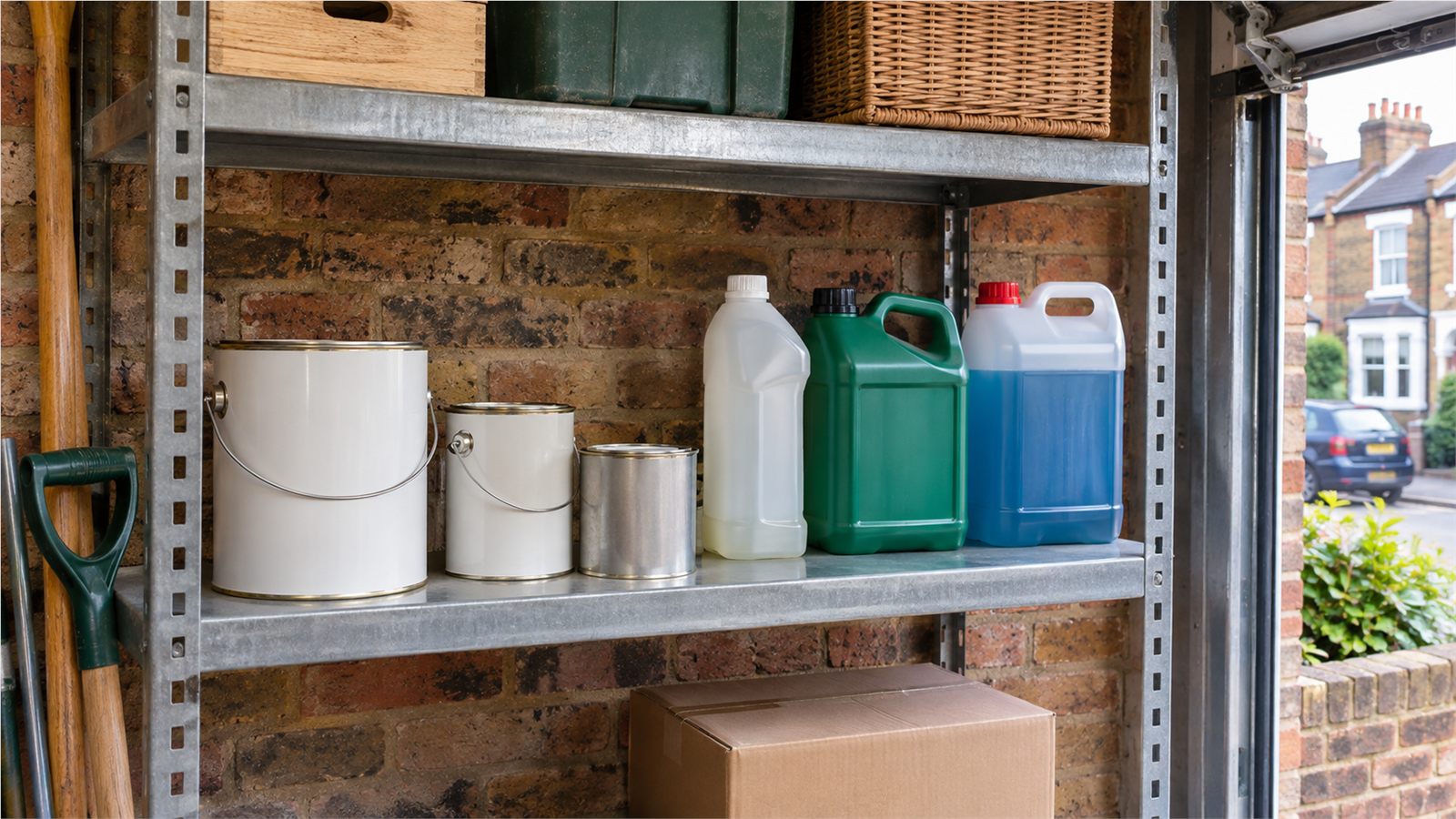
A garage shelf can hold a surprising mixture of tins, bottles and canisters. Some contain ordinary products, some are empty and some hold materials that cannot go into mixed household rubbish. The outside shape is a poor guide: a metal tin might contain usable paint, dried residue or a liquid solvent. Before a garage clear-out, identify each container by its label and condition, then ask the appropriate receiving service what it accepts.
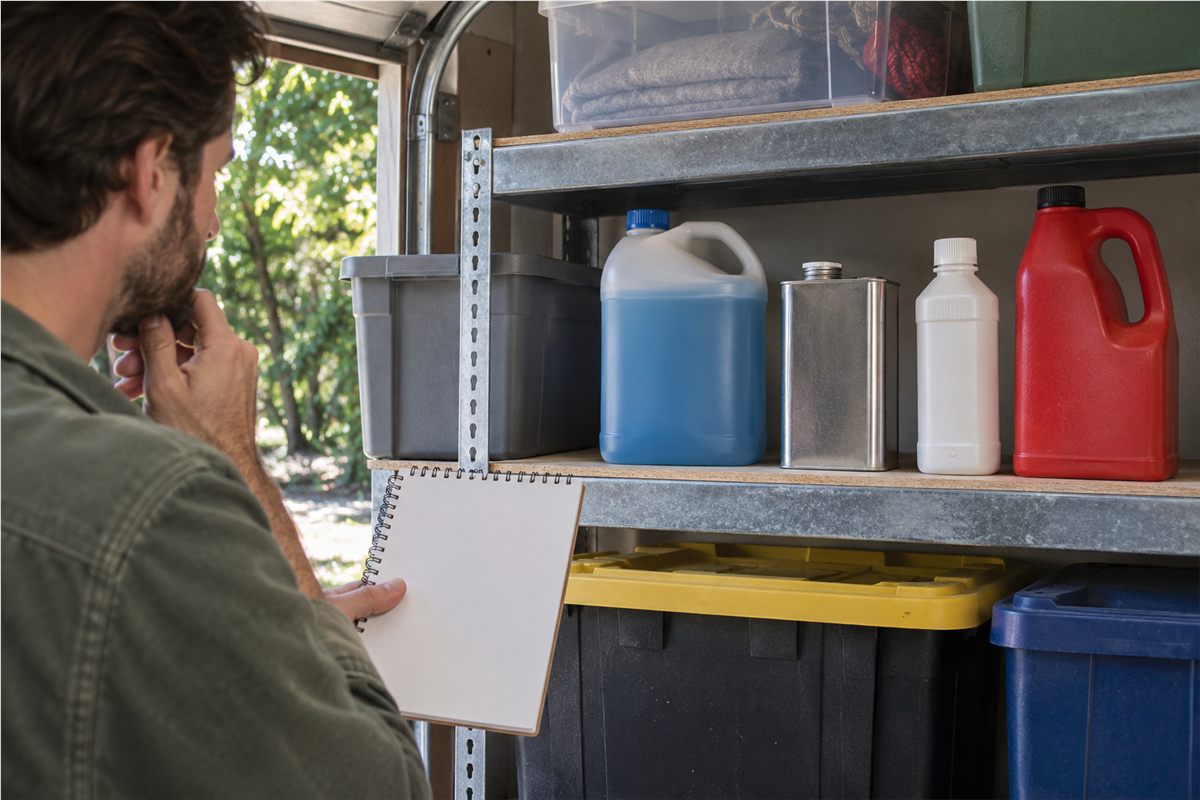
The aim is not to become a chemist or to open unknown packaging. A clear inventory is enough to keep uncertain materials out of a general collection and direct the enquiry to the right council or specialist service. If you cannot identify a container, record that uncertainty rather than guessing.
Start with labels you can read safely
Take stock from a position where you can see the containers without moving an unstable pile. Read the product name, intended use and any warning symbols on intact labels. Write down the approximate container size and whether it appears full, partly used or empty. Photograph the label if it is legible. Do not remove lids or sniff contents to test what a faded bottle might hold.
Common groups include paint and decorating products, garden chemicals, vehicle fluids, cleaning products and pressurised containers. Keep them as separate inventory lines. “Six tins from the garage” gives a receiving service very little information; “two tins of water-based emulsion, one labelled white spirit and three unlabelled bottles” makes the problem clearer without handling any substance.
If the label is missing, say so. A product may have been decanted into another container years ago, making the outside name unreliable. Do not pour it into a new bottle to make the shelf neat. Leave it undisturbed and seek guidance from the local hazardous waste service about how to identify or present it.
Look for different types of paint and decorating product
Paint is a good example of why labels matter. A usable water-based emulsion, an oil-based gloss, a paint thinner and an empty tin are not the same waste stream. North London Waste Authority’s paint guidance distinguishes reusable paint and water-based emulsion from oil-based paint or varnish, which it routes to hazardous collection. Recycle Now also says empty or dry metal tins may be accepted at many recycling centres, but asks users to check the local authority first.
Do not assume an old tin is dry because it feels light. Do not open damaged or leaking tins to inspect them during a general sort. Record what is written on the label and ask the receiving service what it needs to know. If you have many tins from a decorating project, count them by type and size so the enquiry can be assessed correctly.
Keep items intended for reuse apart from waste. A neighbour or community paint scheme may want a sound, usable product, but acceptance depends on the exact scheme. A tin with unknown contents should not be offered as a usable colour just to avoid arranging disposal.
Identify vehicle fluids without treating them as scrap
Engine oil, antifreeze, brake fluid and fuel are distinct products. An old motor-oil bottle may contain used oil or a different liquid, so do not infer the contents from the branding if the bottle was reused. Ask the person who stored it if possible. If the answer remains uncertain, tell the local service that you have an unidentified liquid rather than calling it oil.
North London Waste Authority lists reuse and recycling centres as a route for used engine oil in its area and warns against pouring it into drains. This is not a route for every garage chemical, and it is not a general London-wide rule. Check the correct local facility and its current acceptance conditions before travelling.
Do not mix different fluids to reduce the number of containers. Mixing can make identification and proper disposal harder. Keep the original labels visible and let the receiving facility advise on each item. A general garage clearance provider should not be expected to decide the contents of an unmarked bottle at the door.
Treat garden and household chemicals as separate enquiries
Weed killers, pesticides, cleaners and other chemical products may have specific disposal routes. Some are old enough that their labels have become unreadable. Keep them out of the bag of ordinary tools and household clutter. The City of London’s household hazardous waste service collects certain boxed chemicals and paint for residents in participating boroughs and asks applicants for the names, number and size of containers. Its page lists exceptions, so check your own borough and the current rules before applying.
If a product is leaking or damaged, do not attempt to repack it according to a generic blog instruction. Avoid contact and seek direct advice from the relevant authority or specialist. Explain the condition, location and label information. The appropriate response depends on what the substance is and how the container has failed.
Do not let a familiar brand name override the actual condition. A clean, closed bottle of household cleaner is a different enquiry from an unlabelled, damaged container on a dusty shelf. Describe both accurately.
Pressurised containers deserve their own line
Gas cylinders, aerosol cans and fire extinguishers may be stored alongside paint and tools but should not be treated as ordinary empty metal containers. The receiving route can depend on the container type, remaining contents and the provider. Record the visible marking and approximate size. Check the council or supplier’s current return instructions rather than putting them into a mixed metal pile.
Do not test a valve, puncture a container or remove fittings to see whether it is empty. The inventory stage is observational. A specialist service can tell you what information it needs for safe acceptance.
Make an inventory that separates known from unknown
Create columns for product name, type, container size, condition and proposed route. Mark unknowns clearly. For example: “One five-litre container labelled engine oil, contents uncertain”; “Two intact paint tins labelled water-based emulsion”; “One unlabelled bottle, do not include in general collection.” A photograph can support the description, but the written uncertainty matters too.
Include the shelf or area where each group was found. If several people are helping, this prevents a tin that is awaiting advice from being returned to the ordinary rubbish pile by mistake. A small numbered label beside the container can match a line in the inventory, but do not cover the original product information. Keep photographs and notes together. When speaking to a service, explain if the label is partly readable rather than transcribing only the words that seem familiar. A cropped photograph can omit an important warning or a second product name on the same container.
Ask the council or specialist service about each unusual group. Do not assume that one appointment will accept everything on a mixed shelf. Some facilities may take paint but not fuel; some may require an application before collection. The service’s own acceptance list is the deciding source.
Once those containers are set aside, the remaining ordinary items can be discussed through the garage clearance service. Make the separation explicit. Rubbish Begone’s general clearance page should not be interpreted as a promise to collect unidentified chemicals, oil, fuels or other specialist waste.
Finish the sort without guessing
The best result is a shelf where each container has either a known reuse destination, a confirmed disposal route or a pending enquiry. Unknown is a legitimate status. It is safer and more useful than a false label applied simply to finish the job.
Do not let the presence of a few uncertain tins prevent you from identifying all the straightforward tools and boxes around them. Define a separate scope for ordinary garage contents and leave the questionable containers in place until the right service has advised. A good clear-out is based on truthful descriptions, not on turning every object into “general rubbish” by default.