
What Paperwork Should You Review Before a Property Clearance?
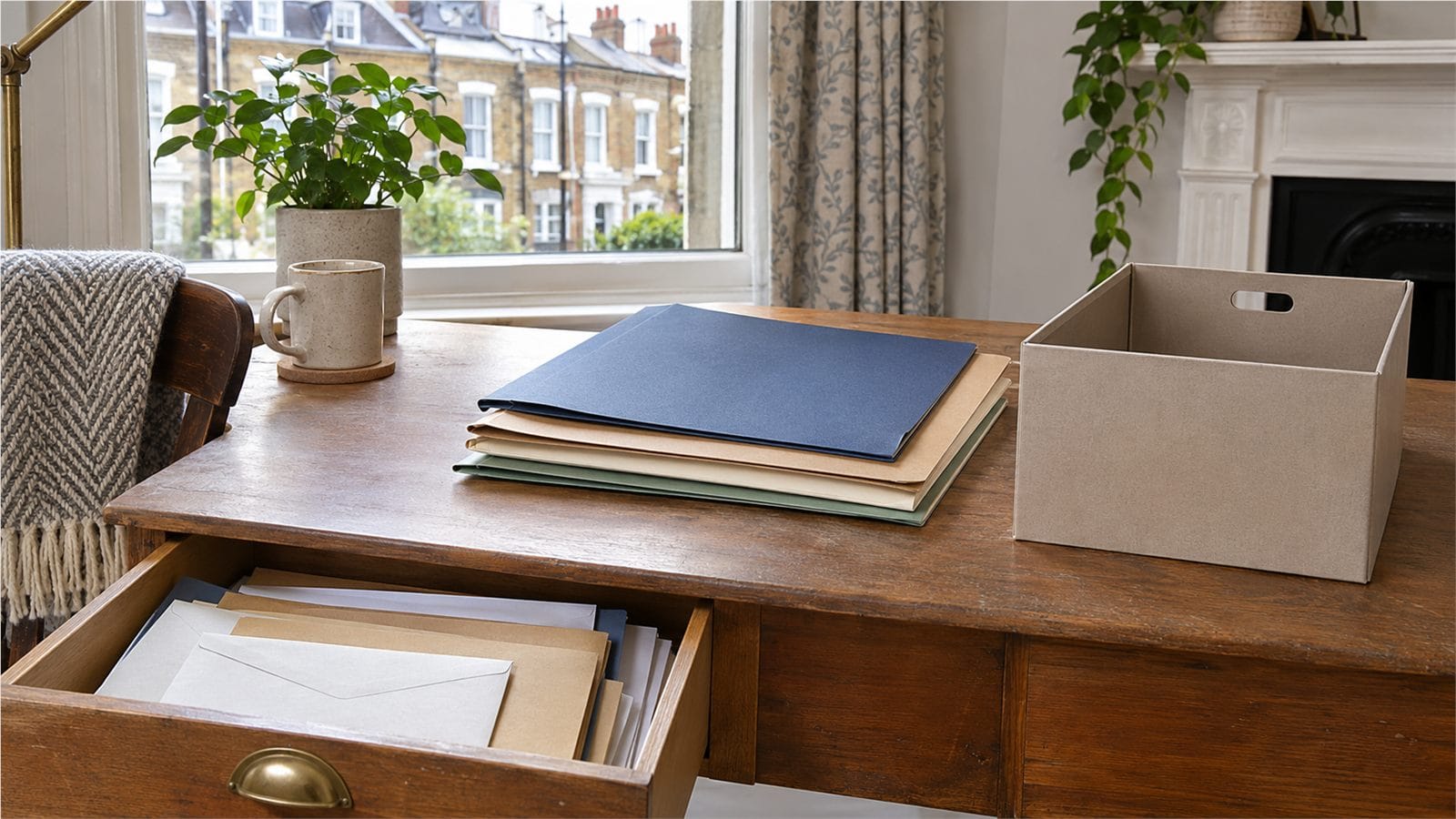
Paper can be the least visible part of a property clearance and the hardest to replace afterwards. A drawer of envelopes may contain old leaflets, but it can also hold a passport, a current insurance letter or a photograph tucked inside a folder. The practical answer is not to keep every sheet forever. It is to create a short review stage before boxes and furniture are labelled for removal.
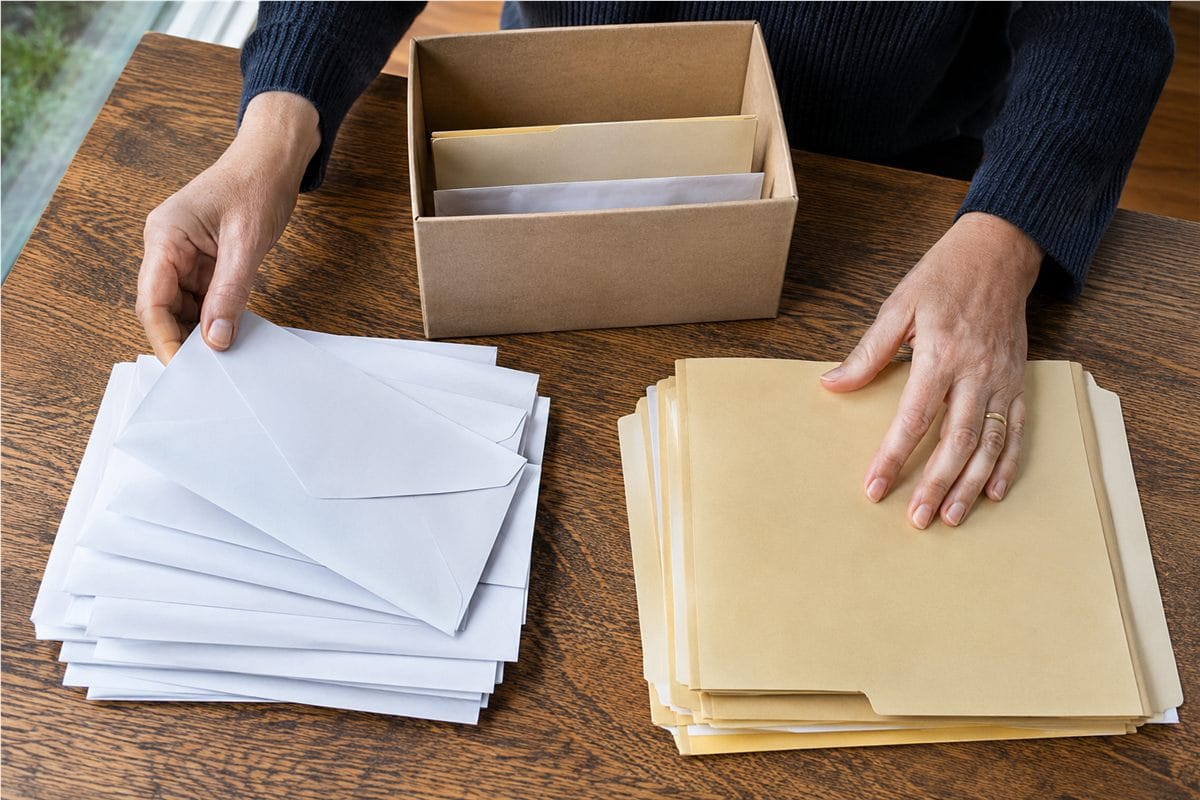
This is especially useful when several relatives, tenants or property managers are involved. The person arranging collection may not know which records matter to the owner. A separate holding area and a simple decision log can prevent important papers from disappearing inside a mixed load.
Stop ordinary paper becoming an unexamined waste stream
Walk through each room and look for places where papers collect: desk drawers, bedside tables, kitchen cupboards, filing cabinets, wardrobes and bookshelves. Check envelopes and folders rather than judging a stack from its top page. Look inside books with papers protruding from them. A document may have been stored wherever there was space, not in a labelled filing cabinet.
Set aside a box marked “documents for review”. It should not be placed beside the rubbish bags. Keep it dry and limit who has access to it. If the property belongs to someone else or several people have an interest in it, make clear who is authorised to decide what can be destroyed. Do not treat the contents of an unlabelled drawer as disposable because the furniture itself is leaving.
Use a quick first pass. Separate identity and official documents, financial and property papers, personal correspondence, photographs and apparently routine leaflets. You can examine details later. The immediate job is to stop potentially important or private material being loaded without a decision.
Give identity and current records priority
Look for passports, driving licences, birth and marriage certificates, current bank or insurance documents, property information, medical records, keys and access cards. The exact set depends on the household. Put each type in a labelled folder rather than one large mixed envelope. Record where the folder has been moved and who holds it.
Do not assume that an old-looking document is valueless or that a recent document is safe to discard. A decades-old certificate may be difficult to replace; a recent advertising letter may be irrelevant. The value lies in its purpose and ownership, not its age. If you cannot tell whether a record must be kept, mark it pending and ask the appropriate person or adviser before destroying it.
Personal notes and correspondence deserve an explicit decision too. They may have sentimental significance even when they have no formal role. Ask family members what they want to review. A small group of letters can be photographed for remote discussion without sharing the entire property inventory publicly.
Protect private information during the sort
Documents can reveal addresses, account numbers, dates of birth and other details. Keep the review box in a controlled place rather than leaving it open to every visitor or posting clear photographs in a public group. If you make digital copies for family review, share them only with the people who need them and use a suitable private channel.
The Information Commissioner’s Office identity theft guidance advises keeping documents containing personal details in a safe place and shredding or destroying personal papers that are being thrown away. That is a useful consumer practice. It does not mean every paper in a property must be shredded. Separate records worth keeping, ordinary non-sensitive paper and sensitive paper that is no longer needed.
Check the local council’s instructions before placing shredded paper into recycling. The accepted presentation can vary. The ICO’s guidance on document disposal also explains why the information should not remain legible after disposal. For an organisation’s records, formal retention and data-protection responsibilities may apply; seek the appropriate advice rather than using a household tidy-up rule for business files.
Make destruction a separate task
Do not shred while you are still deciding what the document is. Put clearly identified, no-longer-needed sensitive papers into a secure destruction group. A second person can review the list if decisions are consequential. Once destroyed, the information cannot be put back together easily, which is the point of secure disposal but also the reason to check first.
If there is a large volume, you may consider a reputable document destruction service. Confirm what the service accepts and how records are handled. Do not include the papers in an ordinary furniture collection on the assumption that privacy will be dealt with automatically. The removal of physical objects and the destruction of information are different jobs.
Check digital media mixed with papers
USB sticks, memory cards, external drives, CDs and DVDs are often kept in the same drawers as receipts and letters. Put them in a separate labelled container for review. A small black memory card can be overlooked in the bottom of a box of paper clips. A disc may hold family photographs or documents not stored elsewhere.
The ICO’s guidance on deleting data from devices notes that personal information can live on removable media as well as computers and phones. It warns that a device that no longer turns on may still contain accessible data. Do not assume a broken laptop or an old USB stick is harmless. Decide whether its contents need to be copied, kept or securely removed before the object goes to an electrical recycling route.
If someone else owns a device or media card, do not wipe it without their authority. Label it pending and ask. The quickest disposal option is not the right one when the data or ownership is uncertain.
Record who approved the final decision
Use a simple log for categories rather than listing every leaflet. For example: “Blue folder: retained by owner, 13 November”; “Three boxes of routine household paper: reviewed, recycling route checked”; “One sealed envelope: pending review by family.” This makes the clearance scope understandable to someone who was not present during the sort.
If a reviewer cannot come to the property, do not send photographs of every document by default. Start with a description of the group and ask what they need to see. A picture of a document can reveal more personal information than the question requires. For a small number of important papers, arrange a private review and record the decision beside the item code. If the person cannot decide in time, keep the document in the holding area and exclude it from the collection. This preserves the choice without stopping unrelated furniture and ordinary rubbish from leaving.
When a paper group is ready to leave, keep it distinct from items still under review. A colour label or a separate room works better than verbal instructions alone. If the person opening the property for a collection is not the organiser, give them the final selection list. They should not have to decide whether a box of financial records is rubbish at the door.
The eventual house clearance enquiry can describe the rooms and unwanted items once the document review is complete. It does not require copies of private documents. Say which boxes are excluded from removal and keep them physically apart. If an unreviewed box turns up later, add it to the pending group rather than quietly expanding the collection.
A practical final walk-through
Before the collection, open the drawers of furniture that will leave and check shelves and boxes one last time. Confirm that the document holding area has not moved into the removal pile. Ask the authorised people whether they have finished their review. Photograph the labelled keep and remove areas if several helpers are involved, but avoid exposing private content in those images.
The aim is a clear boundary: documents to retain are safe, uncertain material is still available for a decision, and papers being discarded have an appropriate privacy and recycling route. Once that boundary is established, the physical clearance can proceed without asking a removal crew to make choices about someone’s records.