
How to Create a Room Inventory Relatives Can Review Remotely
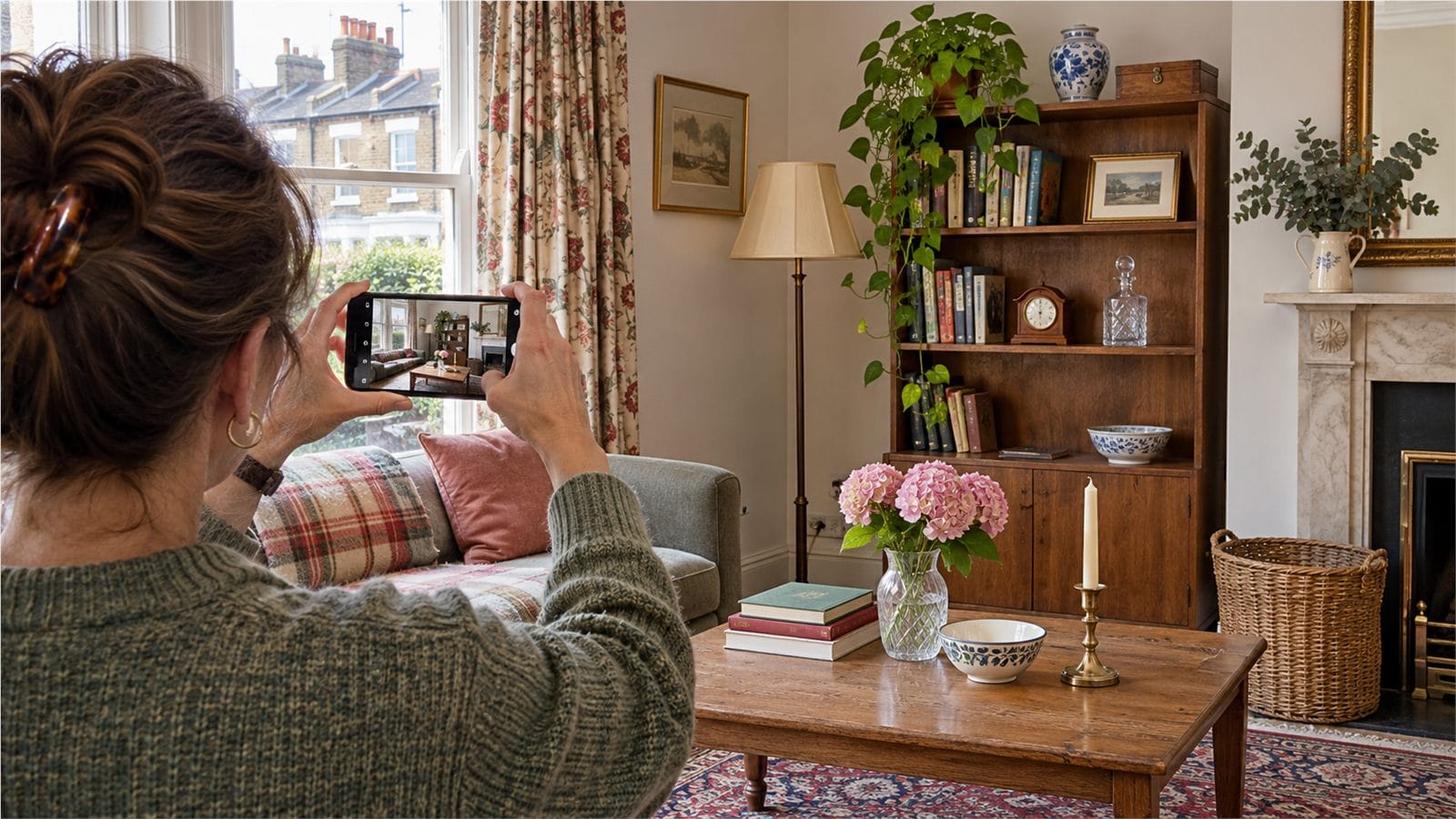
Clearing a family property becomes harder when the people who need to make decisions live in different places. One relative may be able to visit the house, while another remembers which cabinet holds the old photograph albums. A video call helps, but it is easy to forget what was agreed once the call ends. A room inventory gives everyone a shared reference before anything is moved, donated or taken away.
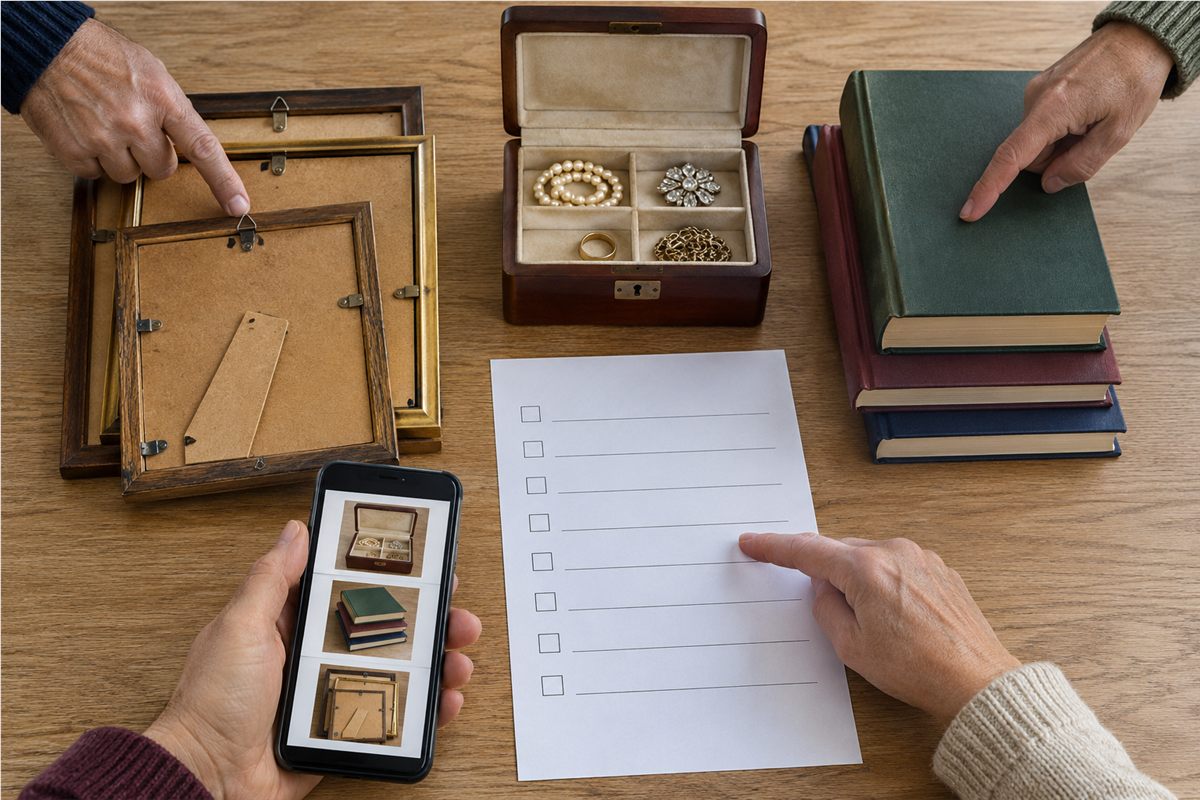
The useful version is simple. It identifies each area, shows the significant objects, records who has decided what, and leaves uncertain items untouched until they are resolved. It is not an attempt to catalogue every teaspoon. It is a way of reducing mistakes when several people cannot stand in the same room together.
Agree what the inventory is for
Start by deciding which decisions need remote review. Perhaps the family wants to identify keepsakes and documents before a whole-house clearance. Perhaps one person needs to approve furniture leaving the property. Write the purpose at the top of a shared note. This keeps the inventory focused: a list for preserving family items needs more detail about drawers and boxes than a list of ordinary broken furniture.
Choose one person to maintain the master copy. Others can comment, but a single organiser should update the final status of each item. Otherwise one spreadsheet may say “donate” while a message thread says “keep”. State who can approve a disposal decision. If authority is uncertain, leave the item pending rather than assuming the person taking photographs can decide for everyone.
Give the project a clear date and property reference. A house can change quickly as relatives take belongings away. An inventory created on Monday should not silently be treated as current after several visits. Keep a short change log noting what left the property, who collected it and when.
Divide the property into places people recognise
Use normal room names: front bedroom, kitchen, sitting room, loft and garage. If two rooms share a name, add a distinctive feature such as “bedroom with bay window”. A rough sketch is optional, but a consistent naming system is essential. Do not rename “back room” as “study” halfway through the project.
Inside each room, divide items into obvious zones. You might use “window wall”, “left-hand wardrobe” and “two boxes under the bed”. These descriptions help a remote reviewer find the object in the photographs and help a person on site locate it later. The inventory should answer both questions: what did we decide, and which physical object did we mean?
Take one wide photograph of each room before moving anything. Then photograph smaller zones and important items. The wide shot provides context; the closer view shows labels and condition. If you only take close-ups, a remote relative may recognise a vase but not know which of three similar vases is pictured.
A workable naming method
Name files with a room code, zone and number: `KITCHEN-CUPBOARD-03` or `FRONT-BEDROOM-WARDROBE-02`. Put the same code in the inventory row. You do not need special software. A shared spreadsheet or document can hold the code, a brief description, a photo link, an agreed decision and a note. Consistency matters more than the tool.
Avoid relying on automatic photo filenames such as `IMG_4826`. They mean nothing to a person reviewing hundreds of images later. If renaming every file is too slow, create a numbered contact sheet or put the photographs into clearly named room folders and refer to their visible order. Test the system with one room before applying it across the house.
Record decisions rather than vague impressions
Use a small set of statuses: keep, offer to a named person, donate, remove, and pending. Add the name of the person who made or confirmed the decision. “Mum’s table” is a useful description but not a complete instruction. “Offer oak side table to Maya; await reply by Friday” makes the next step clear. If Maya declines, record that before changing the status.
For boxes, list what you can actually see. “Cardboard box marked Christmas, unopened” is more honest than “Christmas decorations” if nobody has checked inside. A box may contain photographs, paperwork or a mixture of items. Open it with the appropriate person present or ask for a remote review of its contents. Photograph an open box from above if it needs a decision, but avoid spreading everything across the floor without a way to put it back in order.
Do not reduce sentimental decisions to a hurried vote. If two relatives disagree, mark the item pending and move on to something straightforward. A pending shelf is a small inconvenience; removing the wrong family object can be irreversible. Set a clear date to revisit unresolved items so the whole clearance does not stall indefinitely.
Keep private and valuable items in a separate list
Documents, keys, photographs, jewellery and digital devices deserve their own review. They are easy to miss among ordinary household goods, and photographs of them may be sensitive. Keep the record accessible only to the people who need it. An inventory of a property is not something to post in a public sharing group.
Check drawers, books and boxes before labelling a cabinet for removal. A document slipped between magazines can be overlooked when the whole stack is described as paper. Put anything requiring review in a clearly marked holding area. The person on site should know that “pending review” means it stays put, even if the rest of the room is ready.
If a relative wants a particular item, record how it will reach them. A decision to keep a heavy bookcase in another city is incomplete without transport, timing and a person responsible for collecting it. The inventory need not solve every logistical problem immediately, but it should show that the object is reserved and not available for disposal.
Make remote review manageable
Send reviewers a small batch at a time. Twenty labelled photographs from one room are easier to decide on than an unstructured folder containing hundreds of pictures. Include a short explanation of what response you need and by when. For example: “Please mark keep, offer, donate or pending for these ten kitchen items by Sunday evening.”
Use comments or a shared decision column so the context stays beside the item. A reply saying “keep the blue one” may be ambiguous if the folder contains several blue items. Ask reviewers to refer to the inventory code. For uncertain objects, a short live video call can supplement the photographs. Afterwards, update the written decision while everyone still remembers the discussion.
Not every item needs a group discussion. Agree thresholds in advance. Everyday kitchen utensils may be managed by the organiser; family photographs and named heirlooms may need a wider review. Clear rules make the process faster without letting important decisions slip through.
Turn the inventory into a clearance scope
Once the decisions are complete, make a separate list of what is actually leaving the property. The working family inventory may contain personal notes and unresolved details that a collector does not need. A clearance scope should identify rooms, large items, bags and boxes for removal, plus what is staying. It should also note access and any areas explicitly excluded.
If the load covers many rooms, the house clearance service is a relevant point of contact for discussing the removal. Share the practical scope, not the private family discussion. Photographs of the removal pile can help with the collection enquiry after the keep and donate groups have been separated. Check that no item still marked pending appears in those pictures.
Walk through the property once more before the agreed visit. Compare the physical labels with the final list, especially in rooms where relatives have collected things since the inventory was made. Make a note of changes and tell the team if the load is different from the one used for the quote. The inventory is useful only if the selection on paper matches what is on site.
A small system that prevents large mistakes
A room inventory works because it removes ambiguity. Each important object has a place, a photograph and a decision that can be traced back to the people involved. The organiser can keep progressing even when relatives are travelling or working, and reviewers can concentrate on a manageable set of choices.
Start with one room, test the file names and decision labels, then extend the system. Leave uncertain belongings alone until they are resolved. When the final removal list is ready, it should be much shorter and clearer than the full family inventory. That is the point at which a property clearance can be discussed with confidence.