
Should You Dismantle a Wardrobe Before Moving It?
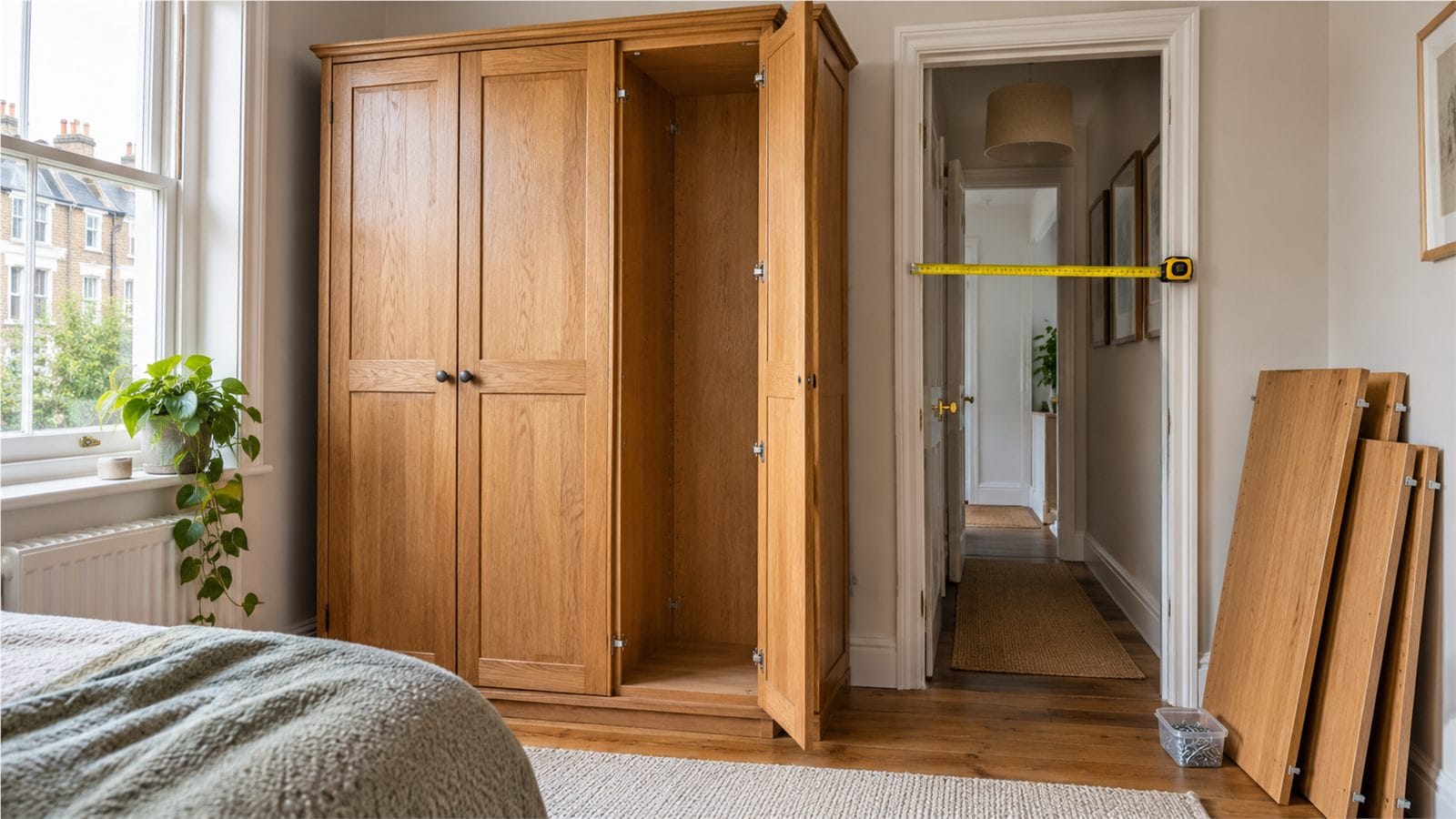
A wardrobe that fits neatly in a bedroom may be difficult to take through the doorway. That does not automatically mean it should be taken apart. Some wardrobes can be separated into designed sections and reassembled; others lose strength when old fixings are removed. A decision made after measuring the route and understanding the construction is better than discovering halfway through that the back panel was holding the frame square.
Begin with the intended destination. Is the wardrobe moving to another room or home, being given away, or leaving as unwanted furniture? A reusable wardrobe deserves more care with joints and fittings. An item going for disposal may still need a safe way out, but it does not need to survive reassembly. State the goal before choosing tools.
Measure the wardrobe and the route first
Record the wardrobe’s height, width and depth. Include protruding handles, cornices and feet. Then measure the bedroom door, hall, staircase or lift it must pass through. The narrowest width alone is not enough: a long wardrobe may need room to turn at a landing or pass around a corridor corner. Look at ceiling height as well, especially if the piece would need to be tilted upright.
Take photographs of tight points. A full view of the door and the adjacent wall is more useful than a close-up of a tape measure. If the wardrobe is to be collected, share the measurements and route with the recipient or furniture removal service before anyone arrives. A team can discuss whether the item can leave whole, whether designed sections should come off, and what work is included.
Do not assume the wardrobe was carried in fully assembled. It may have been built in the room or installed before other fittings were added. A recent carpet, handrail or door change can also alter the route. Check the current opening, not a memory of how the furniture arrived.
Identify the type of construction
Freestanding solid-wood wardrobes, flat-pack frames and fitted wardrobes behave differently. A solid-wood piece may have removable doors and drawers but a rigid main body. A flat-pack unit may use cams, dowels and screws designed for initial assembly. A fitted wardrobe may be attached to the wall and integrated with skirting or trim. Do not assume removing a few visible screws will release it safely.
Find the model or assembly instructions if available. Look inside drawers or on the back for a product label. The manufacturer may provide disassembly instructions for a specific version. IKEA’s UK product information for one PAX frame includes disassembly instructions; that does not make the same steps suitable for every PAX generation or another brand. Match instructions to the actual model and fittings.
Inspect the condition of joints before deciding to reuse the wardrobe. If panels are swollen, fasteners are already loose or the frame twists when moved, dismantling and reassembly may make it less stable. A wardrobe that is not sound should not be offered as easy to rebuild. Describe its condition frankly to anyone taking it.
Check the simplest removable parts
Empty the wardrobe completely. Remove loose shelves, rails and drawers, then label where they belong. This reduces the weight of the main body and prevents parts sliding out while the piece is moved. It also lets you inspect the inner fixings. Put small fittings into a labelled bag, not an unmarked pocket that can be lost between rooms.
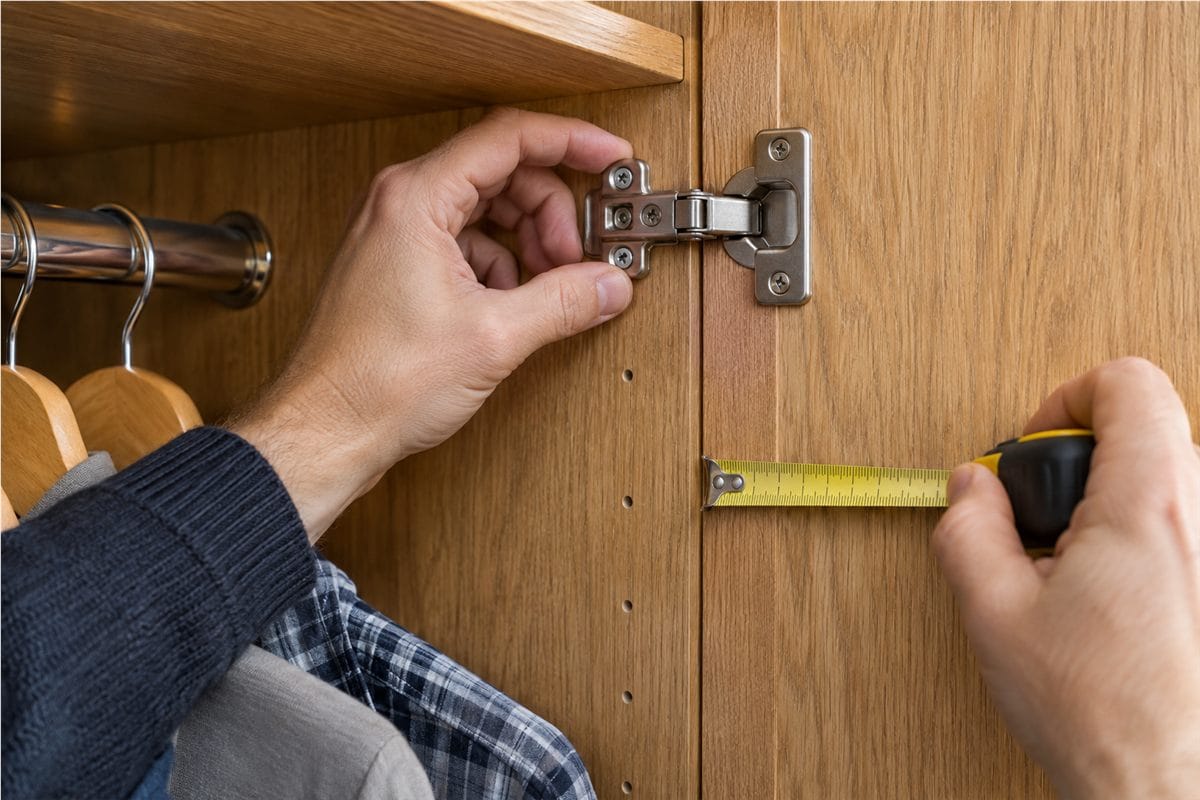
Doors may be removable on their hinges, but photograph each hinge position and note which door is left or right. Mirror doors need particular care because the panel is heavy and breakable. Do not force a hinge that you do not understand. Ask for help when a section cannot be supported steadily by one person.
Taking off doors and drawers may solve the clearance problem without dismantling the frame. Measure again after they are removed. A few centimetres saved at a tight doorway can change the plan, but there is no benefit in taking a sound unit fully apart if it can be moved safely in simpler sections.
Keep the reassembly information with the item
If the wardrobe will be reused, photograph the structure before and during dismantling. Number matching panels on removable tape placed where it will not damage the finish. Put screws and cams for each stage in separate labelled bags. Include the instructions or a link to the exact model. A bundle of unlabelled boards and one mixed bag of fittings is much harder to pass on than a complete, documented wardrobe.
Check whether any part was originally glued or nailed. Removing a backboard can cause a frame to lose shape. Manufacturer guidance varies, so do not treat a generic online video as proof that your own wardrobe will go back together with the same strength. If the item is worth keeping, a professional furniture mover or fitter may be preferable to an improvised dismantling.
Know when dismantling creates more problems
Stop if you discover concealed wall fixings, electrical fittings, damaged structural panels or an unstable frame. A fitted unit may require work beyond ordinary furniture removal. If you are in a rented or managed property, check what is part of the property before removing built-in components. An item that looks like furniture may have been installed as a fixture.
Do not force a wardrobe down stairs or cut panels while people are standing in the route. The immediate goal is not to make it fit at any cost. If a piece cannot pass through without damage to the property or risk to the people carrying it, reconsider the plan and seek appropriate help.
The same caution applies if a charity or buyer is due to collect the wardrobe. Agree in advance whether the item will be whole or dismantled and who is responsible for the work. A recipient expecting a ready-to-use unit may decline a stack of panels, even if every screw is present.
Decide based on the destination
For a move to another home, preserving strength and completeness is central. Remove only what the instructions and route require; protect parts in transit; make a reassembly plan. For a donation, confirm that the receiving organisation accepts dismantled furniture. Some will only take a complete, saleable unit. For disposal, describe the wardrobe’s materials, dimensions and whether it is fixed to the property when seeking a quote.
If the wardrobe is part of a larger room clear-out, separate its contents before arranging removal. Clothes, documents and small objects inside a drawer are not automatically part of the furniture collection. Identify what stays and what leaves. An empty wardrobe also weighs less and exposes hidden fixings that could affect the route.
Before the agreed visit, make sure the access route is clear. Move smaller possessions out of the hallway and protect anything fragile nearby. If a door must be removed or another change is proposed, confirm who will do it and whether it is included. Do not assume a collection booking grants permission to alter the property.
A decision you can explain to the next person
The useful answer is usually one of three choices: the wardrobe can leave whole; designed removable parts should come off; or the item needs a more involved dismantling and perhaps specialist help. Measurements, construction and destination determine which applies. Record that decision and any limits before the day of the move.
A wardrobe is more than a rectangular box. Its joints, back panel, doors and possible wall fixings affect what can be done without damage. Measure before taking tools to it, use product-specific instructions where available, and be honest with the person who will carry or receive it. That turns a potentially chaotic job into a planned movement of known parts.