
Which Household Electrical Items Count as WEEE?
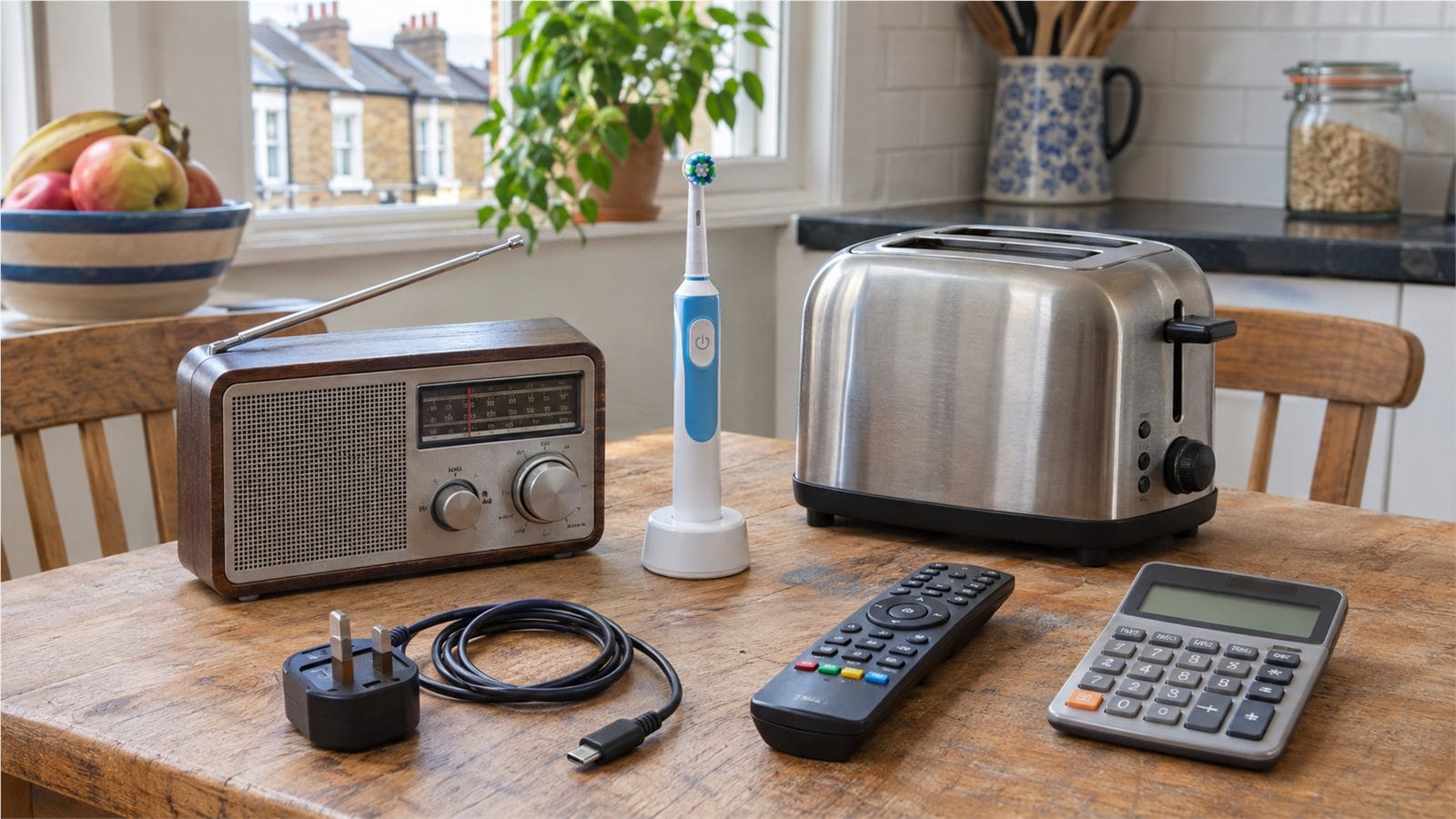
A kitchen drawer containing cables, an old radio and a broken electric toothbrush may look like ordinary clutter. It is easier to sort when you recognise that the items belong in an electrical waste stream. Waste electrical and electronic equipment, usually shortened to WEEE, covers a wide range of devices. The group is broader than large appliances such as washing machines, and it includes many objects small enough to hide inside a bag of general rubbish.
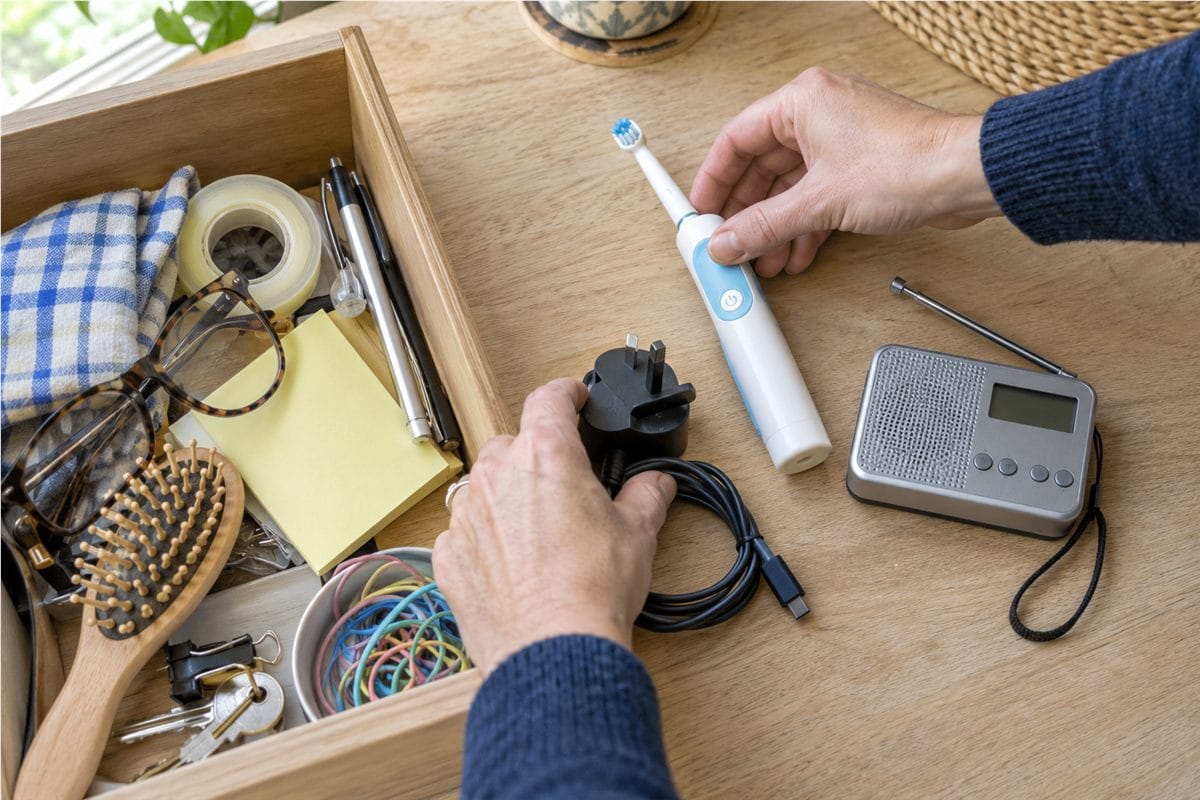
This guide helps you identify likely electrical items in a household clear-out and work out the next question to ask about their collection. It does not assume that every device can go to the same drop-off point. A retailer, council site or private collector may have different size and acceptance limits.
Start with power, not the size of the item
Ask whether the object needs a plug, a battery or an electronic circuit to do its job. A toaster is obvious. A calculator, musical greeting card, electronic toy or remote control is easier to miss. The UK government’s consumer guidance on electrical waste directs unwanted electrical products to appropriate collection points rather than ordinary household rubbish. It also explains that waste electricals should be kept separate at a household waste recycling centre.
Look beyond the main device. Chargers, power supplies and loose cables can form part of the electrical group. Do not hide them inside a box marked “miscellaneous kitchen bits”. If an appliance is still working and safe to use, consider whether someone will actually take it for reuse; ask the recipient what it accepts. If it is broken or unwanted, identify a genuine electrical recycling route.
The presence of a battery is especially important. A toy or torch may appear to be mostly plastic, but its battery changes how it should be handled. If the battery is removable without forcing the device, follow the collection point’s instructions for separating it. If it is built in, treat the whole object as an electrical item rather than trying to dismantle it.
Understand the crossed-out wheelie-bin mark
Many electrical products carry a small symbol that looks like a wheeled bin crossed through with an X. It may be printed on the device, packaging or instructions. The government’s guide says batteries and electrical products should display the symbol, which tells consumers not to put them into household rubbish when they are no longer wanted. A missing or unreadable symbol does not magically make an obvious electrical device general waste. The power source and function are still useful clues.
Check the back, underside or inside the battery compartment of a small item. On some products the marking is tiny, so good light helps. Do not spend an hour looking for the symbol on a decades-old appliance if its electrical nature is clear. The practical action is to place the device in the group for electrical reuse or recycling.
The label also does not tell you which local facility accepts the item. A recycling point for small electricals may have a size limit, while a household waste recycling centre may have separate areas for large appliances, screens and small devices. Check the current instructions before travelling.
Make a sweep through the rooms most likely to hide devices
In the kitchen, look for kettles, toasters, blenders, coffee machines, scales and handheld mixers. In a bedroom or bathroom, there may be hairdryers, trimmers, toothbrushes, clocks and lamps. A home office adds printers, routers, keyboards, monitors and chargers. The garage may contain cordless tools, work lights and electrical garden equipment.
List each device type as you find it. A short inventory such as “two hairdryers, one toaster, one broken radio and a box of assorted chargers” is more useful than “one bag of electrics”. If the load includes a fridge or other large appliance, list that separately. Size, weight and the way the appliance is handled can differ considerably from a small electrical item.
Keep accessories with the device if they are needed for reuse and are safe to include. If an item will be recycled, separate it according to the receiving site’s instructions. Do not assume you must cut off plugs or strip cables; that may make a usable device less useful and create unnecessary sharp ends.
Check the condition before offering reuse
An appliance that worked when last stored has not necessarily been tested today. Describe its condition honestly. Do not call a device “working” merely because it still has a plug and looks clean. If a charity or reuse group accepts electrical items, it will have its own assessment rules. Ask before bringing in a box of old equipment.
For data-bearing equipment, such as computers, tablets and phones, decide what to do with personal information before handover. Do not assume placing a device in a recycling box automatically removes its data. A separate guide on data preparation is more suitable for that process; the first step here is to identify the device as an electrical item and keep it out of an untracked mixed load.
Choose an actual collection route
The government guide lists household waste recycling centres as a route for electrical products. It also describes retailer take-back when buying a like-for-like replacement, and a separate obligation for certain larger retailers to accept small electricals without a purchase. Check the retailer’s current instructions and whether the item meets its size conditions before setting off. A kiosk that takes batteries may not accept a broken vacuum cleaner.
Your local council may provide a small electrical collection or a designated recycling bank. The arrangement is postcode-specific. Check the council page for the address from which the item is leaving, including any booking rules for a recycling centre. Do not apply an arrangement from another London borough to your own property. Recycle Now’s electrical recycling guide is a useful starting point for finding local options, but confirm the destination before the journey.
If the electricals form part of a larger removal job, tell the provider about them explicitly. The site’s small household appliances service is the relevant page for discussing accepted small items. Do not assume that a mixed rubbish quote includes every appliance or that the service will handle data removal. Name the items, count them and ask which route applies.
Keep batteries visible as a separate question
Some devices have batteries you can remove easily; others contain sealed or built-in cells. The government’s battery guidance says portable batteries can be taken to collection points in many shops, while a battery built into a device that cannot be removed should be treated with the electrical product. Do not pry open a sealed device simply to create a separate battery pile.
Loose batteries should never disappear into a bag of miscellaneous electrical accessories. Put them aside for an appropriate battery route and check whether any are damaged. The government warns that some lithium-ion batteries can catch fire if they are wet or damaged and placed in rubbish. If a battery is swollen, leaking or hot, do not put it with ordinary undamaged batteries; seek advice from the receiving facility or appropriate specialist service.
The distinction between an electrical device and a loose battery makes your sorting more reliable. A remote control without batteries is still an electrical product. The batteries removed from it have their own collection route. Labelling these two groups prevents a small object from being overlooked during a hurried clear-out.
Use one simple test at the end
Before a bag or box leaves the house, ask: “Is there anything here that uses electricity or stores electrical energy?” If so, take it out and identify it. Check the crossed-out bin mark where present, decide whether the item is suitable for reuse and look up the relevant local collection point. Keep large appliances, small electricals and loose batteries distinct in the inventory.
This small pause can catch a charger hidden under kitchenware, a battery-powered toy in a box of plastics or a phone in a desk drawer. The point is not to make the clear-out complicated. It is to send each item to a route that actually accepts it and to give any collector a truthful description of the load.