
EALING COLLECTIONS
Rubbish Removal in Ealing
Our Ealing rubbish removal service collects agreed unwanted contents from homes and business premises. A job can distinguish discarded project materials from new supplies and replacement items staying at the premises. We discuss where the load is held, how it reaches the vehicle and what the collection includes before confirming a visit.

Ealing collections, explained.
Can project leftovers leave while new supplies remain beside them?
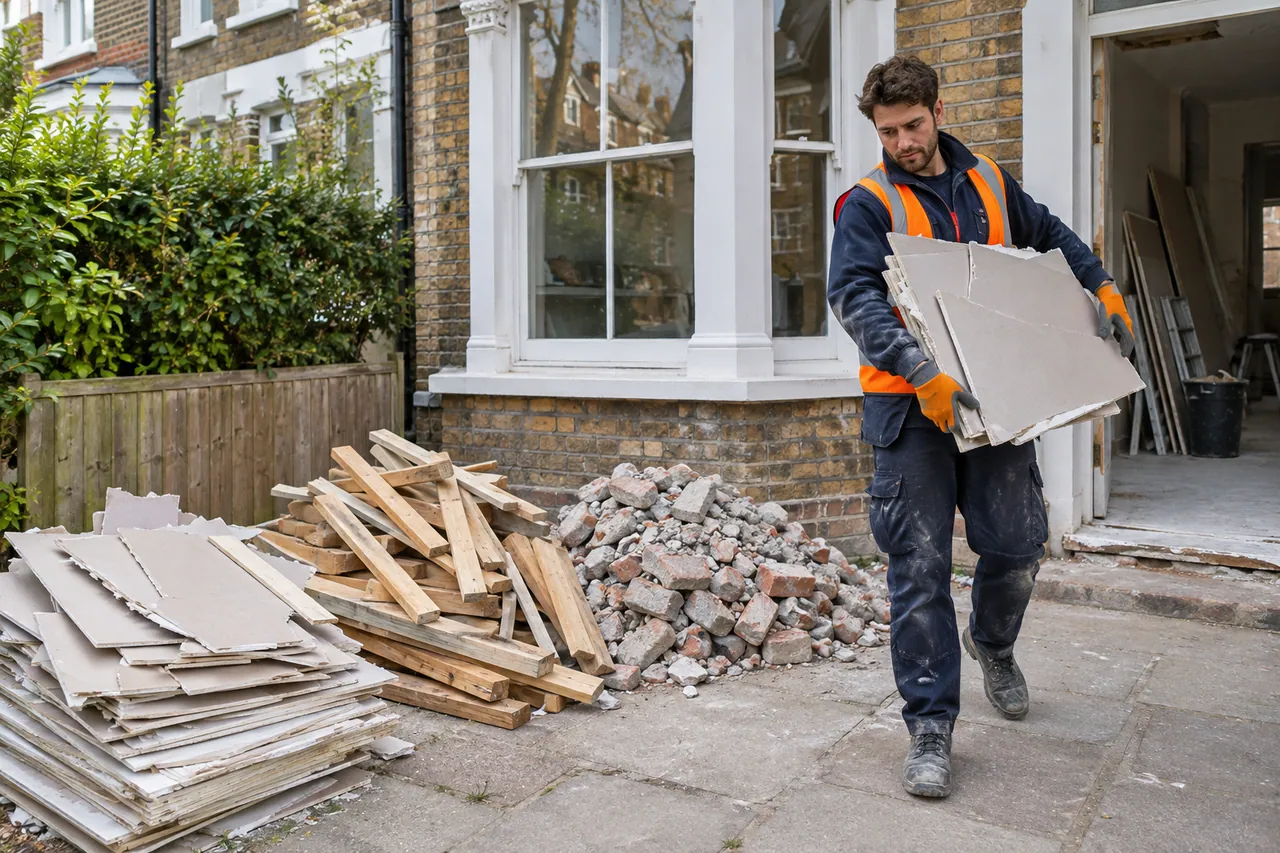
We distinguish selected waste from boards, unopened materials and replacement items being retained for the work. Describe the loose offcuts, tile pieces and discarded packaging by material and approximate amount. The access contact needs to recognise that selection, so the team does not have to decide which similar supplies the customer intends to keep.
What does a renovation waste enquiry need to clarify?
Identify the actual materials leaving, the amount and their collection locations. Explain whether cartons hold waste or retained supplies and whether any fitting is still attached. We discuss acceptance, carrying and scope before confirming the quote and available arrangements; the request does not automatically include detachment, demolition or every material generated as work continues.
The contents included in your Ealing enquiry.
| Part of the renovation selection | Information established before the visit | How we keep the scope clear |
|---|---|---|
| Tile or dense material pieces | Actual material, approximate amount and whether it is loose or contained. | Waste pieces are distinguished from unopened supplies or material the customer is retaining. |
| Timber and board offcuts | Material type, approximate dimensions and quantity of the selected pieces. | Full-length or unused boards nearby are not automatically included in the removal. |
| Discarded packaging | Cardboard, wrapping and inserts, including any contents remaining within them. | Empty material is separated from cartons or wrapping still protecting retained goods. |
| Unwanted replaced items | The fittings or furniture leaving, their current form and any work still needed. | New replacements and attached items are not silently treated as ready-to-carry waste. |
Waste material stays distinct from new supplies

A renovation-related collection needs a clear boundary between waste and materials still required for the work. Cut timber, tile pieces and discarded packaging can sit beside new boards, unopened boxes and reusable components. We identify the actual selection leaving rather than assume that every material in a work area is rubbish.
The customer or authorised contact decides which supplies are retained. We discuss the waste by substance and approximate quantity, including contents hidden in bags or cartons. If a separate household selection is also leaving, our house clearance service provides that wider description. Retained furniture, new fittings and building supplies are not included simply because they stand beside an accepted debris pile. Where work continues and the waste changes, the removal description needs updating before the visit is treated as covering the larger selection.
Combining materials into an agreed visit
Our planning process keeps the contents, access and available arrangements connected. It begins with the actual removal selection and ends with carrying, loading and transport of the accepted load. Adding another material stream or collection area requires clarification rather than being assumed part of the original job.

Separate the collection areas
We identify the rooms, storage points and outdoor locations holding the waste selected for removal.

Describe the material mix
Furniture, loose household belongings, green material and project debris are recorded as distinct groups.

Agree scope and access
The carrying routes, loading arrangement, accepted contents and quote are discussed before an available visit is confirmed.

Carry and remove the selection
The team collects the agreed pieces and materials and transports them for appropriate onward handling.
The contents and carrying behind your Ealing enquiry.


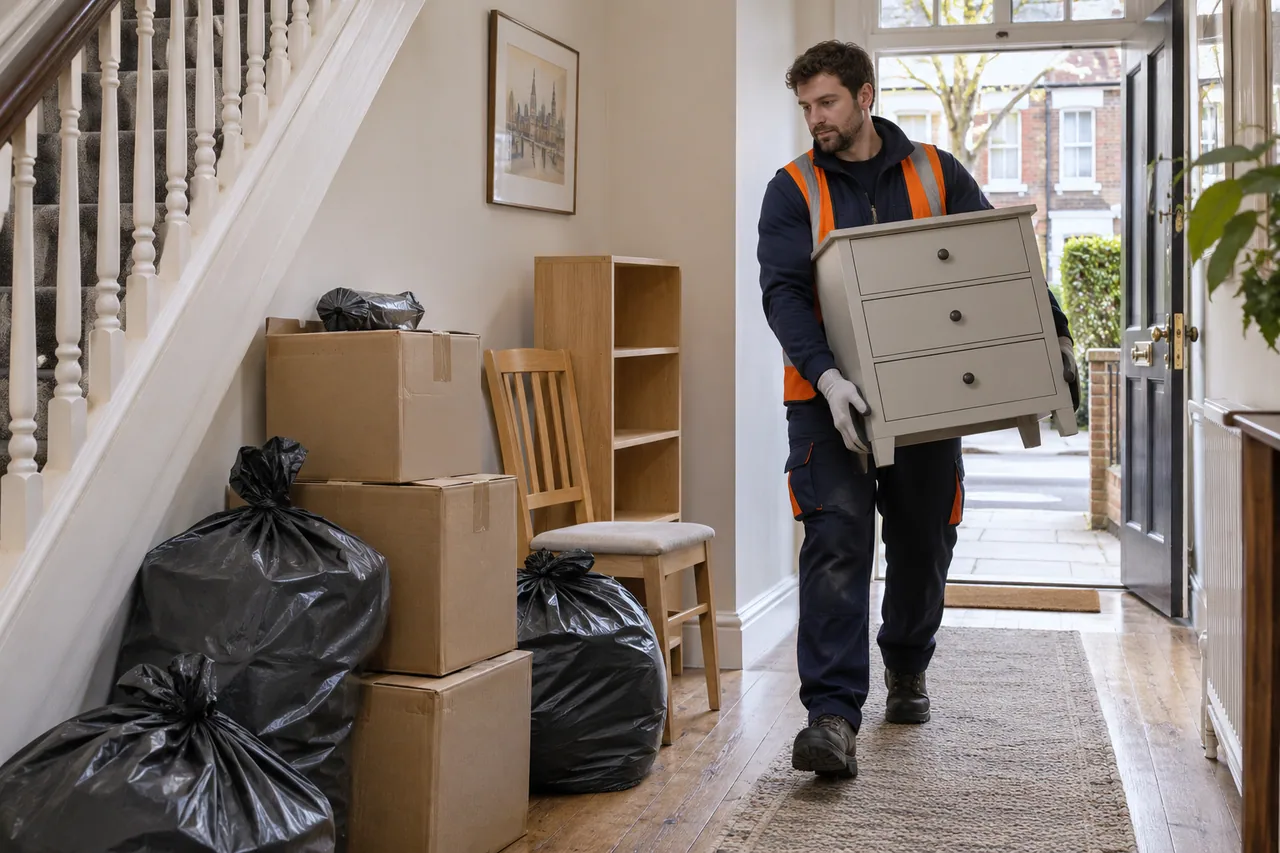
The renovation selection before acceptance
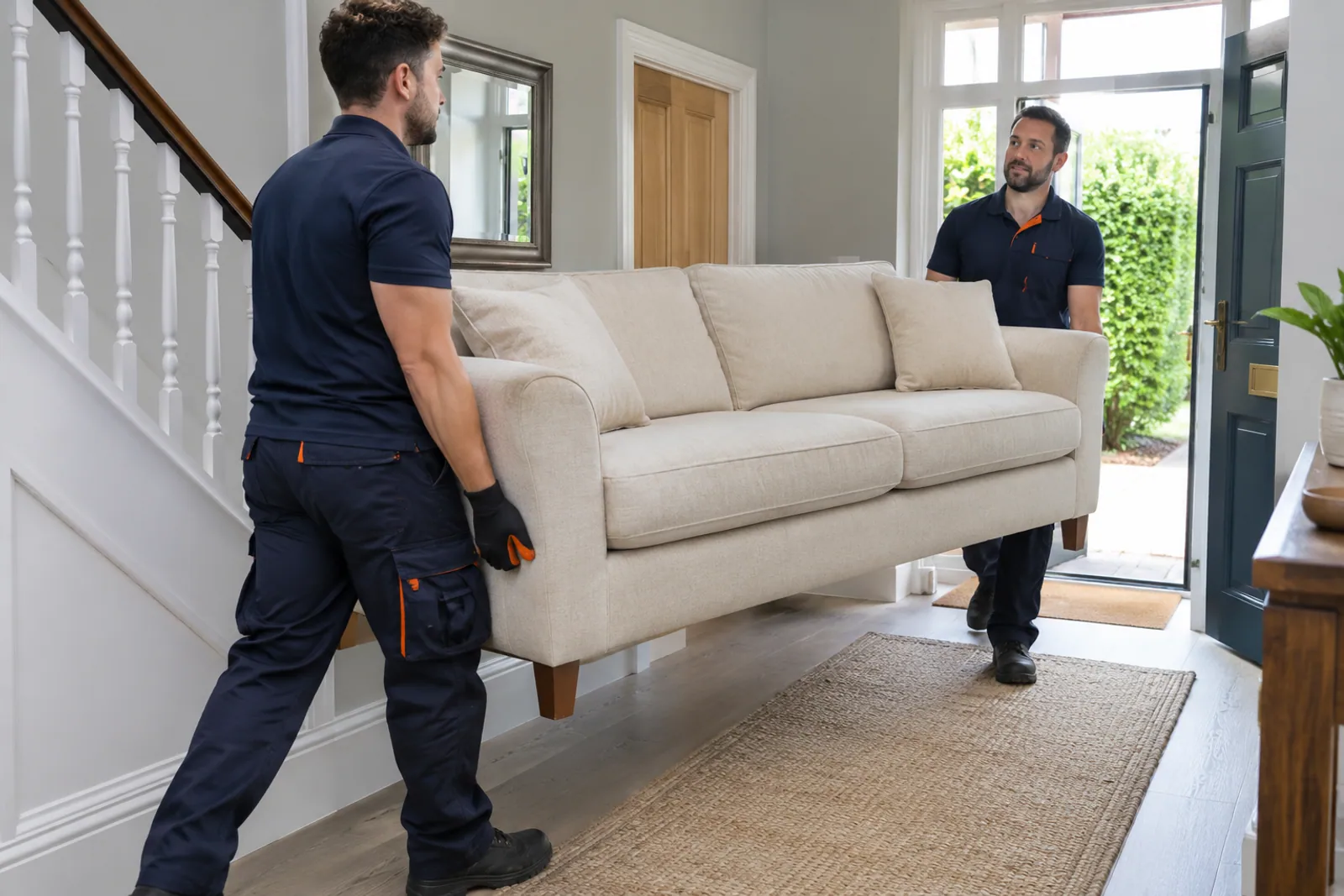
We discuss the material itself and its waste status. The appearance of a tile box or wrapped board does not establish that its contents are unwanted. Photographs support an inventory that distinguishes accepted project leftovers from materials still assigned to the renovation.
Routes through the property and from the garden
An internal collection starts with the room and floor holding the contents. We discuss stairs or a lift, doorways and turns where these affect the pieces being moved. An outside load also has a route: its position may be separate from the exit and practical vehicle loading point. Both routes need describing where they form part of the requested work.
No particular property layout is assumed from an Ealing address. If access passes through another part of the premises, involves changes in level or depends on an entry contact, that information belongs in the collection discussion. The team connects it with the amount and type of waste. Where a route or loading position changes after the first description, explain the update before relying on the original quote and visit arrangements. The loading position is established for the address alongside the carrying route.
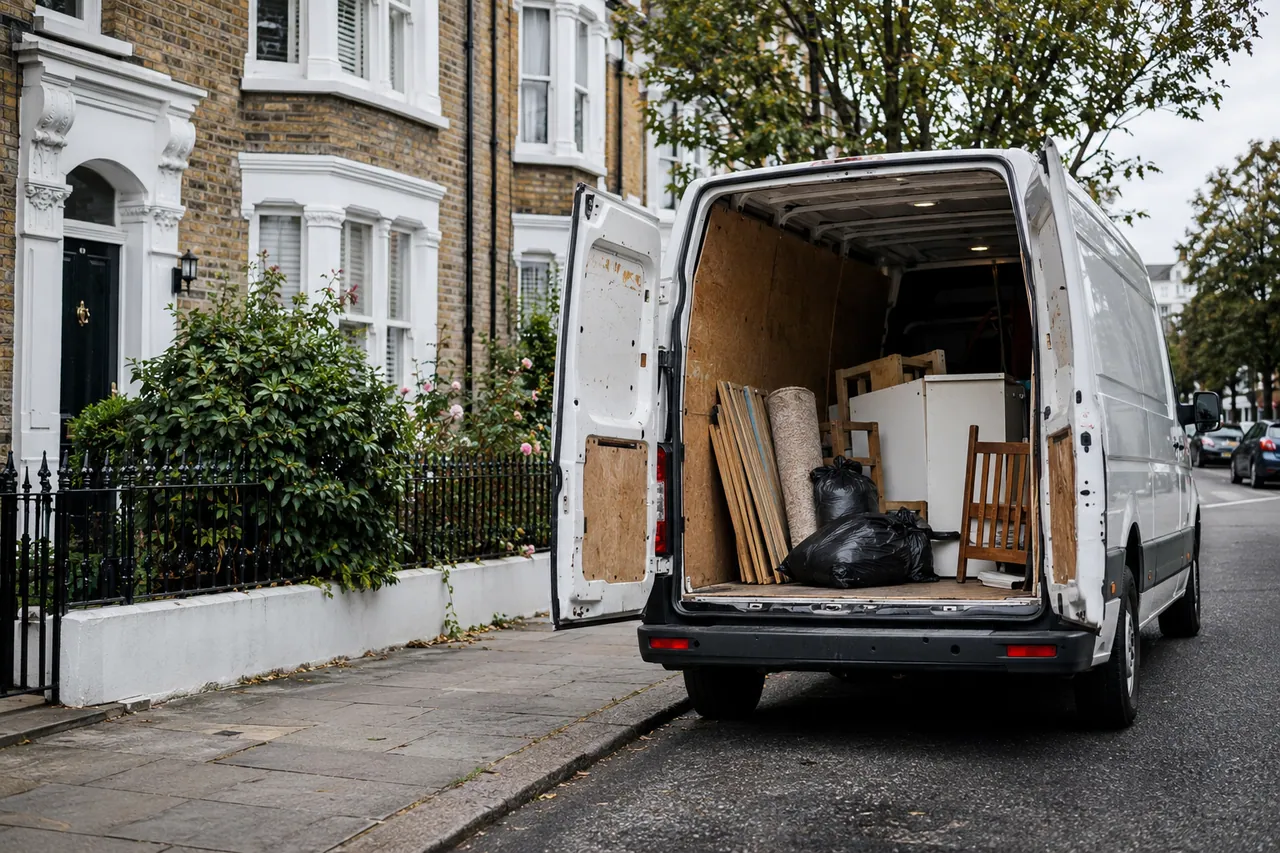
Retained supplies beside the waste
The builders clearance discussion identifies accepted project materials without deciding which supplies the customer wishes to keep. A collection of timber offcuts or discarded tile pieces should remain distinct from a decision to discard new stock. The access contact needs to recognise that selection at the property.
| Waste and retained material distinction | Details discussed with the enquiry | Collection boundary |
|---|---|---|
| Offcuts beside new boards | Which pieces are unwanted and the dimensions of the selected timber. | Retained full boards are not removed because their material resembles the waste. |
| Tile pieces beside unused boxes | The material, approximate amount and containers actually leaving. | An unopened or partly used box is included only if its contents are expressly selected. |
| Wrapping around replacements | What is discarded packaging and which protected object remains. | The accepted packaging request does not authorise removal of the new fitting or furniture. |
| Supplies in the same room | The separate storage or placement of contents remaining for the project. | A room-based collection does not become an instruction to empty the renovation work area. |
Furniture and project leftovers need different handling discussions
A refurbishment can leave packaging beside unwanted furniture and building material. We separate those categories when discussing the accepted collection. For refurbishment waste removal, the actual materials and quantity matter; the fact that everything came from one room does not make it one uniform waste type.
| Material from the property | What the team establishes | Relationship to the removal work |
|---|---|---|
| Freestanding furniture | Size, location, assembly and selected components. | Carrying and loading are discussed around the pieces as they currently stand. |
| Timber and fittings | The form of the material and whether any attachment or work remains. | Detachment or alterations are distinguished from a ready-to-carry waste collection. |
| Dense renovation debris | The material type, approximate amount and containment. | The load is described by its substance rather than only the number of bags. |
| Packaging and electrical items | Packaging materials and device types listed as separate groups. | Acceptance and any additional requirements are clarified without assumptions about hidden contents. |
Locating the Ealing collection correctly
The centre used for this page is Ealing, within the borough of Ealing, with W5 as an indicative nearby postal district. The full address distinguishes the actual premises from the wider borough. For a load held partly indoors and partly outside, describe both collection points: the geographical reference does not explain how those separate materials reach the vehicle.
The quote follows the removal selection
We discuss the accepted amount and material types together with carrying and loading. That allows the price to relate to the actual work being requested. More waste, another collection area or a changed route can alter the scope even where the preferred visit date remains the same.
| Component discussed for the quote | Information supporting the removal scope | Change to review before collection |
|---|---|---|
| Material acceptance | Household pieces, green waste, project materials and any separately identified equipment. | A new waste category or uncertain substance not included in the first enquiry. |
| Quantity and dimensions | Bulky item sizes, counts, containers and views of each complete waste group. | Extra furniture, a larger garden pile or more renovation debris. |
| Collection locations | Rooms, floors, storage points and outdoor areas from which waste is carried. | Another area added to the removal or a different position for the existing load. |
| Route and coordination | Doors, changes in level, practical loading point and authorised access contact. | Altered access, revised loading arrangements or a timing requirement needing agreement. |
Ealing: collection location and area map.
Map of Ealing
Load the interactive area map from OpenStreetMap. This connects your browser to the map provider.
Open map in a new tab ↗ © OpenStreetMap contributors
Area orientation only. This map does not mark a company office or a confirmed loading point.
Ealing collection questions
Can tile offcuts leave while unopened tile boxes stay?
The selection can make that distinction. Describe the actual waste material and approximate amount, identifying which containers or loose pieces leave. Unopened or partly used boxes of retained supplies remain outside the removal list unless expressly included. The access contact should recognise the selection so the team is not left to decide which materials are still needed for the work.
Are full boards included when timber offcuts are mentioned?
Not automatically. Explain the timber pieces selected for removal and their approximate dimensions. Full boards or reusable material nearby may be retained even though they are made from the same substance. We discuss the accepted physical load rather than treat every timber item in the room as waste because a pile of offcuts is leaving.
Can packaging be removed while a replacement fitting remains wrapped?
Identify the discarded packaging separately from material still protecting the retained fitting. A request to collect wrapping does not authorise taking the new item away. We discuss the packaging materials, amount and location, with any contents inside cartons made clear. The removal list should describe what leaves rather than rely on the appearance of a delivery area.
What if more debris is produced after the first enquiry?
The added material and quantity need reviewing with the team. Work continuing at the premises can change the load even if it remains in the same room. We clarify acceptance and any effect on scope or quote before the original visit is treated as covering the expanded selection. A project-waste collection is not an unlimited allowance for later debris.
Does the team decide whether unused materials are worth keeping?
The customer or authorised contact identifies the supplies being retained and the waste selected for removal. We establish acceptance and the carrying work, not the customer’s decision about future use of building materials. Clear instructions are needed where similar offcuts, unused stock and packaging stand together, so the collection follows an agreed boundary rather than an assumption about their value.
Can a replaced fixture be collected while still attached?
Any attachment and work required before carrying must be explained. Detachment or alterations are not automatically included within waste removal. We discuss the item in its current form, its materials and the additional requirement before agreement. The collection description should keep it separate from loose debris ready to leave and from a replacement fitting being retained.
Arrange your Ealing collection.
Discuss the unwanted items, full postcode and route to the vehicle with the collection team.
Discuss your Ealing collection
Open our booking form to arrange your collection.
Continue to our booking form to confirm your items and contact details.