
KILBURN COLLECTIONS
Rubbish Removal in Kilburn
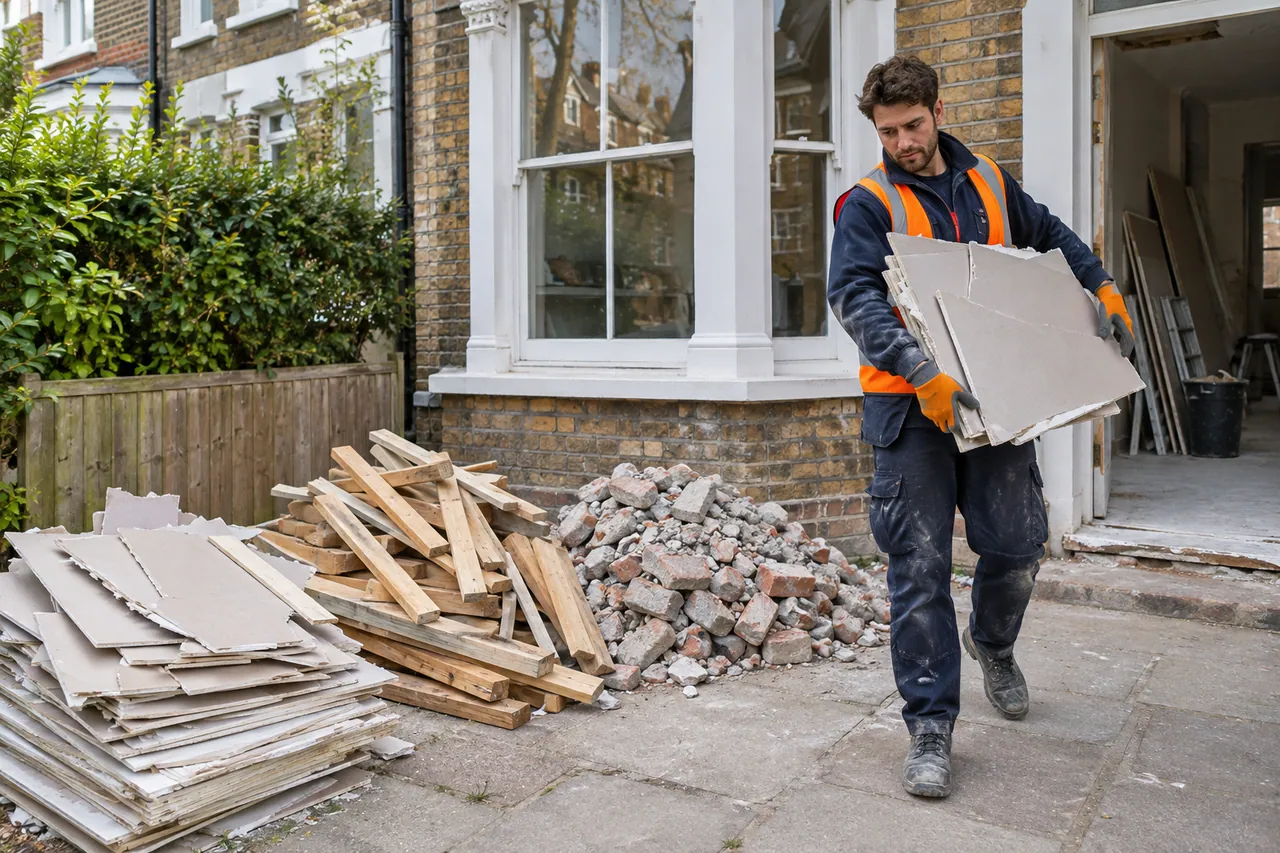
We arrange Kilburn rubbish collections for accepted household and business waste, including separately described renovation materials. A property project can leave debris, packaging and unwanted furniture together, but those are not one interchangeable waste type. We establish the materials and amount, the work of carrying them out and the agreed removal scope before confirming an available visit.

Kilburn collections, explained.
Can a Kilburn collection include renovation leftovers beside furniture?
The enquiry can describe both, with furniture and project materials identified separately. We need to know the actual debris, timber, packaging or other waste rather than only the room it came from. Acceptance, approximate quantity and the carrying route are discussed for those categories before the team agrees the collection scope, quote and available arrangements.
Do bags of building material need their contents described?
Yes. A bag count does not establish whether the load contains light packaging, timber, dense debris or an uncertain material. We use a contents description alongside photographs and approximate quantity. Anything unusual or unidentified should be raised before acceptance rather than concealed within a general request to remove mixed rubbish from the property.
The contents included in your Kilburn enquiry.
| Material group in the enquiry | Description established with the team | What the description avoids assuming |
|---|---|---|
| Timber and board pieces | The material, approximate quantity, dimensions and any mixed components. | That every long piece is the same size or ready to be carried through the same route. |
| Bagged renovation debris | The main contents and approximate amount, with dense material identified. | That the number of bags alone explains the physical load or material acceptance. |
| Packaging from the work | Cardboard, wrapping and other packing material, including any contents still inside. | That a box is empty or that all packaging is mixed with the same project debris. |
| Furniture being replaced | Named units, approximate size, assembly and collection location. | That ordinary furniture removal includes detaching fittings or removing retained contents. |
A project load can contain several different jobs

An unwanted cabinet, a pile of wrapping and a group of debris bags may all arise during work at one property. We separate the contents in the removal description so the team understands what must be carried and transported. The origin of the waste does not make furniture, packaging and dense material the same collection category.
Our builders clearance service provides the relevant discussion for agreed project waste. We need the actual material types and approximate amount, including what is inside containers. The enquiry also distinguishes waste ready to leave from fittings still attached or materials being retained for the work. Collection of an identified load does not automatically include demolition, detachment or completion of the building project. Any request beyond carrying, loading and removal needs clarification before agreement.
From the material description to removal
Our process connects the accepted waste with the route and work at the premises. It does not replace material identification with a visual estimate of the pile. The person arranging access confirms the collection areas, the scope and the available visit with the team.

Identify the project waste
Timber, debris, packaging and other materials are named separately, with furniture and retained building supplies kept distinct.

Clarify amount and current form
The enquiry explains containers, bulky dimensions and any uncertain contents before the waste is accepted.

Review the route and scope
Collection locations, carrying, practical loading and any work beyond removal are discussed alongside the quote.

Collect the agreed selection
The accepted materials are carried, loaded and transported away for appropriate onward handling within the confirmed scope.
The contents and carrying behind your Kilburn enquiry.

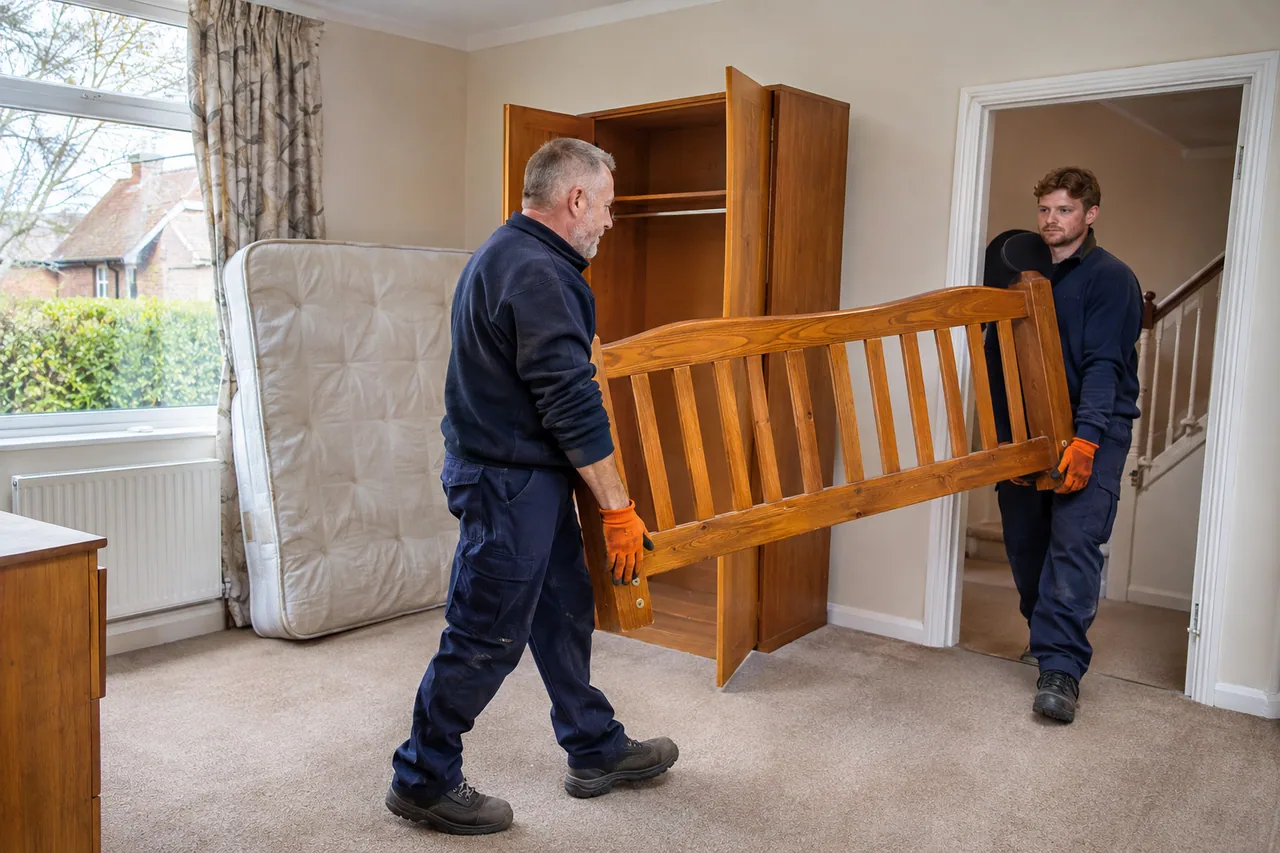

Describing the project materials rather than their containers

The useful inventory names the materials and explains their current form. Photographs can show the load’s size and position, while the description deals with contents that are hidden or not readily identifiable. We discuss uncertain waste before acceptance rather than guess its suitability from a picture.
The collection is separate from work still taking place
We establish which waste is ready for the proposed removal and which parts of the property are outside the job. Where work continues, a growing pile or another room can change the amount before collection. The team needs an updated description rather than an assumption that any material generated after the quote is already included.
The same boundary applies to attached items. A freestanding cupboard selected for removal differs from a fitting that still needs taking off the wall. We discuss the furniture or materials as they will actually be presented. Our refurbishment waste information describes accepted project contents without turning the collection into an unspoken instruction to undertake alterations. Additional requirements and material changes are clarified before they become part of the scope.
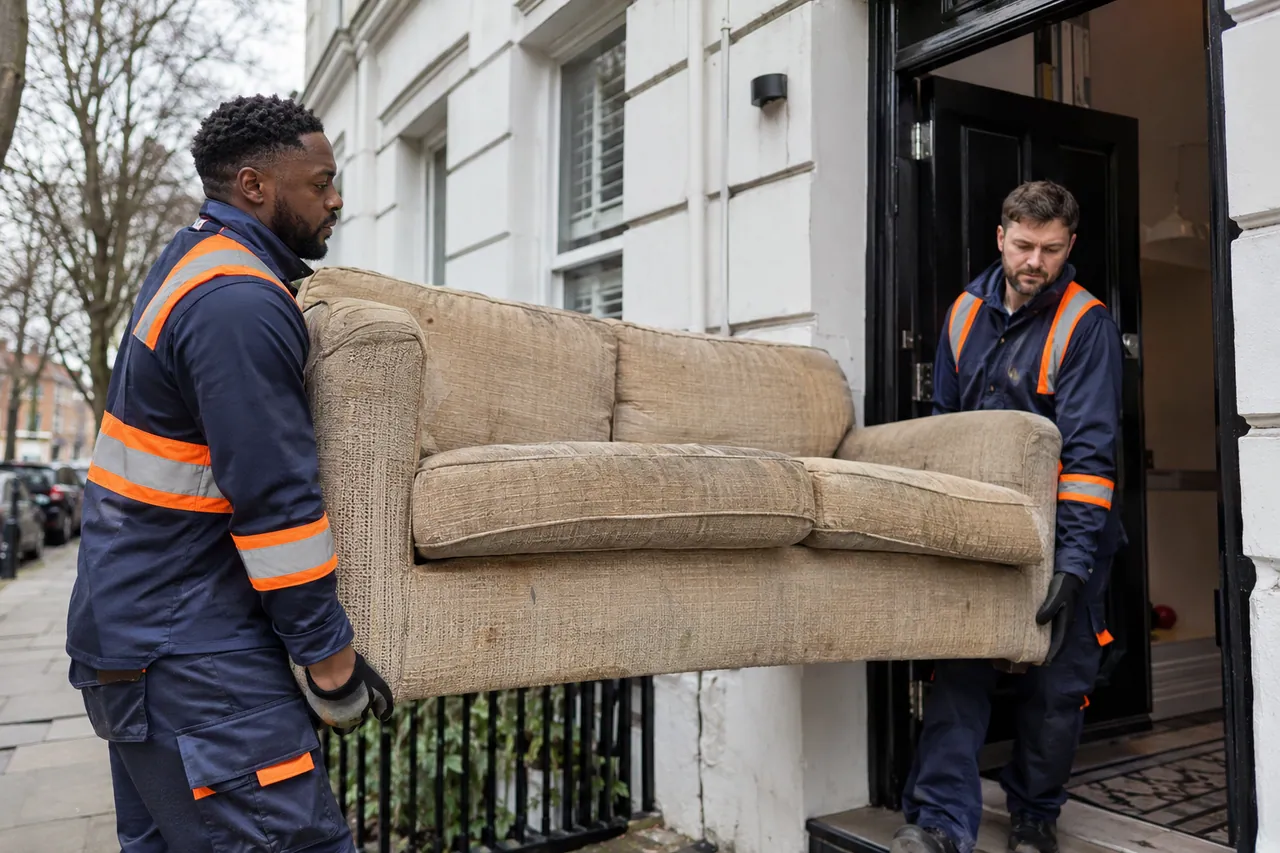
Carrying material out of the actual collection area
We discuss the room, floor or outside area where the waste is held and the route from there to loading. A photograph can show bags waiting together but still leave the stairs, doorways or distance to the vehicle unexplained. The carrying description therefore accompanies the quantity and material description.
| Collection-area detail | Information connected to the work | What the team needs to distinguish |
|---|---|---|
| Waste in an internal room | The floor, doorway route and any stairs or usable lift involved. | The actual carrying route rather than an assumption that material is already beside the entrance. |
| Separate piles | Locations and contents of each group intended for the same removal. | One photographed pile from other material elsewhere that also needs carrying. |
| Long or bulky pieces | Approximate dimensions and the route available for those items. | A large rigid piece from smaller material that can travel differently through the property. |
| Distance to loading | The practical vehicle position, carrying distance and relevant changes in level. | The practical loading arrangement for the premises is discussed alongside the collection route. |
Furniture and smaller household contents alongside project waste
A household may want old furniture removed while renovation materials are collected. We identify those pieces and their components explicitly. The furniture collection service concerns the accepted furniture in its current form; it does not silently include belongings stored inside or every item remaining in the room.
| Additional property contents | What the enquiry records | Collection boundary |
|---|---|---|
| Tables or freestanding cupboards | Individual units, size, assembly and any contents being retained. | The furniture selection is separated from possessions and supplies staying with the customer. |
| Beds or seating | Mattresses, frame parts, sofa sections and other selected pieces. | Component counts are established rather than assuming a complete room is leaving. |
| Boxed domestic belongings | Main materials, approximate amount and the storage location. | Household contents are understood separately from bags of building debris. |
| Electrical items | Device types and any requirement beyond taking them away. | Equipment is identified before acceptance without an assumed specialist or data service. |
Kilburn and the full premises location
The geographical reference for Kilburn spans Brent and Camden, with NW6 as an indicative nearby district. The complete postcode and address distinguish the actual premises. We use that location with the material list and route description; the shared locality name does not establish an individual building’s access arrangements.
The accepted waste is transported for appropriate onward handling. Different materials may require different routes after removal, and recycling or reuse is pursued where suitable. We keep the material groups identifiable when discussing their onward handling. The area map is an orientation point rather than a local office or loading instruction, so the practical collection location remains part of the discussion with the premises contact.
Pricing an identified project removal
The quote relates to the accepted material, amount and work of carrying and loading. We do not use a bag count or room label as a complete measure of the collection. Changes in the waste or route should be discussed before the original agreement is treated as covering them.
| Quote factor for this removal | Description explaining the accepted work | Change needing review with the team |
|---|---|---|
| The material mix | Named timber, dense debris, packaging, furniture and other accepted contents. | Another waste category, an uncertain substance or different material inside the containers. |
| The physical amount | Approximate quantities, piece dimensions and photographs of all the selected waste. | More debris generated after the enquiry or another pile added to the job. |
| The starting points | Rooms, floors and outside areas holding the materials intended for removal. | Additional collection areas or waste moved to a different location. |
| Carrying and coordination | The route, practical loading position, access contact and desired collection date. | Altered entry, loading arrangements or timing requirements that need confirmation. |
Kilburn: collection location and area map.
Map of Kilburn
Load the interactive area map from OpenStreetMap. This connects your browser to the map provider.
Open map in a new tab ↗ © OpenStreetMap contributors
Area orientation only. This map does not mark a company office or a confirmed loading point.
Kilburn collection questions
Can the load keep growing after the quote is discussed?
More material needs an updated discussion with the team. A quote for an identified project load is not an unlimited allowance for waste generated later. Explain the additional material, quantity and location so acceptance and any effect on the scope or price can be clarified. This also applies where the work adds another room or a separate pile.
Do timber and debris bags count as the same waste group?
We describe them separately. Timber pieces have their own dimensions and carrying requirements, while the bag contents need identifying by material and amount. Grouping everything as project waste can hide those differences. The team discusses acceptance and the actual physical load across the named categories before agreeing the collection arrangements.
Does collection include taking a fitting off the building?
Not automatically. Tell us the current attachment and any work needed before the item can be carried. Detachment or alterations are additional requirements to clarify before agreement, not assumptions within a rubbish collection. The removal description should distinguish materials ready to leave from fittings still in position and from supplies remaining for the project.
Can old furniture stay separate from the renovation debris?
Yes, we record the selected furniture as its own part of the enquiry. Describe each piece, its approximate size and assembly, and identify belongings staying inside or beside it. The furniture and project materials may share one proposed visit, but their acceptance and handling descriptions remain distinct rather than becoming one unexplained mixed pile.
What should be said about an unidentified material?
Raise the uncertainty before the collection is agreed. We should not have to infer an unknown substance from a closed bag or an unclear picture. The team needs an adequate material description to discuss acceptance and handling. Do not assume that a general builders clearance request means every substance from a project has been accepted without clarification.
Why is the full postcode needed for a Kilburn enquiry?
Kilburn is the locality reference, while the complete address identifies the premises where the waste is held. The geographical plan records Brent and Camden for the centre area, so the locality name is not a precise access instruction. We discuss the actual collection floor, entry route and loading arrangement for the property with the responsible contact.
Arrange your Kilburn collection.
Discuss the unwanted items, full postcode and route to the vehicle with the collection team.
Discuss your Kilburn collection
Open our booking form to arrange your collection.
Continue to our booking form to confirm your items and contact details.