
STOKE NEWINGTON COLLECTIONS
Rubbish Removal in Stoke Newington
We arrange rubbish collections from Stoke Newington homes and business premises. This guide explains a workplace request after a room has been vacated: remaining desks, storage furniture and loose contents are identified for removal while retained assets, installed fittings and additional work remain clearly distinguished in the collection agreement.
Stoke Newington collections, explained.
Does a vacated office mean everything left in it is waste?
The organiser identifies the contents authorised to leave. Furniture, stored equipment and other possessions may still be retained even when people no longer work in the room. We discuss the particular selection and its materials before quoting, rather than treat an empty workplace or available key as permission to remove every object or installed fitting.
What defines the removal after a workplace move?
Describe the furniture and loose contents remaining, their present assembly and the areas included, together with access and loading details. Explain any electrical, unusual or additional service requirement separately. The team discusses acceptance, carrying and an available collection against that current inventory rather than the room’s former furniture list or an assumed complete strip-out.
The contents remaining after people have left
A vacated workroom can still contain retained furniture, belongings awaiting another destination and objects selected for disposal. We identify those decisions with the organiser. The collection is based on the furniture and materials actually leaving, not simply the fact that the room is no longer occupied or that an access contact can open it.
Our office clearance service provides the workplace removal context. The request can cover a defined room inventory or several collection areas. We establish what remains in its current form, including loose components and boxes, so the work of carrying, loading and transport corresponds to the objects presented rather than the former arrangement of the business.

The current inventory instead of the former room layout

Photographs help show the remaining selection, while the description supplies counts, materials and contents concealed in containers. Desks may already be in parts and cupboards may or may not still hold belongings. The organiser identifies those details before agreement, keeping useful assets and possessions intended for another destination outside the disposal load.
Removable furniture and installed parts of the premises
We clarify whether objects are freestanding, already separated or still attached. A waste collection should not be confused with a general instruction to strip out the room. Detachment, disconnection or work to the property is raised before the quote is agreed, so the customer and team understand the same service rather than rely on a broad use of the word clearance.
| Present object or requirement | Detail clarified with the organiser | Boundary of the collection scope |
|---|---|---|
| Freestanding furniture | Which complete pieces and loose components leave. | The physical contents can be described for carrying and loading. |
| Furniture already in parts | Components present and their current locations. | The load reflects what remains rather than an assumed complete assembled system. |
| Fittings attached to the premises | What is fixed and the additional task requested. | Alteration or detachment is considered separately from furniture transport. |
| Connected equipment | Device type and any expected technical work. | Equipment acceptance and additional services are not inferred from access to the vacated room. |
For a wider business request, our commercial waste collection information explains the related service context. The current one-off load and any ongoing requirement are discussed separately, particularly where the business has moved to another premises and future waste will arise at a different location.
Loose records, equipment and other materials
The organiser identifies main container contents and separates material streams. Paper, packaging, electrical devices and dense project debris need different descriptions even when stored in the same workroom. A closed box does not establish ordinary mixed-waste suitability or permission to dispose of every possession inside it.
Any requirement concerning information, destruction, certification or technical work is raised specifically before agreement. Physical collection and transport alone do not describe those additional services. The team clarifies the actual request, while the business makes its own selection of records, assets and other contents leaving or staying.
| Material within the remaining load | Information supplied before acceptance | What remains distinct |
|---|---|---|
| Ordinary paper or stationery | Main contents and approximate amount selected. | Retained records and any separate security requirement are not assumed from physical paper removal. |
| Electrical equipment | Device types, quantities and additional requirements. | Equipment is individually identified rather than treated as another furniture component. |
| Packaging | Principal materials, overall amount and any contents inside cartons. | Boxes holding useful assets remain distinguishable from unwanted packing material. |
| Project debris | Material types and quantity, including unfamiliar contents. | A vacated-room collection does not automatically accept unknown renovation waste. |
Our IT disposal page provides the relevant context for the equipment portion. The room’s status does not determine whether a device is unwanted, disconnected or covered by a technical process. Those details belong in the enquiry and service discussion before the team confirms a collection.
Entry arrangements after the workplace has changed
We discuss who provides access, which entrance is being used and who can identify the selected contents. A keyholder may not have made the disposal decisions, so the inventory should remain understandable when the organiser is elsewhere. Uncertain items are clarified rather than the team deciding which objects the business should discard.
The collection address is the premises holding the waste, which may differ from the business’s new address or the organiser’s contact location. Give the full postcode and address, with useful building or occupier identification. The team connects that information with the current load and entry contact so the removal is arranged at the right place.
Carrying from the current collection areas
We establish the present locations of the furniture and loose contents. Relevant floors, doors, internal turns, stairs or a usable lift and the loading connection are discussed for the actual premises. If items have been consolidated after the move, describe where they now stand rather than only the rooms they formerly occupied.
Dimensions and assembly are considered alongside that route. Any expectation of cutting, dismantling or another additional task is clarified before agreement. The quote should reflect the carrying work still required, including separate stores or collection areas expressly included, rather than an outdated photograph or an assumption that all remaining material is beside the entrance.
Agreeing the remaining-contents collection
The team combines the inventory, material descriptions and access arrangements to discuss acceptance, the quote and an available visit. A preferred date is a request to discuss availability; the collection is confirmed directly against the current scope. The organiser can then compare that description with the contents left at the premises.

Identify what remains for disposal
The business lists furniture and loose material authorised to leave, keeping retained assets and belongings destined elsewhere separate from the load.

Clarify form and extra requirements
Current components, container contents and any detachment, technical or information-related requirement are explained before acceptance and scope are agreed.

Connect the load with entry and route
Current locations and carrying towards loading are considered with the quote, then an available collection is confirmed with the premises contact.

Remove the described workplace contents
The accepted objects are carried, loaded and taken away for appropriate onward handling according to their identified materials.
The contents and carrying behind your Stoke Newington enquiry.


The material groups within the removal.
| Workplace contents proposed | Information discussed | What the removal description identifies |
|---|---|---|
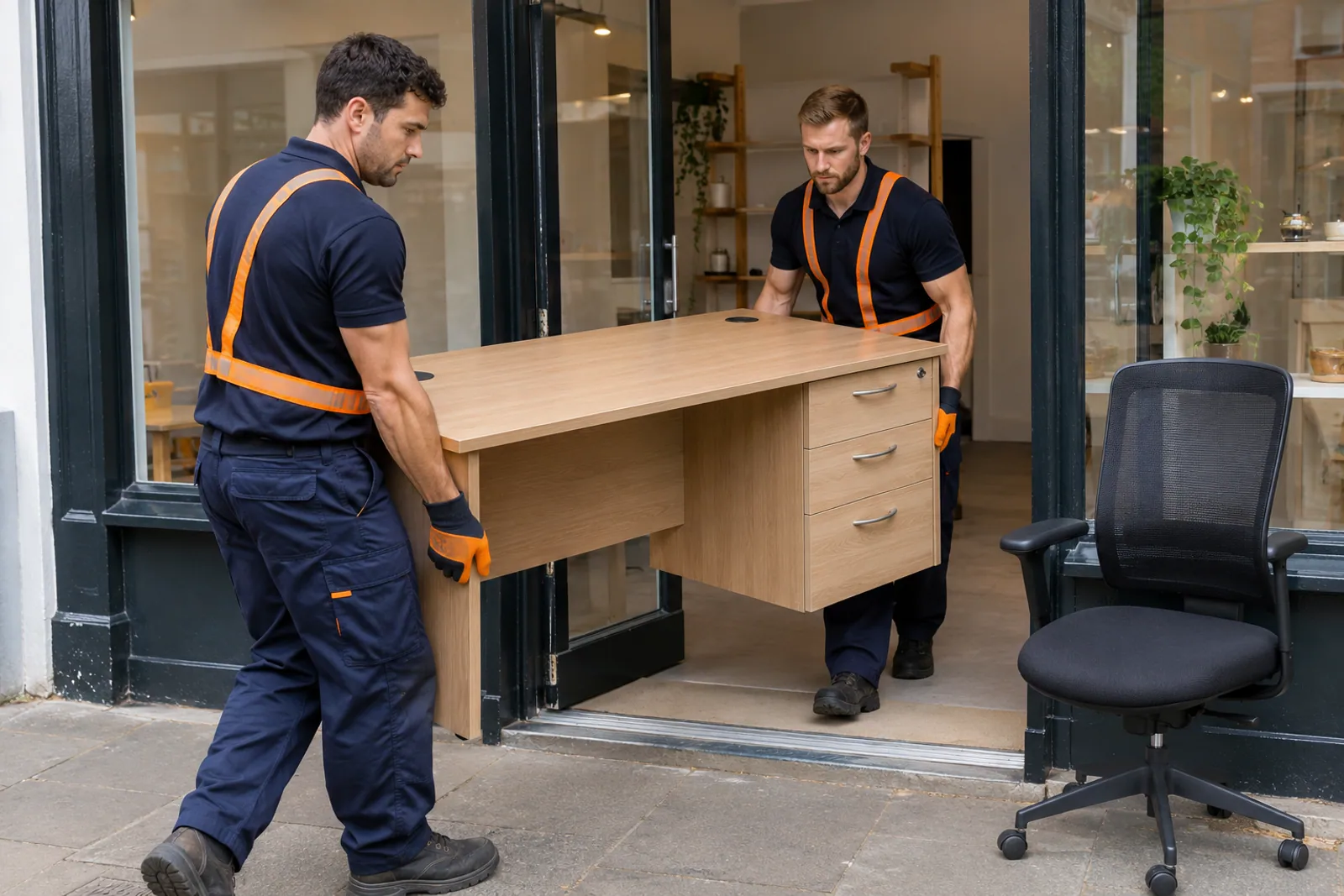
| Desks and tables | Number, dimensions, present assembly and parts included. | The furniture currently available rather than an old plan of the occupied room. |
| Storage units | Freestanding pieces, loose shelves or drawers and any contents also leaving. | Furniture and its stored material remain separate selection decisions. |
| Seating | The complete chairs or components requested and their locations. | The specified seating, distinct from useful furniture retained for another premises. |
| Loose contents | Main bag or box contents, quantity and the groups selected. | Identifiable material rather than everything left after the business move. |
The Stoke Newington address and final updates
The map centres on Stoke Newington in Hackney, with N16 an indicative nearby postcode district. Provide the full address and postcode holding the remaining load, along with the entry contact. These details connect availability with the premises where the carrying and loading are needed.
| Change after the enquiry | Updated information discussed | What the team reviews |
|---|---|---|
| More furniture retained or removed elsewhere | The pieces still selected and their present locations. | The inventory for this collection rather than an earlier complete room list. |
| Further loose contents found | Main materials, amount and any separate acceptance question. | The expanded load before it is treated as included in the original quote. |
| Components regrouped | Current form and any additional work still requested. | The physical objects presented for carrying and loading. |
| Entry or collection point changed | Current contact, access and the route from the new starting location. | The practical work and available visit against the current request. |
Appropriate onward handling is arranged for the contents collected, with recycling or reuse pursued where suitable to the materials and available route. The agreement concerns that stated load rather than all possessions later found at the old premises or a future collection requirement at the business’s new location.
Stoke Newington: collection location and area map.
Map of Stoke Newington
Load the interactive area map from OpenStreetMap. This connects your browser to the map provider.
Open map in a new tab ↗ © OpenStreetMap contributors
Area orientation only. This map does not mark a company office or a confirmed loading point.
Stoke Newington collection questions
Does an empty office authorise removal of all remaining furniture?
The business identifies which contents are unwanted and authorised to leave. Some furniture may be retained or awaiting another destination despite the room being vacated. We discuss a clear inventory before agreement rather than make disposal decisions from the fact that staff have moved out or a keyholder can provide access.
Can the keyholder be different from the person choosing the waste?
Yes, explain that arrangement and make the selection understandable at the premises. The entry contact should be able to identify the agreed group and access route. Any uncertain possession is clarified with the organiser rather than the visit depend on the keyholder guessing what the business intended to discard.
Are installed fittings included with the desks?
Not automatically. Describe anything attached and the additional work requested before agreement. Carrying and loading freestanding furniture is distinct from detachment or alteration to the premises. The scope should make those requirements clear rather than use a room-clearance description to imply an unagreed strip-out task.
What if an earlier inventory includes furniture already moved away?
Update the team on what remains, its current form and locations. The collection quote should represent the load actually being presented. A former room list or photograph does not establish that every original object is still present or that other material found later has joined the accepted scope.
Does taking equipment from the old office include information destruction?
Raise any destruction, erasure, certification or other technical requirement specifically before agreement. Physical carrying and transport do not themselves describe those processes. Identify the devices and the additional service you want to discuss so the team can clarify the scope rather than infer it from the office move.
Is waste at the business’s new address part of this removal?
That is a separate location to describe, with its own contents, access and availability discussion. A quote for the old premises does not automatically include another property’s load. Explain any combined request directly so the team can clarify the arrangements rather than assume one visit covers both addresses.
Arrange your Stoke Newington collection.
Discuss the unwanted items, full postcode and route to the vehicle with the collection team.
Discuss your Stoke Newington collection
Open our booking form to arrange your collection.
Continue to our booking form to confirm your items and contact details.