
BEXLEYHEATH COLLECTIONS
Rubbish Removal in Bexleyheath
We discuss rubbish removal from Bexleyheath properties around the material selected for collection. This guide focuses on already contained rubble and dense renovation debris: explaining what the bags or containers actually hold, how much material is involved and where it must be carried before loading and transport are agreed.

Bexleyheath collections, explained.
Is the number of rubble bags enough to describe a collection?
We also need their principal contents and approximate amount, with any mixed or unusual material identified. Bags of dense fragments and bags of light packaging describe different loads. Photographs show the selection’s extent, while the contents description lets the team discuss acceptance, carrying and a suitable collection arrangement for the material involved.
Can furniture be included with a Bexleyheath debris collection?
It can be discussed as a separate part of the proposed load. Describe the furniture pieces and their dimensions alongside the building materials, including where each is held. We consider acceptance and handling by material, so a request involving rubble does not automatically include every household item at the same address or unrestricted additional waste.
The contents included in your Bexleyheath enquiry.
| Debris stream | What we discuss | Material kept outside an assumption of ordinary rubble |
|---|---|---|
| Rubble or dense fragments | Principal materials and approximate amount in each pile or container. | The load is not assessed from occupied space alone or confused with lightweight packaging. |
| Timber pieces | Form, lengths where relevant and the quantity selected for removal. | New boards, useful offcuts and retained components are not waste unless expressly selected. |
| Removed loose fittings | What each item is, whether it is already detached and its current form. | Further detachment or work to the property requires its own scope clarification. |
| Mixed project bags | Main contents, quantity and any materials needing separate attention. | A bag does not establish that unknown or unusual material is acceptable mixed construction waste. |
Waste collection is distinct from carrying out renovation work
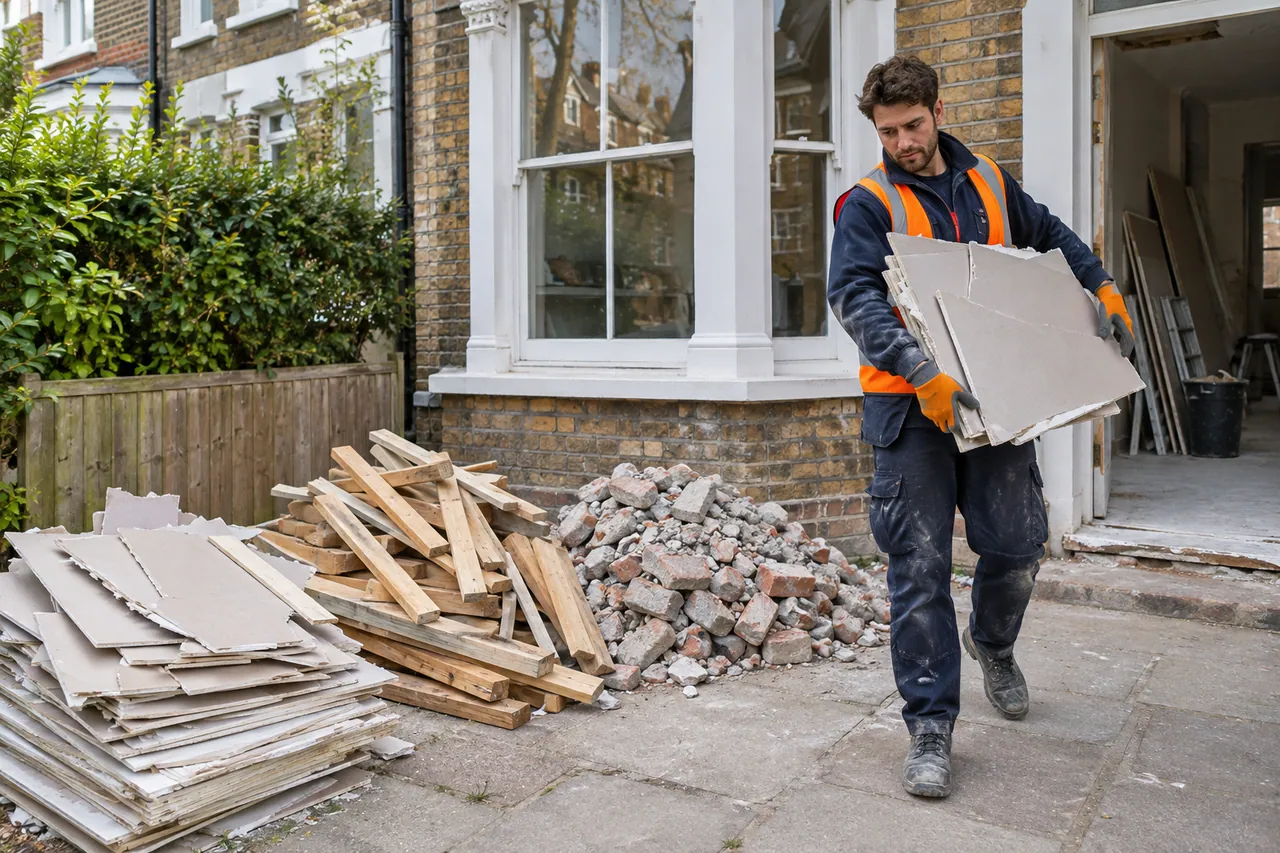
Our role in this request is the agreed removal of accepted material. A collection of project debris does not itself include further building work, demolition, detachment of fixtures or completion of the renovation. We clarify any additional requirement before agreement rather than assume that everything creating waste must also be part of the collection service.
The organiser describes the debris already selected to leave, including its form and the places where it is held. Our builders clearance service provides the relevant service context. The term builders waste is only a starting category: a pile of timber and a smaller dense rubble load create different removal questions. The quote therefore needs the materials and amount explained, not merely the name of the project or the room that was worked on.
Identifying the actual debris streams
Photographs showing the full selection help establish the extent of the material, while the description identifies contents that are concealed or difficult to distinguish. We separate waste streams that have different handling or acceptance questions. Unknown substances, unusual material and anything potentially hazardous are raised specifically rather than treated as ordinary mixed debris because they came from a renovation.

Dense material and bulky material are different load descriptions

The amount of room a pile occupies does not on its own describe the work of removing it. Dense debris, large rigid components and light packaging can occupy similar spaces but differ in handling and vehicle use. We discuss the principal material, form and approximate quantity of each part so that the removal is not based on one visual estimate applied indiscriminately to everything.
The team considers a suitable collection arrangement against the material and quantity described. If the pile grows or the material mix changes before the visit, the updated description is reviewed. An earlier quote for light waste needs reviewing when a dense pile is added, even if the additional material stands in the same location as the original selection.
The project-waste collection process
We connect the material description, the authorised selection and the actual premises arrangements before confirming an available visit. A preferred date starts an availability discussion; it is not a promise inferred from the postcode. The quote concerns the current accepted load, rather than all waste the ongoing project might produce after the description was supplied.
Planning the Bexleyheath visit

Identify the waste rather than the project
We establish rubble, timber, loose components, packaging and other material actually selected for removal, keeping supplies and retained objects separate.

Clarify material and quantity
Dense debris, bulky shapes, mixed bags and any unusual contents are explained before their acceptance and collection arrangement are discussed.
At the agreed collection premises

Agree the premises work
The collection locations, usable carrying route and loading connection are considered with the quote, and the team confirms an available visit.

Remove the accepted project load
The agreed material is carried and loaded for transport, with different waste streams identified for appropriate onward handling rather than one assumed outcome.
The contents and carrying behind your Bexleyheath enquiry.
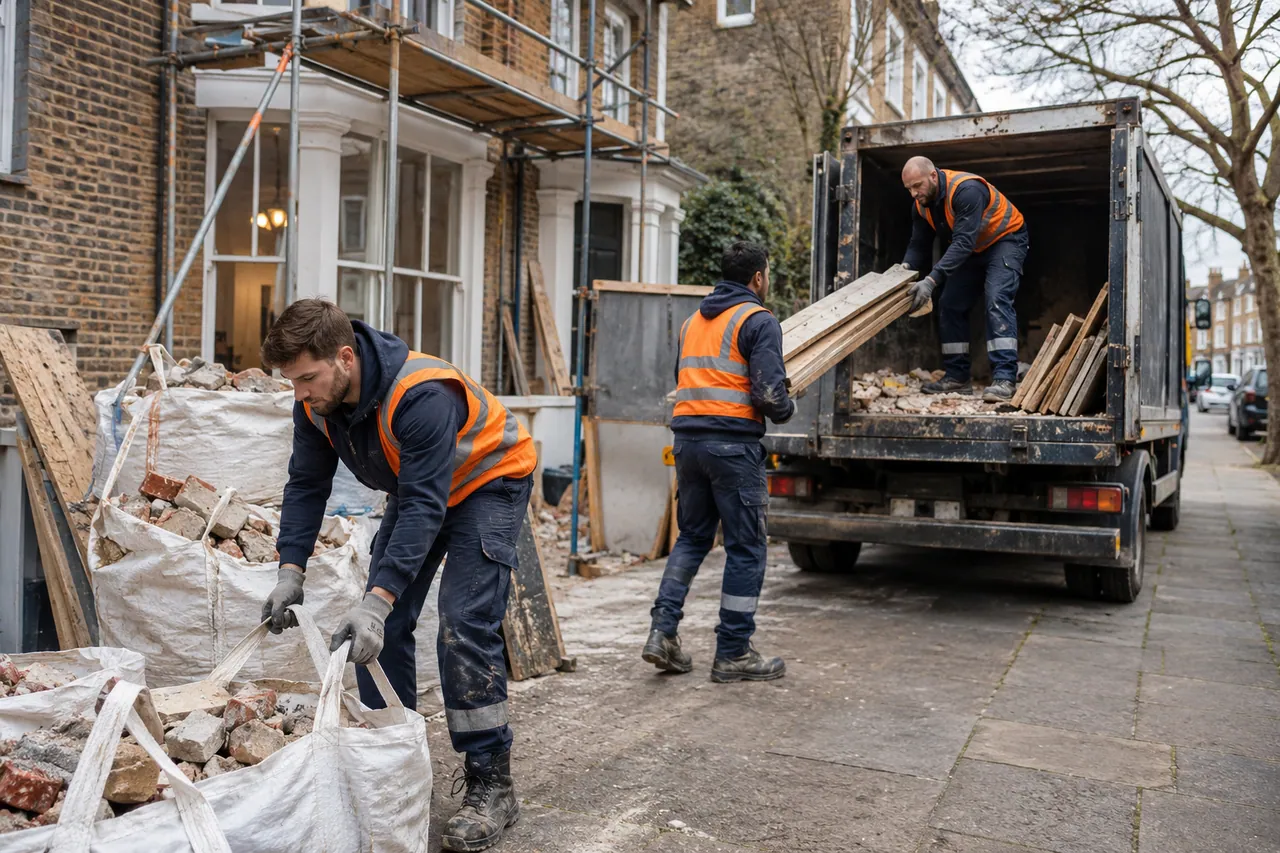



What a container description does and does not establish
Containing debris can make a pile easier to identify, but it does not turn all contents into the same material. We discuss the main fragments, anything mixed among them and the extent of the selection. A photograph of closed sacks cannot establish what is concealed, and a count alone does not explain how full they are or whether another loose pile is also part of the request. We do not assign a standard weight to every bag or assume a particular container can be handled without discussing its contents.
| Container or pile description | Information still needed | What the collection discussion can establish |
|---|---|---|
| Several rubble bags | Principal fragment materials and approximate fullness or overall quantity. | The accepted load is described beyond a count of similar-looking containers. |
| Mixed sacks | What is combined with the rubble, including any unfamiliar or unusual content. | Acceptance questions can be resolved before the sacks are treated as an ordinary debris stream. |
| A loose dense pile | Material identification, extent and its position at the premises. | The carrying and loading requirement can be considered rather than inferred from bagged waste nearby. |
| Large rigid containers | Their contents, approximate amount and the removal being requested. | We clarify the material and scope instead of promising that any filled container can be lifted as a single unit. |
Carrying debris from its collection location
We discuss the route from each accepted pile to the loading point. Material held inside a property and a separate outside pile may have different carrying starting points. Relevant floors, doors, stairs or a usable lift, changes in level and distance are included in the premises description. We do not infer a standard access route or loading permission from the Bexleyheath name.
Long pieces and bulky detached items need their shape considered against that route. Any expectation that material will be cut, dismantled or detached as part of the collection must be clarified beforehand. The accepted removal should describe what is available to carry and what additional work, if any, has actually been agreed. It should not rely on an unspoken assumption that the team will alter the material or property to make the route usable.
Packaging and furniture within the wider request
Packaging can be part of a project-waste enquiry, but it remains identifiable rather than automatically mixed into rubble. We discuss what it contains and the amount involved. Likewise, a sofa or cabinet requested for removal has its own dimensions, assembly and carrying requirement. Those objects may share a collection request without being treated as construction debris.
| Additional selection | Information recorded in the discussion | Difference from the main debris pile |
|---|---|---|
| Empty packaging | Principal packing materials, quantity and whether other waste is contained within them. | Light packaging is identified rather than used to conceal an un-described material stream. |
| Furniture | The particular pieces, current assembly and approximate size. | Carrying is discussed around the actual furniture, not inferred from the building-work request. |
| Electrical equipment | Device types and quantity, with any additional requirement raised expressly. | Acceptance and handling remain separate from ordinary project rubble or timber. |
| Domestic belongings | Main contents of selected bags or boxes and the quantity involved. | Only accepted household material leaves, not all possessions exposed during the renovation. |
Our refurbishment waste information explains this broader project-removal context. We do not include unagreed technical work, information-security services or a guaranteed treatment outcome simply because a device or other special item was discarded during a renovation.
The Bexleyheath location and collection agreement
The map centres on Bexleyheath town centre in Bexley, with DA6 an indicative nearby postcode district. Give the complete premises address and postcode so the team can discuss the collection location and availability. Describe where the contained rubble or loose pile is held, and how that collection point connects to the property entrance and loading.
| Agreement detail | What is established for this removal | What changes need reviewing |
|---|---|---|
| Material scope | The identified accepted waste streams and approximate quantities. | Further debris or a different material mix is raised before being considered included. |
| Collection areas | Every stated pile, room or storage location involved. | A further area adds carrying work as well as potentially more waste. |
| Work beyond transport | Any specific requirement beyond carrying and loading, clarified before agreement. | Detachment, alteration or additional project work is not inferred from the service name. |
| Visit arrangements | The actual address, access contact and an available collection agreed with the team. | Changed entry or timing requirements are discussed against the current scope. |
The load is taken away for appropriate onward waste handling, with recycling or reuse pursued where suitable to the material and available route. For a separate bulky furniture request, our furniture disposal page provides the relevant service description. Furniture dimensions and locations are discussed alongside the debris quantity when both form part of the proposed collection.
Bexleyheath: collection location and area map.
Map of Bexleyheath
Load the interactive area map from OpenStreetMap. This connects your browser to the map provider.
Open map in a new tab ↗ © OpenStreetMap contributors
Area orientation only. This map does not mark a company office or a confirmed loading point.
Bexleyheath collection questions
Do identical-looking bags always describe identical loads?
No. Explain their main contents and approximate amount, including anything mixed through them. The container’s appearance does not establish material, fullness or handling. We discuss the actual accepted load rather than apply one assumed weight or collection arrangement to every sack photographed at the property.
Is rubble quantity assessed from the pile’s footprint alone?
We also need the principal materials and approximate amount involved. Dense waste creates a different handling question from lighter packaging occupying similar space. Photographs support the description, but the material and extent of the load still need explaining before the quote and a suitable removal arrangement are discussed.
Does builders clearance include removing fixed kitchen units?
Not automatically. Identify whether the items are already detached or require work to the premises before they can leave. Detachment and other work beyond carrying and loading need separate clarification. A request to collect project waste should not imply unagreed alteration or further renovation work.
Can more debris produced after the quote join the same load?
Explain the additional material and quantity to the team before considering it included. An active project may change the collection scope, and the original description does not cover unlimited future waste. We review the current load and carrying arrangements rather than rely on a pile photographed before the addition.
Are project bags accepted without knowing what they contain?
Their main contents need describing, with anything unusual or uncertain raised specifically. A sealed bag does not establish that its contents are ordinary mixed building waste. Acceptance and handling depend on the actual material, not only the container or the fact that it came from a renovation.
Can an unwanted sofa be removed with accepted debris?
That can be discussed as a separate part of the enquiry. Give its dimensions, current assembly and collection location as well as the debris description. Furniture remains an identified bulky item with its own carrying requirement, rather than being assumed included within a generic builders-waste load.
Arrange your Bexleyheath collection.
Discuss the unwanted items, full postcode and route to the vehicle with the collection team.
Discuss your Bexleyheath collection
Open our booking form to arrange your collection.
Continue to our booking form to confirm your items and contact details.