
GOLDERS GREEN COLLECTIONS
Rubbish Removal in Golders Green
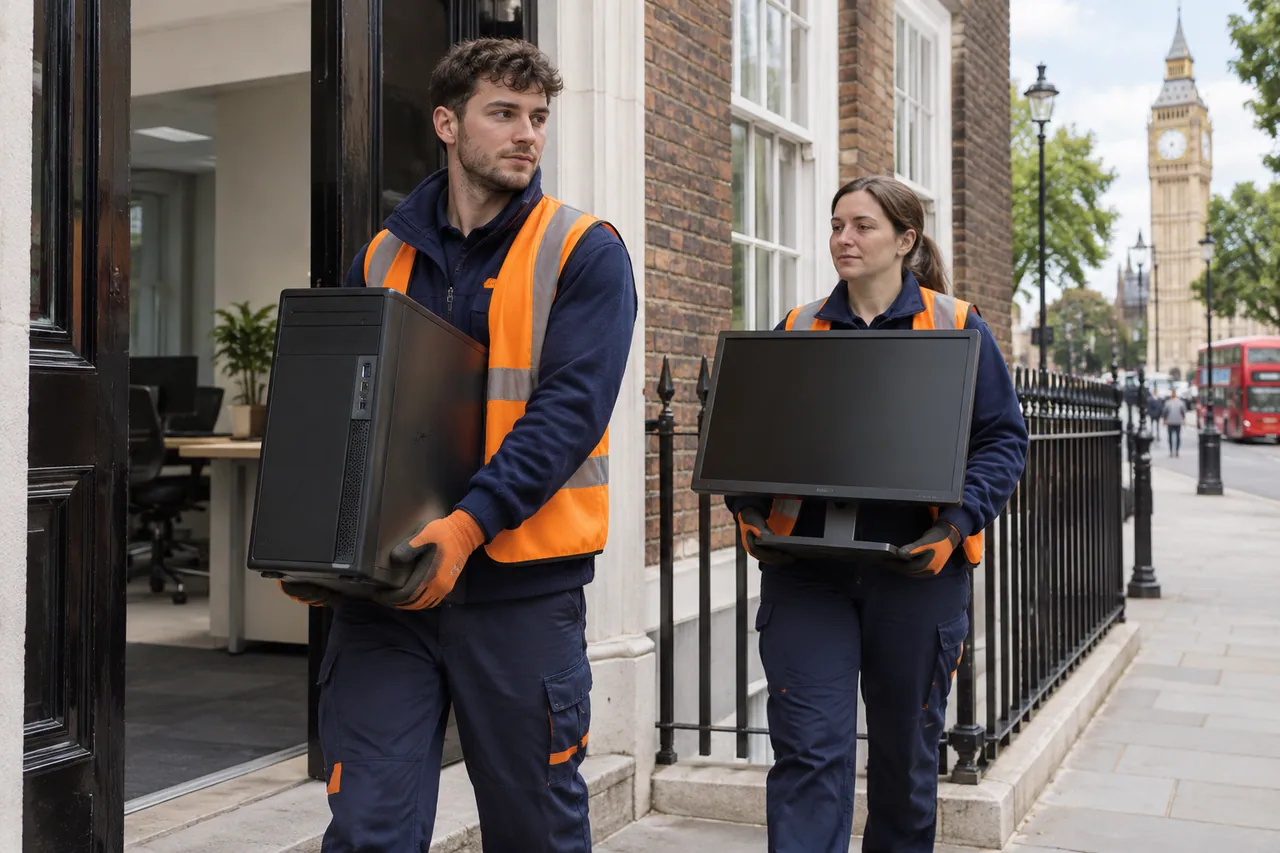
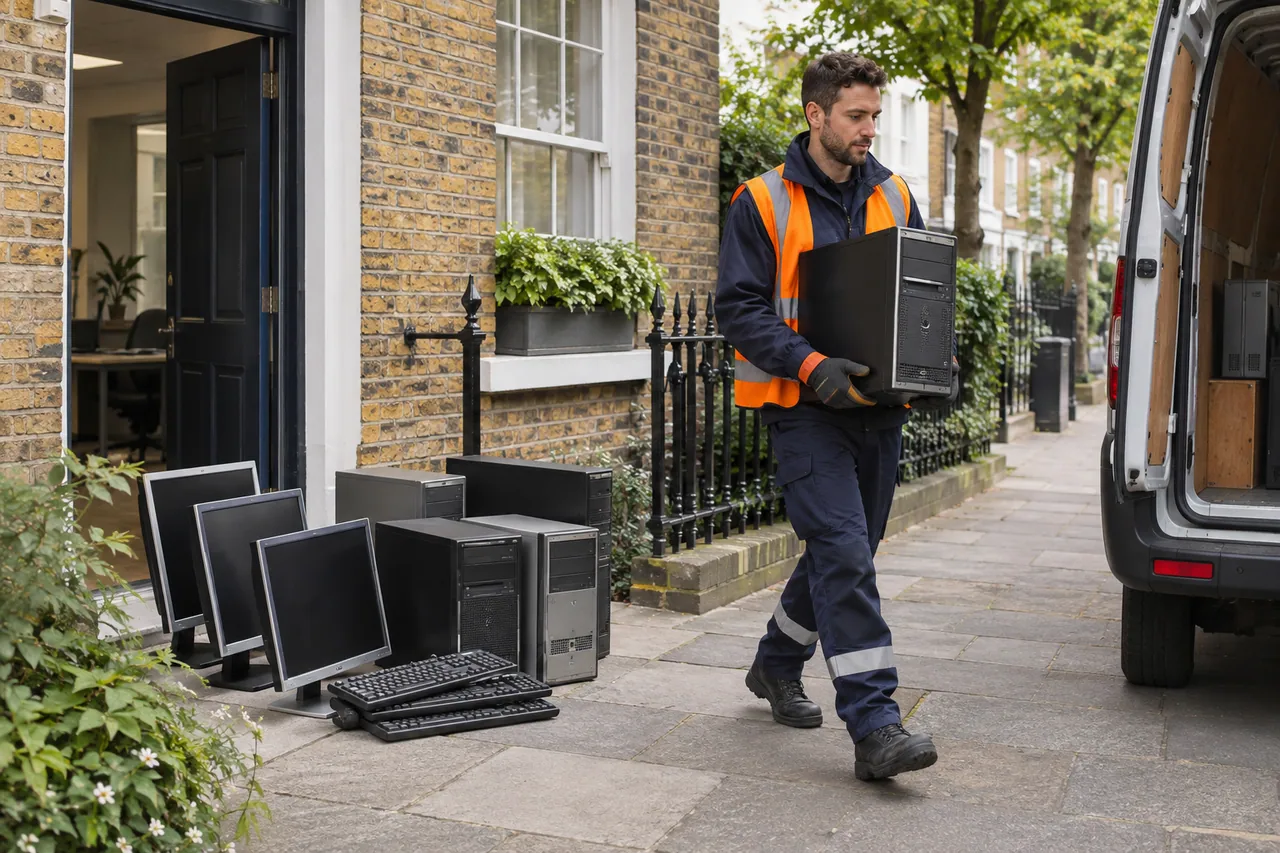
We arrange rubbish collections from Golders Green properties for the contents described in your enquiry. This guide explains a household-study request: unwanted computer equipment, screens and accessories, with devices kept distinct from the desk, records and belongings staying at the property before carrying and removal are arranged.
Golders Green collections, explained.
Can a household enquire about computer equipment without clearing its study?
Yes. Identify the devices and accessories requested for removal, their quantity and where they are held. The desk, shelves and other belongings can remain outside the collection. We discuss acceptance and the carrying route for that selection rather than treat every object in a study as waste because one computer or screen is unwanted.
Does physical equipment collection include data erasure?
Any requirement relating to information held on a device must be raised expressly before agreement. Carrying and removing equipment does not by itself describe a data-erasure process, certification or other technical service. The enquiry should distinguish the physical items leaving from an additional requirement so the team can clarify the exact service being requested.
The contents included in your Golders Green enquiry.
| Equipment group | Information discussed before acceptance | What the collection description identifies |
|---|---|---|
| Computer units | Device types, quantity and the particular units selected. | The physical equipment leaving, separate from working or retained devices. |
| Screens | Number, approximate size and whether loose stands or supports are included. | Each screen and its accompanying parts rather than an assumed complete desktop setup. |
| Printers or other peripherals | Device types, amount and any contents or additional requirement to clarify. | Separate electrical objects instead of unidentified items hidden within a computer label. |
| Accessories | The keyboards, cables, supports or other parts requested, with their approximate amount. | Loose contents expressly included rather than every accessory held at the property. |
A device selection rather than an entire room clearance
A household request may concern a computer, several screens and stored accessories while the desk and other study contents remain in use. We identify the physical equipment selected to leave before discussing the removal. An item being old, disconnected or stored beside another device does not decide its inclusion; the organiser makes that selection and describes the quantity and location of each group.
Our IT disposal service provides the relevant enquiry context. We discuss device types and any additional requirements directly, keeping the accepted equipment separate from furniture or general household bags. That gives the customer a removal list that can be recognised at the property, including any loose accessories that are also unwanted.
From equipment enquiry to collection
The team discusses acceptance, the quote and an available visit using the equipment selection and premises details. A preferred date is a request to discuss availability. Once the collection is confirmed, it concerns the stated physical items and any additional service requirement expressly clarified, with retained belongings distinguished from the removal.

Identify the devices leaving
The organiser lists computer units, screens, peripherals and accessories, distinguishing working equipment and other belongings staying at the property.

Clarify the full service request
The team discusses acceptance, mixed contents and any separate technical or information-related requirement before the scope is agreed.

Connect equipment with premises access
Quantities, current locations and the carrying route are considered with the quote, then an available visit is confirmed with the access organiser.

Remove the described contents
The listed physical items are carried and loaded for transport and appropriate onward handling according to their identified material streams.
The contents and carrying behind your Golders Green enquiry.
Identifying computers, screens and peripheral equipment
The word computer can refer to several physical objects in one household enquiry. A desktop unit, screen, keyboard and separate accessories should be distinguished where they form part of the request. Photographs show the selection, while the description explains quantities and anything stored in a separate box or cupboard. This is particularly useful when some equipment is staying and similar-looking parts share the room.
Device, accessory and furniture are separate decisions
The removal inventory should describe what happens to the equipment and the objects around it. A screen selected for disposal may stand on a desk the household is keeping. A box of cables may include retained leads among unwanted ones. The organiser identifies those decisions before the visit so that the team or entry contact does not have to infer them from proximity.
If furniture is also requested, it receives a separate description. Our furniture disposal page explains that service. Give the desk, chair or storage-unit dimensions and present assembly, together with any contents included. The device enquiry can discuss different accepted items together while maintaining an identifiable boundary around working equipment and personal belongings that stay.
| Relationship within the study | Selection clarified by the organiser | Scope made clear for the collection |
|---|---|---|
| Screen on a retained desk | Whether the screen and any separate support leave while the desk stays. | Equipment removal does not automatically include the furniture holding it. |
| Accessories in a mixed box | Which cables or other parts are selected and what the box mainly contains. | The physical accessory load is understood rather than inferred from the container. |
| Equipment inside a cupboard | The particular devices leaving and whether the cupboard itself is also unwanted. | The furniture and its contents remain independent selections. |
| Similar working and unwanted units | The units authorised for removal and their locations. | Appearance alone does not decide which household equipment is waste. |
Additional technical requirements need a separate scope
The physical collection is described by the objects, carrying and transport. Requests concerning stored information, disconnection, installation or technical work must be raised specifically before agreement. We clarify what is being requested rather than use a general equipment-removal description to imply a service the customer has not discussed with the team.
That distinction is useful even where the organiser regards a device as no longer working. Its condition does not establish what technical process has been requested or how any information is to be treated. The collection should explain the physical load and any additional requirement clearly enough for the customer to understand the agreed service before an available visit is confirmed.
| Requirement in the enquiry | What is clarified before agreement | Difference from ordinary physical removal |
|---|---|---|
| Equipment carrying | The units, accessories, locations and route towards loading. | This describes the objects to be taken away from the property. |
| Information-related process | The precise additional requirement for the devices involved. | Erasure, destruction or certification is not inferred from transport alone. |
| Disconnection or other technical task | What is connected and the work the organiser expects. | Work beyond the stated carrying and loading is clarified expressly. |
| Other household contents | The furniture, boxes or loose objects additionally requested for removal. | A device request does not become an unrestricted study or household clearance. |
Material questions and the complete proposed load
We identify electrical equipment as a separate part of the enquiry. Unknown bag contents, unusual substances and other items requiring specific acceptance should be explained rather than placed within an equipment pile without description. Where a peripheral contains additional material or the organiser is uncertain about an item, that question is raised before it is considered part of the load.
Ordinary household belongings can also be discussed. Our household waste removal information provides that wider context, while keeping the computer equipment individually identified. The team considers the quantity and material mix of the complete request rather than assume a photograph of one screen represents all contents to be taken away.
Carrying the equipment from its current location
The enquiry explains where the equipment is held and how it reaches loading. Relevant floor levels, doors, internal turns, stairs or a usable lift and the property entrance are part of that discussion. If devices are distributed between a study and another storage area, both starting points need identifying. The quote can then consider the work at the premises alongside the device and accessory count.
The current presentation also matters. A loose screen, an item in a box and a group of components stored together should be described as they will appear at collection. If the contents move to another floor or are regrouped after the enquiry, update the team. We connect the physical load and route rather than rely on an earlier description that no longer represents the removal.
The Golders Green address and changes to the load
The map centres on Golders Green in Barnet, with NW11 an indicative nearby postcode district. Provide the full collection address and postcode, plus the rooms or stores holding the equipment. We connect those details with the entry contact and the current carrying route when discussing availability and the removal quote.
| Change to the device request | Updated information discussed | What the team reviews |
|---|---|---|
| More equipment added | Device types, counts and accompanying accessories. | Acceptance and the revised physical load rather than an assumed complete setup. |
| Accessories regrouped | Current container contents and approximate amount. | What is actually presented alongside the devices selected. |
| Furniture also discarded | Piece descriptions, dimensions and present assembly. | Additional furniture carrying rather than automatic inclusion with equipment. |
| A new service requirement | The specific technical or information-related task requested. | Scope clarification before it is treated as part of the collection agreement. |
Golders Green: collection location and area map.
Map of Golders Green
Load the interactive area map from OpenStreetMap. This connects your browser to the map provider.
Open map in a new tab ↗ © OpenStreetMap contributors
Area orientation only. This map does not mark a company office or a confirmed loading point.
Golders Green collection questions
Can I retain a desk while its old computer equipment leaves?
Yes. Identify the physical devices and accessories selected and make clear that the desk remains. We discuss the equipment removal separately from furniture. If the desk or chair later becomes part of the request, give its description and carrying requirements so the team can review the additional scope.
Does a screen collection automatically include its support stand?
Describe whether the support is part of the item or a separate object also selected for removal. The inventory should identify the physical contents leaving, including loose parts. We do not assume every nearby support or accessory is waste simply because one screen at the property is unwanted.
Can an unspecified box of cables be included with the devices?
Explain its main contents and approximate amount, distinguishing retained leads and other objects inside. A container does not establish that everything within it is an accepted accessory. The team discusses the described load so the collection selection can be recognised by the organiser and entry contact.
Is a device described as broken automatically subject to data destruction?
No additional information-related process should be inferred from that description. Explain any erasure, destruction or certification requirement specifically before agreement. The equipment’s condition and the physical collection are distinct from the technical service the customer may be requesting, and the team needs to clarify that scope directly.
What if the equipment is stored in two different rooms?
Identify the groups and their current locations, including relevant floors and access. The carrying description should cover each collection area expressly included. A quote based on one accessible group should be reviewed if another location or further devices become part of the request before the visit.
Can ordinary household boxes join the equipment collection?
They can be discussed separately with their main contents, quantity and location. Electrical equipment remains individually identified while the additional domestic load is considered for acceptance. The team reviews the complete request rather than treat a device quote as automatically including unrelated household contents placed nearby.
Arrange your Golders Green collection.
Discuss the unwanted items, full postcode and route to the vehicle with the collection team.
Discuss your Golders Green collection
Open our booking form to arrange your collection.
Continue to our booking form to confirm your items and contact details.