
HAMPSTEAD COLLECTIONS
Rubbish Removal in Hampstead
We collect agreed unwanted contents from Hampstead homes and premises. Bulky furniture, stored belongings and separate waste materials are described before the visit, with the route from each collection area and the loading arrangements included in the discussion.


Hampstead collections, explained.
Can you remove stored belongings from a Hampstead home?
We can discuss boxes, unwanted household items and agreed furniture from specified storage areas. Tell us where the contents are, which belongings stay and how the area is reached. The collection scope reflects the accepted items and actual access, rather than assuming every loft, garage or room has the same carrying conditions.
What helps plan bulky-item removal in Hampstead?
Describe the pieces, approximate dimensions and their current assembly, together with the route to the vehicle. Include floor level, doors, stairs or lift and any external change in level relevant to your property. We discuss the carrying task and clarify additional work before agreeing the removal and an available collection visit.
The parts of a Hampstead collection.
Stored belongings
Specify the boxes and items that have been selected for removal.
Bulky furniture
Describe the components and assembly rather than only the room containing them.
Property route
Explain the entrance, internal route and any relevant external changes in level.
Agreed collection
The quote and available visit reflect the accepted contents and access.
A clear selection of household contents
Our Hampstead rubbish removal is based on the possessions and materials you have identified as unwanted. The load may involve furniture from a room, boxes held in storage or several categories collected from different parts of a property. We discuss those contents before arranging removal, keeping retained belongings and items awaiting a decision outside the agreed scope.
A crowded storage area can contain both rubbish and useful possessions. We establish what leaves rather than decide the value of the contents on your behalf. Describe the main categories and the approximate amount, with photographs showing the whole collection area. Where several people have stored similar boxes or furniture, the enquiry should distinguish the removal selection from the belongings that remain.

Information becomes an agreed collection
Our planning connects three questions: what is leaving, how it can be carried and when an available visit can be arranged. The quote is discussed against those details before collection. The resulting work concerns the accepted contents and confirmed route, with any special requirement resolved rather than left implicit in a general request to clear a room.

Contents and locations
We identify the unwanted pieces, stored belongings and separate material streams, including every collection area.

Access and handling
The team discusses the route, bulky dimensions and any additional task requiring clarification before agreement.

Quote and available visit
Scope, price, the access contact and an available collection arrangement are established together.

Carry, load and remove
The accepted contents leave the specified areas for vehicle loading and appropriate onward waste handling.
Stored contents and bulky-item handling.
Furniture components and the route out

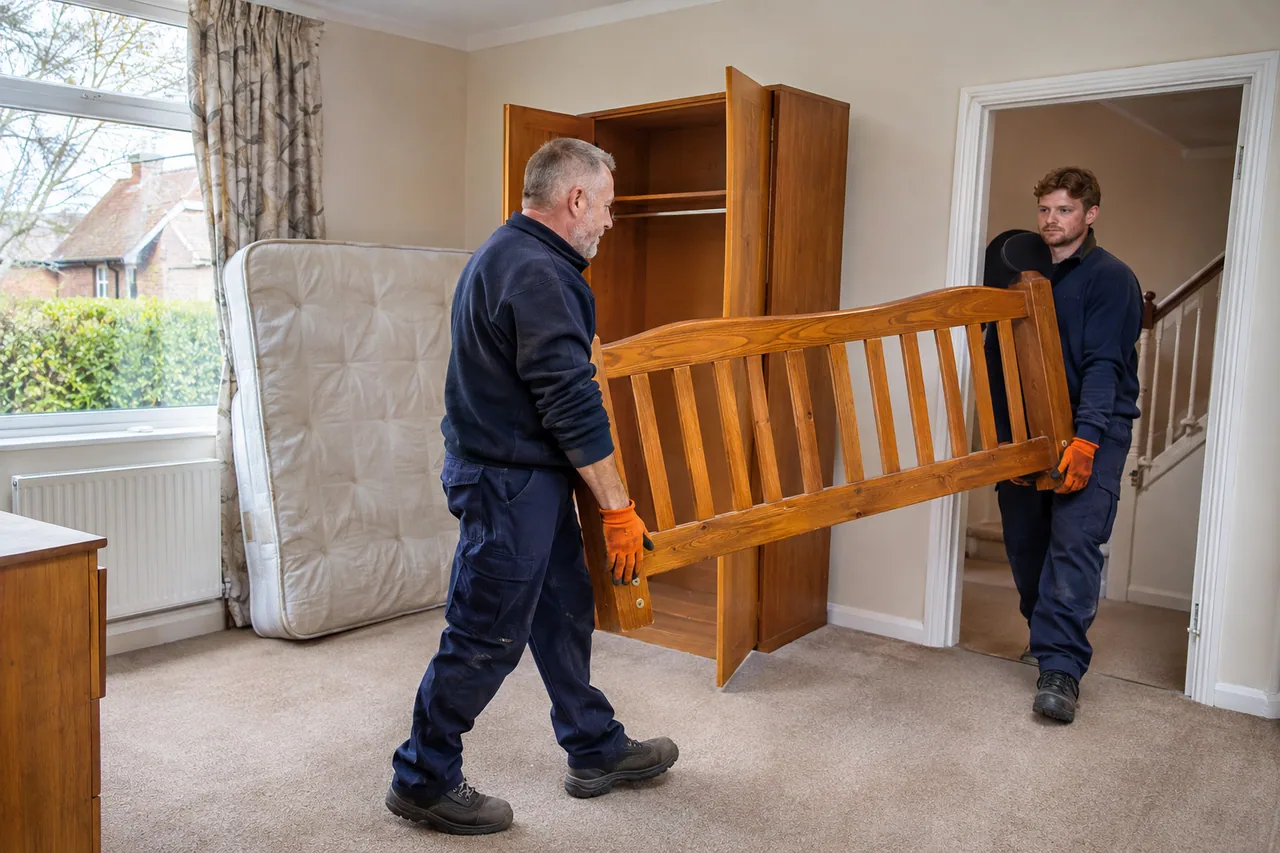
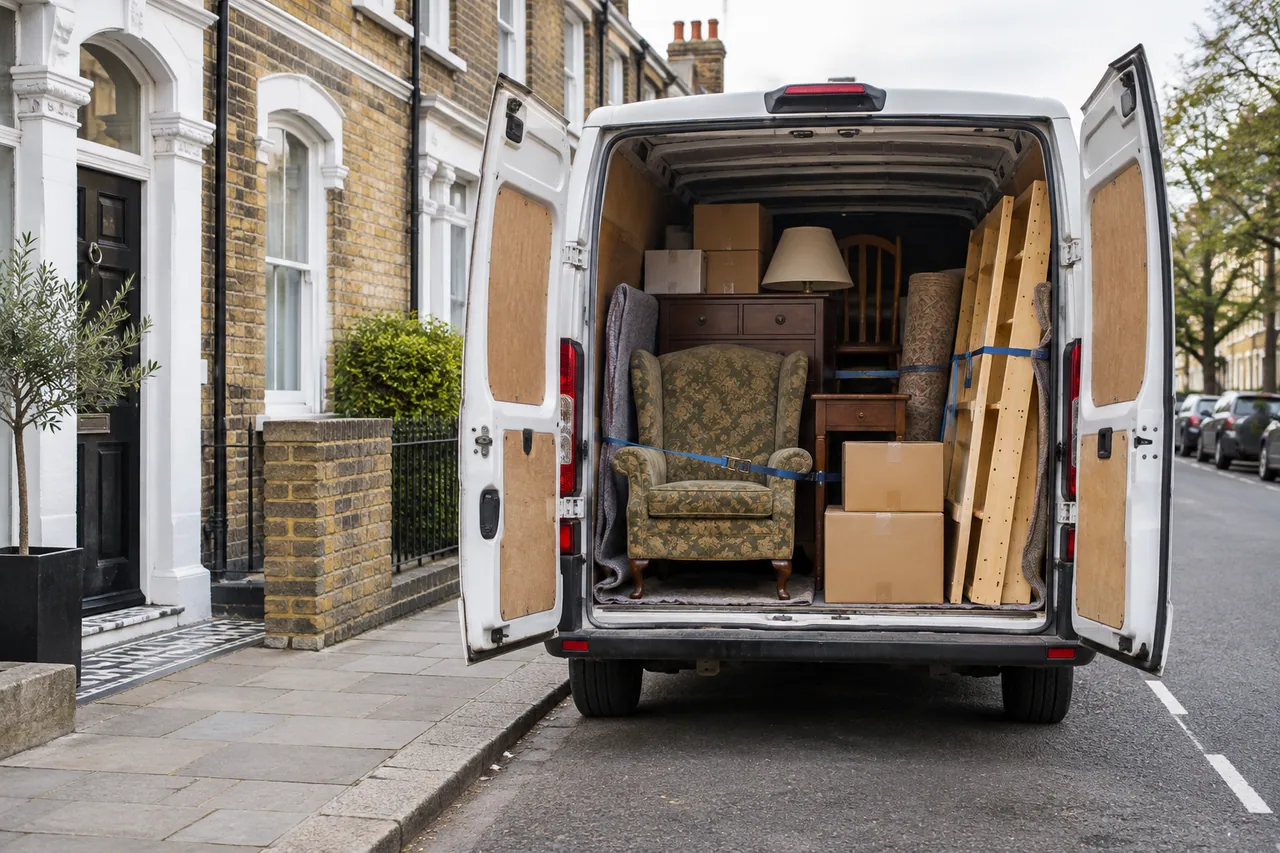
We identify bulky pieces individually because their shape and assembly affect carrying. A mattress is different from a complete bed with frame, base and headboard. A freestanding cabinet may be assembled or already in panels. The item list should show those components so the collection discussion reflects what will actually be moved through the property.
Our furniture disposal service covers the removal of agreed seating, beds, tables and other freestanding pieces. Tell us about narrow turns, large components and anything fixed to the building. Dismantling, detachment or alterations are not assumed from the word clearance; any requirement beyond carrying and loading needs clarifying before agreement.
| Bulky or stored category | What is identified | How it informs collection |
|---|---|---|
| Beds and mattresses | Frame, base, mattress and separate sections | Each component is included or retained explicitly. |
| Storage furniture | Wardrobes, drawers, shelving and panels | Assembly and dimensions are discussed with the exit route. |
| Household boxes | Quantities, sizes and broad contents | Similar containers are distinguished by the actual load. |
| Loose belongings | Accepted domestic items and their locations | The collection areas and removal selection are made clear. |
| Other materials | Electrical, garden or project waste | Separate identification prevents an assumed general-rubbish scope. |
Storage access needs its own description
A loft collection requires a discussion of how the space is reached, the opening and conditions within it. Our loft clearance page explains those access questions. Stored contents and the roof structure are different things: insulation, unknown boards and fixed building components should not be treated as ordinary belongings simply because they occupy the same space.
For any storage location, the route continues beyond its entrance. We discuss landings, stairs, doors and the distance to the vehicle. The team needs to understand how the largest accepted pieces move through that route. We do not assume access is suitable because an object was once taken into the room, or that a lift automatically accommodates every cabinet or mattress.
| Storage or property route | Information discussed | Collection boundary |
|---|---|---|
| Loft or attic | Entrance, opening, usable space and item location | Access suitability is clarified for the actual roof space. |
| Garage or store room | Entrance, contents and route to loading | The accepted stored belongings are defined separately from the building. |
| Upper rooms | Stairs, lift and bulky dimensions | Carrying is planned around the available internal route. |
| Outside approach | Steps, distance and any relevant change in level | The enquiry describes the movement beyond the property door. |
The Hampstead reference used for collection
The GLA town-centre point and the map locate Hampstead within the London Borough of Camden. Camden Council’s neighbourhood material distinguishes Hampstead Town in the North neighbourhood from Camden Town in the Central neighbourhood. We use that distinction to identify the correct area, not to treat every address in the borough as interchangeable for an enquiry.
The council describes Hampstead’s varied setting and village core. Those geographical descriptions do not establish the route inside your property. Where there are external steps, a slope or changes in level along the actual carrying route, tell us and provide photographs. We discuss the conditions that apply at the address rather than claim every Hampstead collection involves the same access problem.

The full postcode and collection location
NW3 is an indicative postal reference around the mapped Hampstead centre. A full postcode and street address are still needed to discuss the collection, especially near a neighbourhood boundary. We establish the premises, the areas holding the unwanted contents and the practical loading position. The map is for orientation, not evidence of a company office or a dedicated vehicle waiting in the neighbourhood.
For a garage containing several different materials, our garage clearance service explains the contents-based scope. A household storage load can include furniture, boxes and old equipment, but tyres, electrical items and unknown containers need separate identification. We clarify acceptance for the actual material rather than automatically include everything stored at the address.
| Load stream | Information for the team | Handling discussion |
|---|---|---|
| Furniture and household items | Main materials, pieces and condition | Removal and suitable onward handling of the accepted belongings. |
| Electrical equipment | Device types and any data-bearing parts | Any specific treatment requirement is confirmed separately. |
| Dense or project material | Description, amount and largest sections | Suitability differs from lightweight stored possessions. |
| Unknown or specialist items | Available identification and relevant condition | Acceptance is clarified before the material enters the agreed scope. |
Quote factors for the described removal
The price discussion considers the load and the carrying work together. Room size does not establish the amount of waste, and the postcode does not establish a universal charge. A few bulky components, many boxes and dense materials present different removal requirements. Photographs and item descriptions help connect the quote with the actual collection rather than a general description of a full room.
Changes before the visit need discussing with the team. More contents, a different storage location or an unavailable access route can alter the job. The accepted load is removed for appropriate onward handling, with recycling or reuse pursued where suitable. That is not an automatic promise of donation for every stored possession or a single recycling outcome for all mixed materials.
| Part of the quote | Detail supplied | What it defines |
|---|---|---|
| Removal selection | Item list, box quantities and whole-area photographs | The contents leaving, distinct from retained belongings. |
| Large components | Dimensions, current assembly and unusual weight | The handling and loading requirements. |
| Carrying conditions | Entrance, floor, stairs, lift and external route | The work between the contents and vehicle. |
| Final scope | Added items, access changes and requested date | The collection arrangement to be confirmed with the team. |
Hampstead: the collection area.
Use the area map to locate the neighbourhood, then give the full postcode and property details when requesting collection.
Map of Hampstead
Load the interactive area map from OpenStreetMap. This connects your browser to the map provider.
Open map in a new tab ↗ © OpenStreetMap contributors
Area orientation only. This map does not mark a company office or a confirmed loading point.
Hampstead collection questions
Can a collection focus on belongings stored in the loft?
Describe the selected contents and the way the loft is reached. We discuss the opening, conditions and onward route through the home before agreeing the scope. Access suitability is not assumed for every roof space, and building components are distinct from ordinary stored belongings.
Do you decide which family possessions should be kept?
No. The removal is based on the unwanted items you identify. Retained belongings and possessions awaiting a decision remain outside the collection. Make the selection clear, particularly where similar boxes or furniture belong to different people or are stored together in one area.
Is Hampstead the same collection area as Camden Town?
They are different neighbourhoods within the London Borough of Camden. This guide concerns Hampstead, while Camden Town has a separate area guide. The full postcode and address identify the premises for the collection discussion rather than a borough name alone.
Should I mention external steps or a change in level?
Yes, where those features form part of your actual carrying route. Explain where they occur between the contents and the loading point, with photographs where useful. We discuss the conditions at the property instead of assuming the same route applies to every address in Hampstead.
Does bed removal include every part automatically?
List the frame, base, mattress, headboard and any separate sections you want collected. Their assembly and dimensions help explain the load and route. Dismantling or detaching anything fixed needs clarification before it is treated as part of the agreed carrying and removal work.
What if I add stored equipment after the furniture quote?
Tell the team what equipment is being added, including electrical devices, tyres or unusual components. The revised material mix and amount may need another scope discussion. An earlier furniture quotation should not be treated as automatic acceptance of everything later found in storage.
Arrange your Hampstead collection.
Discuss the unwanted items, full postcode and route to the vehicle with the collection team.
Discuss your Hampstead collection
Open our booking form to arrange your collection.
Continue to our booking form to confirm your items and contact details.