
THORNTON HEATH COLLECTIONS
Rubbish Removal in Thornton Heath
We collect unwanted contents from London homes and business premises, including Thornton Heath addresses. Loose kitchen belongings are one example of a household load. We establish the objects and materials leaving, how they are currently held and the route to the vehicle, then discuss the collection work and quote.

Thornton Heath collections, explained.
What is different about removing kitchen contents rather than the kitchen?
The request names loose belongings such as crockery, pans or utensils. The cupboards, fitted elements and appliances can stay. We discuss the amount and materials of those possessions, where they are held and any additional work requested, so the collection concerns an identifiable contents load rather than an inferred strip-out or installation task.
How does a box of kitchenware become a useful collection description?
Tell us its main contents and approximate amount, with any mixed or unusual material identified. Pots, crockery, packaging and electrical objects are different descriptions even if held together. The team uses that information with the carrying route to discuss acceptance and price, rather than treat the outside dimensions or number of boxes as the complete load.
The contents included in your Thornton Heath enquiry.
| Loose belongings requested | What helps describe the quantity | What else the team needs to know |
|---|---|---|
| Crockery or tableware | The main objects and approximate extent of the group. | Present condition and any other material mixed with them. |
| Pans and cookware | The types and amount selected, including loose lids where included. | Whether they are the only contents or part of a mixed household load. |
| Utensils and smaller objects | The principal contents of each group or container. | Which possessions leave and which similar items stay. |
| Storage containers themselves | The objects requested and whether anything remains inside. | Whether the container, the contents or both form part of the disposal selection. |
A contents collection can leave the room in use

The organiser chooses the kitchen belongings that are unwanted. The team collects the items included in that request rather than decide which remaining utensils are still useful or which matching pieces should also leave. A limited group can be removed while cupboards, retained crockery and the rest of the household’s equipment remain.
Our household waste removal service provides the main context. The inventory describes what will be taken away, not how much storage the kitchen has. One cupboard might contain bulky but light packaging; another can hold a concentrated group of pans or tableware. We discuss the actual contents instead of pricing a cupboard’s capacity.
Distinguishing the loose household material
The enquiry identifies the principal objects and materials, supported by photographs showing the whole selection. Where something is inside a closed box or hidden behind another group, describe it. That lets the team consider the complete collection rather than the most visible items on a work surface.
We clarify unfamiliar or unusual material before accepting it. The collection description should explain what is present, including any remaining contents within containers, rather than rely on the fact that an object came from a kitchen.

Where the belongings will be presented
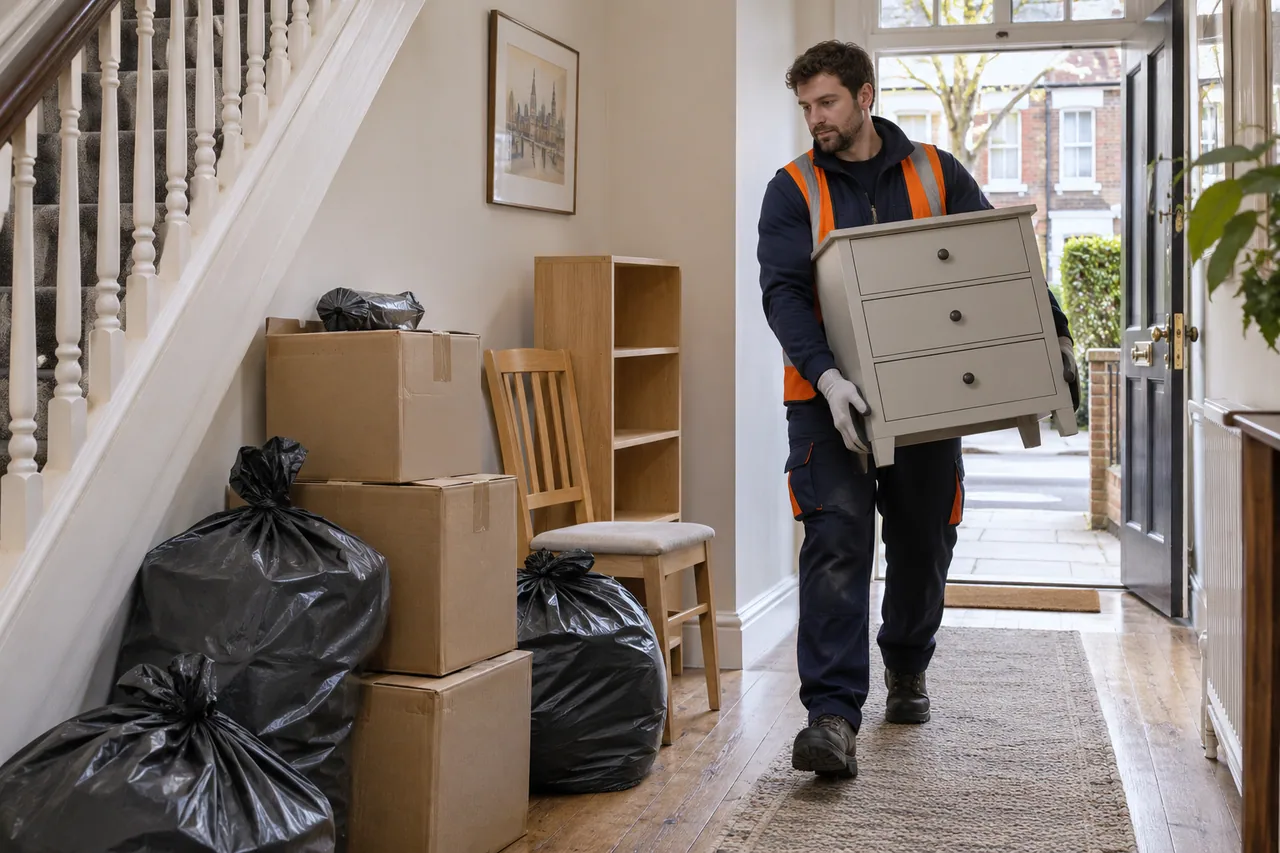
The team needs the current location and form of the load. Loose items, a group held within cupboards and material already assembled into containers can involve different work. Explain what will be presented at the visit, together with any expectation of sorting, packing or another task before carrying. Those requirements are discussed in advance rather than assumed within a general room-clearance description.
If the organiser continues sorting before the visit, update the team on the final selection. A different mixture can occupy the same boxes, and some retained possessions may have been removed from them. The price discussion should remain tied to what is actually being collected.
| Presentation described to us | What we clarify before agreement | Connection with the service |
|---|---|---|
| Loose objects grouped together | Main materials, amount and present location. | The team can discuss the physical contents to be carried. |
| Belongings still in storage | The particular selection and any additional preparation requested. | The scope distinguishes contents removal from an unspoken sorting or packing task. |
| Filled boxes or bags | What they hold and which containers also leave. | The quote represents the material load, not a row of identical-looking containers. |
| Several groups in different places | Contents and quantity at each included point. | The carrying starts from the actual positions described in the enquiry. |
Arranging the contents removal
The map centres on Thornton Heath in Croydon, with CR7 an indicative nearby postcode district. Give the full collection address, postcode and contact arranging entry. The team uses the actual premises and inventory to discuss availability; a preferred date in an enquiry does not already reserve a visit.
The resulting arrangement describes the household load, the work and the available visit. Tell the team if another cupboard’s contents are added, containers change or entry arrangements differ before collection. The revised request is reviewed against the quote. Recycling or reuse is pursued where suitable to the items and available route after removal.
Planning the Thornton Heath visit

Define the loose belongings leaving
The household identifies the kitchen contents requested, distinguishing useful possessions, cupboards and appliances that remain.

Explain materials and presentation
Main contents, amounts and any concealed or unusual material are described, with preparation or additional work clarified before agreement.
At the agreed collection premises

Connect the load with access
The current collection points and route to loading inform the quote, and the team confirms an available visit with the property contact.

Carry and remove the stated contents
The included household material is loaded for transport and appropriate onward handling without extending the instruction to retained fittings.
The contents and carrying behind your Thornton Heath enquiry.


Cupboards and appliances remain independent objects
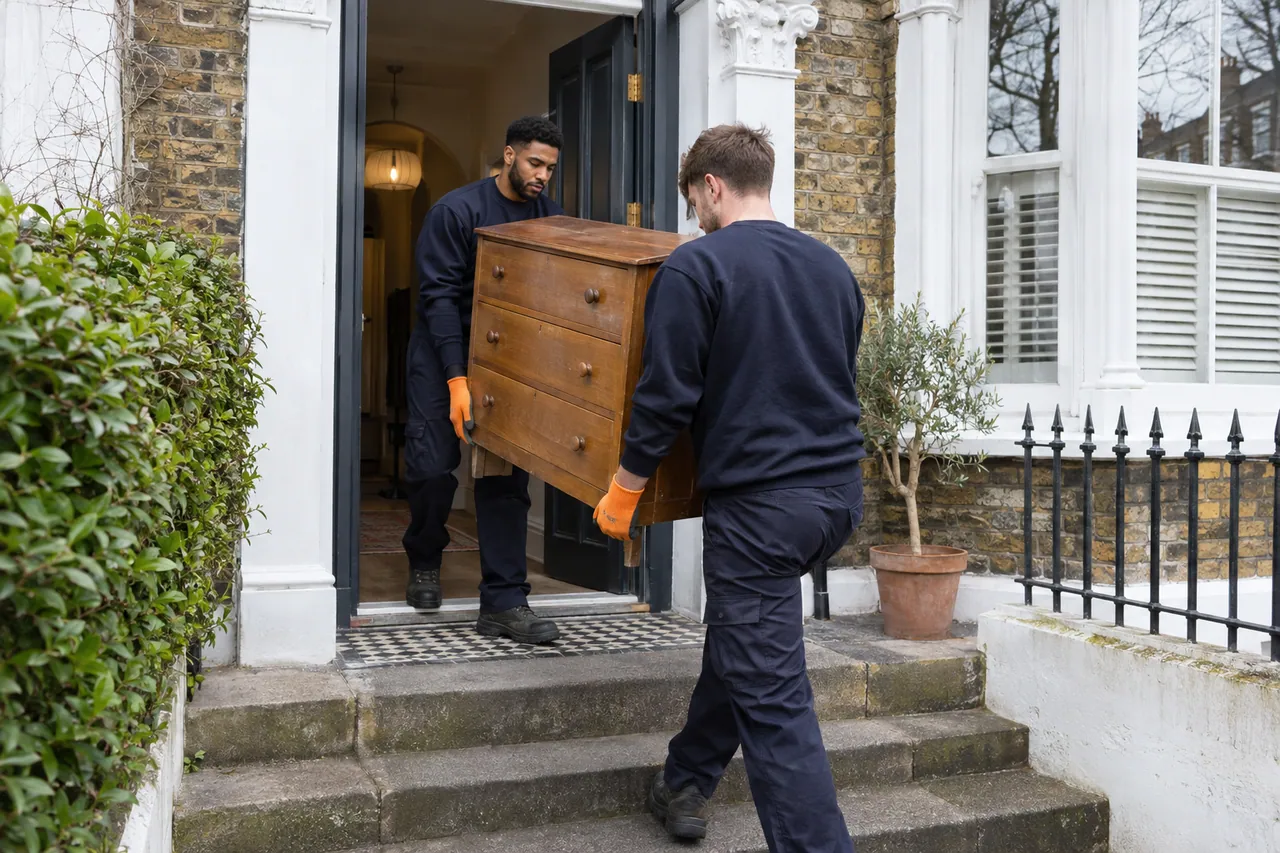
A contents-only request does not determine what happens to furniture or equipment in the room. The cupboard can stay after unwanted belongings leave. A small device beside the crockery may be retained, and a table carrying the boxes may still be needed by the household. We discuss those decisions explicitly where they affect the proposed load.
| Object associated with the contents | Selection to explain | What the team does with that information |
|---|---|---|
| Fitted cupboards | Whether only loose belongings are requested. | Keeps the contents job distinct from work to the premises. |
| Freestanding furniture | Whether the unit also leaves, with its dimensions and assembly. | Considers an additional bulky item instead of hiding it in the kitchenware count. |
| Appliances or smaller electrical devices | The particular equipment, if any, proposed for collection. | Clarifies acceptance and requirements separately from crockery and utensils. |
| Useful household possessions nearby | The objects retained and the group authorised to leave. | Follows the household’s choice rather than judges usefulness during attendance. |
Our furniture disposal information explains the furniture service where a cabinet, table or other piece is also unwanted. Detachment, disconnection or further work to the kitchen needs separate clarification before the quote is agreed. The team’s physical collection should not be mistaken for an installation or strip-out task.
Containers and concealed contents
We discuss what is inside vessels, bags and boxes requested for removal. Their shape does not establish the material they hold. The same container might be empty, contain ordinary household belongings or hold something unfamiliar which needs a specific acceptance question. Explain what is known rather than allow unidentified contents to disappear into a general kitchen-clearance label.
| Container or accompanying material | Information for the enquiry | What is resolved before inclusion |
|---|---|---|
| Empty packaging | Main materials and the overall amount. | Whether the group is genuinely packaging rather than boxes of possessions. |
| A household vessel with contents | What remains inside and what the organiser wants removed. | The physical container and its contents are understood separately. |
| Mixed loose-waste containers | Principal materials and any unusual items. | Acceptance relates to the actual load rather than its outer appearance. |
| Electrical or unfamiliar objects | Item type and the particular requirement or uncertainty. | A separate discussion before the object becomes part of the collection scope. |
A wider request involving other rooms can be discussed through our house clearance service. It still needs the material and collection areas identified. Additional belongings are reviewed rather than the kitchenware enquiry becoming a general allowance for every possession the household later discards.
The carrying work from the kitchen or store
We connect the contents with their current location and the route to loading. Relevant floors, doors, stairs or a usable lift, internal turns and the entrance all form part of that discussion. If some material has moved into a store or another room, identify that starting point as well as the kitchen itself.
The amount and material of the load are considered with the route. A compact group of cookware need not describe the same handling as empty cartons occupying similar space. We do not derive the work from container count alone. The quote reflects the stated contents and the movement from the collection positions to the vehicle.
Thornton Heath: collection location and area map.
Map of Thornton Heath
Load the interactive area map from OpenStreetMap. This connects your browser to the map provider.
Open map in a new tab ↗ © OpenStreetMap contributors
Area orientation only. This map does not mark a company office or a confirmed loading point.
Thornton Heath collection questions
Is a collection of pans and plates a kitchen-removal job?
It can remain a loose-contents collection. Explain the belongings leaving while the fitted cupboards and retained appliances stay. The quote should describe those materials and the carrying involved, rather than infer an agreement to detach units, alter the room or perform other work from the objects’ kitchen origin.
Can the team choose the remaining utensils that seem unwanted?
The organiser makes that selection. Identify which belongings leave and which are retained, with the entry contact able to explain the group. The team follows the stated request rather than decide usefulness or ownership from an item’s appearance, its age or its position beside discarded material.
Are stacked pans described just by the space they occupy?
Explain the principal objects and approximate amount, with any other contents included. Compact storage does not fully describe material or quantity. The team considers that information alongside presentation and carrying, rather than assume the same removal work as an equivalent space filled with empty packaging.
Does the contents job include packing everything from the cupboards?
Describe the current location and any preparation work you want to discuss before agreement. The team needs an identifiable selection and a clear scope. A general request to remove belongings should not depend on an unspoken sorting or packing task that has not been raised with the organiser.
What if some containers still hold an unidentified substance?
Raise the uncertainty before acceptance is agreed, explaining what is known about the container and its contents. The team should not be asked to assume that every object associated with a kitchen is ordinary loose household waste. The material needs its own clarification before inclusion.
Can a retained cupboard stay while a separate freestanding cabinet leaves?
Yes. Identify the particular cabinet as an additional furniture piece, including its size, assembly, position and any contents requested. The fitted or retained furniture remains outside the load. The team reviews the cabinet with the loose belongings so the quote describes both portions explicitly.
Arrange your Thornton Heath collection.
Discuss the unwanted items, full postcode and route to the vehicle with the collection team.
Discuss your Thornton Heath collection
Open our booking form to arrange your collection.
Continue to our booking form to confirm your items and contact details.