
EASTCOTE COLLECTIONS
Rubbish Removal in Eastcote
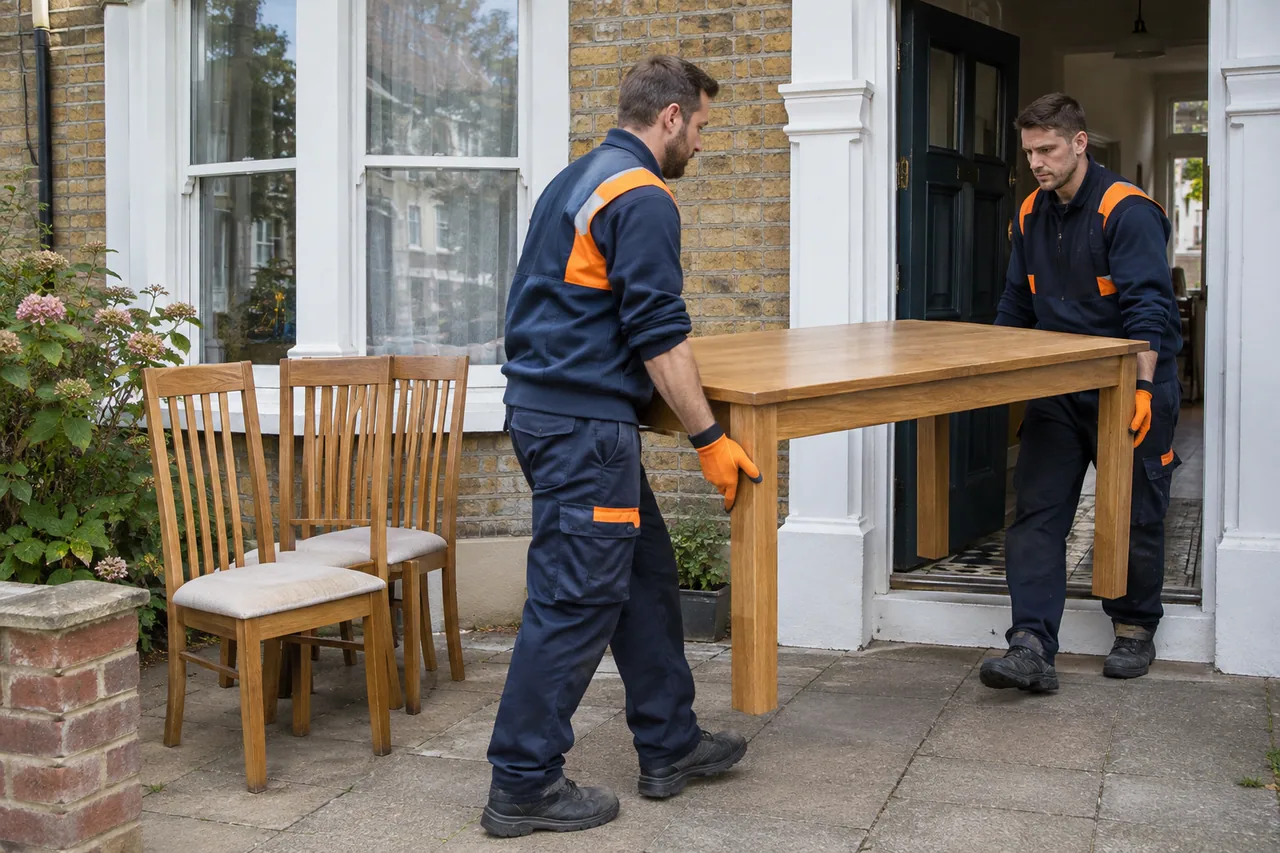
Our London rubbish removal service takes enquiries from households and businesses in Eastcote. We carry the contents covered by the collection arrangement, load them and take them away. For an assembled dining table and chairs, the useful starting point is the furniture’s physical size and form, followed by its route through the property. Those details help the team explain the work and quote before confirming an available visit.
Discuss your Eastcote collection
Open our booking form to arrange your collection.
Continue to our booking form to confirm your items and contact details.
Eastcote collections, explained.
How do you discuss an assembled dining table collection?
We establish approximate dimensions, construction and where the table stands, then connect that form with the route to loading. Tell us about separate leaves or parts also leaving and the chairs included. If work is required before carrying, raise it during the enquiry so the price and scope describe the task requested rather than an assumed change to the furniture.
Can some dining chairs stay while the table leaves?
Yes. Give the count of chairs leaving and distinguish any matching pieces being retained. Include chairs in another room if they also form part of the request. We describe the table and seating in physical pieces, so the load is understandable without using the furniture’s former seating capacity or the room’s name as the collection quantity.
The contents included in your Eastcote enquiry.
| Table information | What the customer describes | What it helps establish |
|---|---|---|
| Overall dimensions | Approximate length, width and height in its current form. | The bulky shape which must follow the route out. |
| Construction | The main tabletop and base materials and relevant features. | The physical object rather than a generic table count. |
| Current assembly | Whether the table is whole or already in separate pieces. | The presentation for which carrying is being discussed. |
| Accompanying components | Extension leaves or other parts leaving with it. | The complete furniture group beyond the main body in the picture. |
Begin with the table as it stands today
An assembled table has length, width and height, as well as a construction which matters to the removal discussion. A photograph may show its appearance but leave dimensions unclear. We use approximate measurements and the current presentation to understand the bulky object the team is being asked to carry from the room.
The furniture disposal service covers that item-focused enquiry and larger furniture loads too. A table can be collected on its own or with a stated chair group and other contents. We discuss the complete request rather than presume a whole dining-room clearance. The customer identifies what leaves; the team connects those contents with carrying, loading and the price for the premises arrangement described.
The route is worked through from room to vehicle
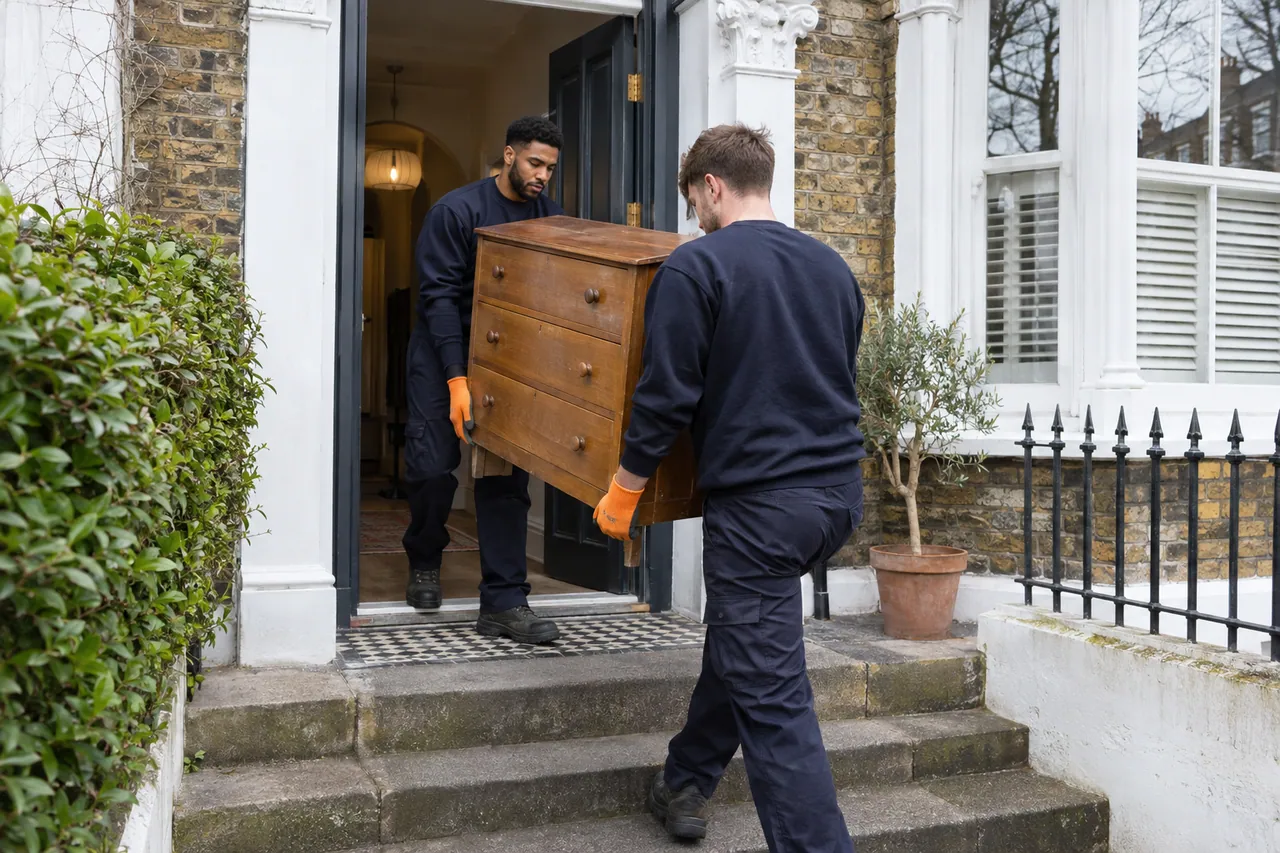
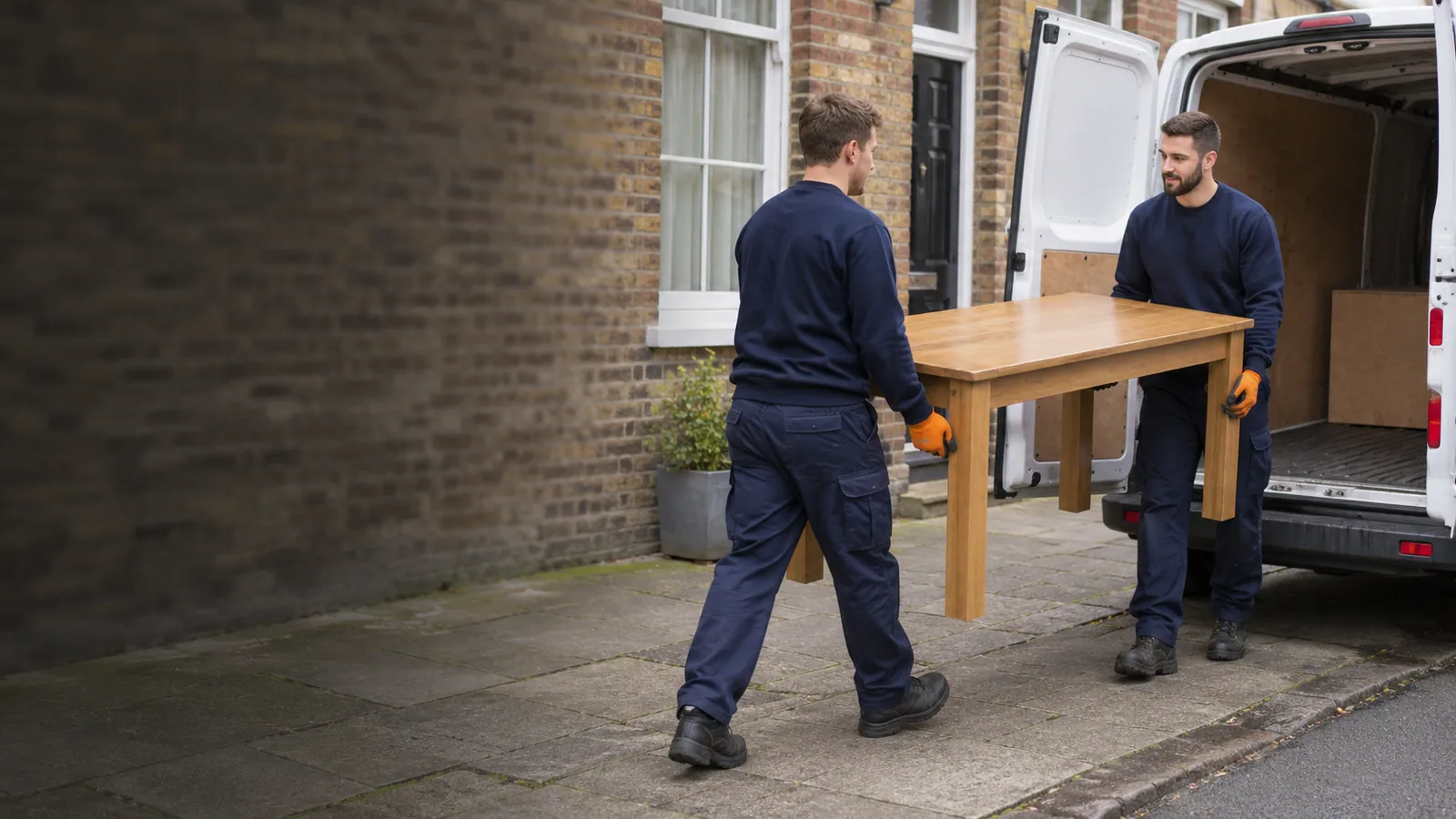
We start with the collection room and floor, then discuss doors, turns, stairs or a usable lift where these are relevant. The same table can involve different work from a ground-floor room or another level, and its position within the premises matters alongside its dimensions. A smaller chair can be part of the same job without explaining the route for the table.
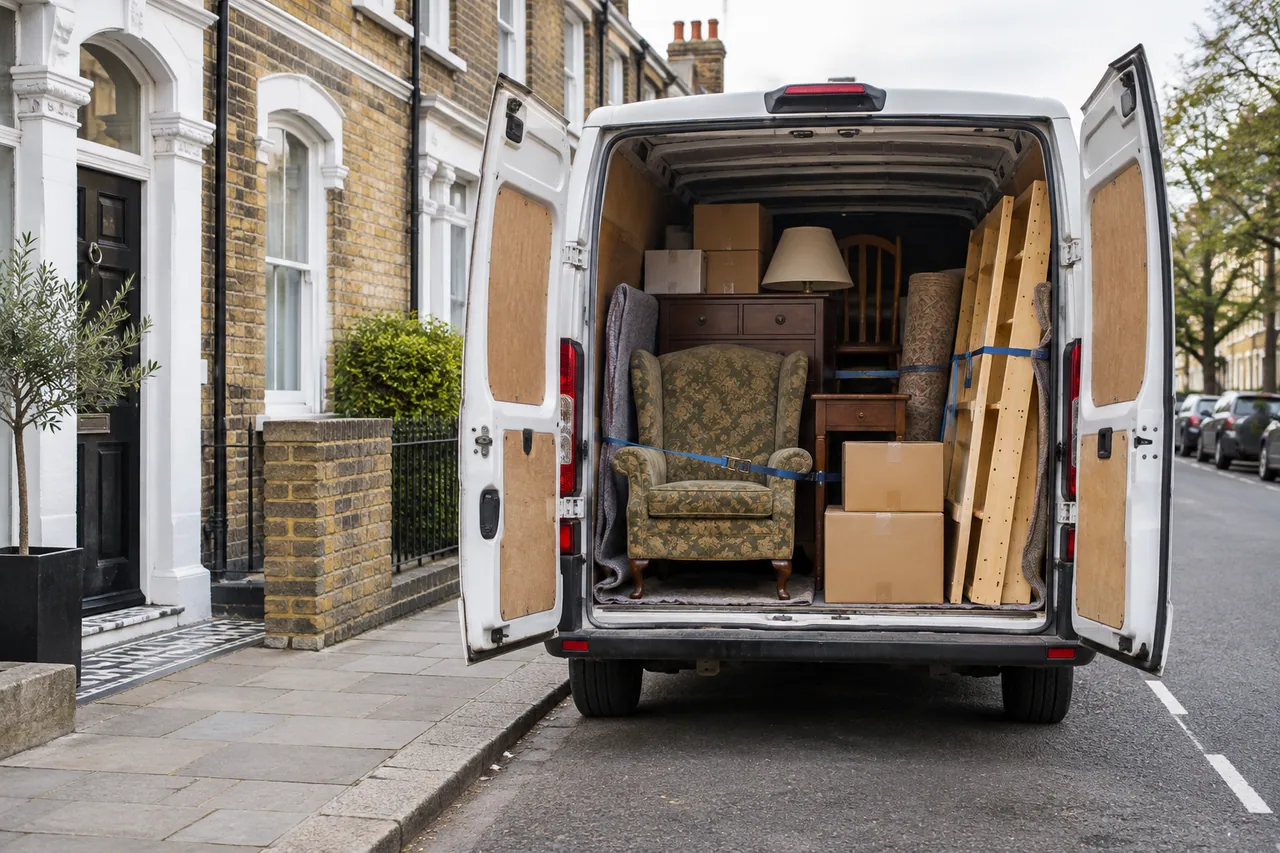
Loading is the final connection in that route. The person arranging removal describes the practical vehicle position and distance from the contents. We discuss the entry contact and any premises arrangement needed for access. These details are established for the individual property; an Eastcote address does not imply a particular house type, floor or doorway layout.
| Part of the journey | Detail connected with the furniture | Carrying work described |
|---|---|---|
| Room to the first doorway | Table position and current dimensions. | Movement from where the piece actually stands. |
| Through the building | Relevant doors, turns and floor changes. | The route for the large object as well as the chairs. |
| From other rooms | Locations of included seating or components. | Additional starting points within the same removal. |
| Exit to loading | Practical stopping point and carrying distance. | The furniture’s connection with the collection vehicle. |
Clarify any work needed before movement
If the table is still assembled and further work is requested, explain it before the scope and quote are agreed. We need to distinguish ordinary carrying from another task, just as the customer needs to know what the collection price covers. A furniture name is not a complete instruction to alter the table or the premises.
The table may already be separated, or the customer may be arranging for it to be presented differently. Describe what will be there for collection and update the team if that changes. An earlier assembled view and a later group of components can share the same short item description while involving different pieces and route considerations. The job discussion follows the presentation, not an assumption about how it will be prepared.
The chair group is counted independently
We ask which chairs leave and where they are held. A matching appearance does not mean the whole set has to be discarded, and a table’s old seating capacity does not establish the number of chairs at the property. The entry contact should recognise the same furniture list as the organiser making the enquiry.
Loose leaves and accessories are treated in the same practical way: identify them if they also leave and say where they stand. Personal belongings on or near the table remain the customer’s selection decisions. The team can then work from a clear furniture inventory rather than decide what appears unwanted in the room.
| Alongside the table | Instruction needed for collection | How it affects the load |
|---|---|---|
| Chairs beside it | The number leaving and any seats retained. | The seating count is stated directly. |
| Chairs stored elsewhere | Their quantity and present locations. | Carrying includes those starting points. |
| Loose extension pieces | Which parts leave and which remain. | The main table photograph is supplemented by a component list. |
| Other furniture | The particular pieces, form and dimensions. | An expanded request can be discussed before the quote is finalised. |
One arrangement for the furniture and carrying
The team brings the table description, chair count and route together when discussing price and an available visit. The person giving access identifies the contents and collection points. We carry the furniture covered by that arrangement, load it and transport it for onward handling. Additional material or work is reviewed before it becomes part of the job.

Describe the table and seating
Current dimensions and assembly explain the table, with chair counts and any separate leaves or components completing the furniture inventory.

Discuss its route and requirements
The room, floor, doors and practical loading are connected with the furniture, including any task requested before carrying.

Confirm the collection and price
The team explains the scope and quote, then confirms an available visit with the person arranging access to the premises.

Carry and remove the furniture
The included pieces are moved from their described positions, loaded and taken away for appropriate onward handling.
The contents and carrying behind your Eastcote enquiry.
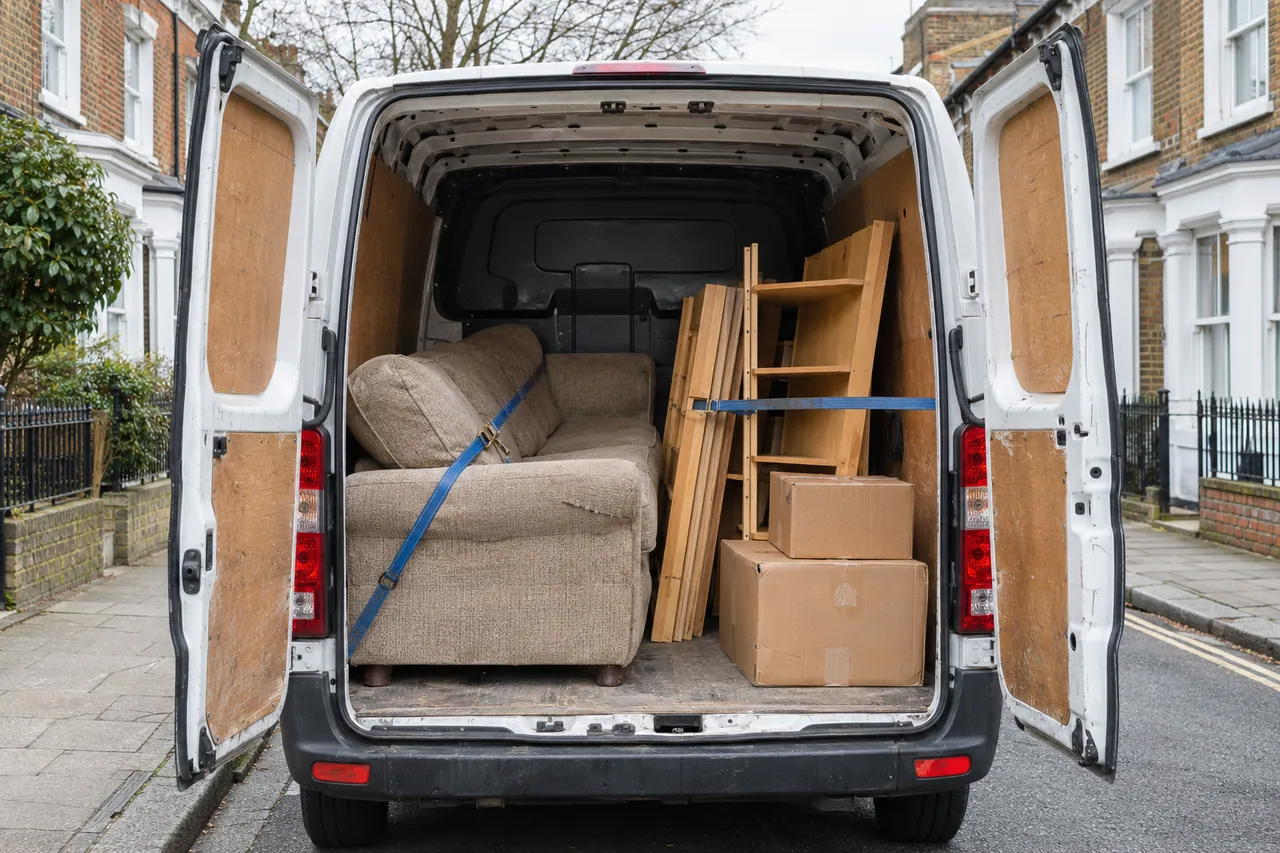
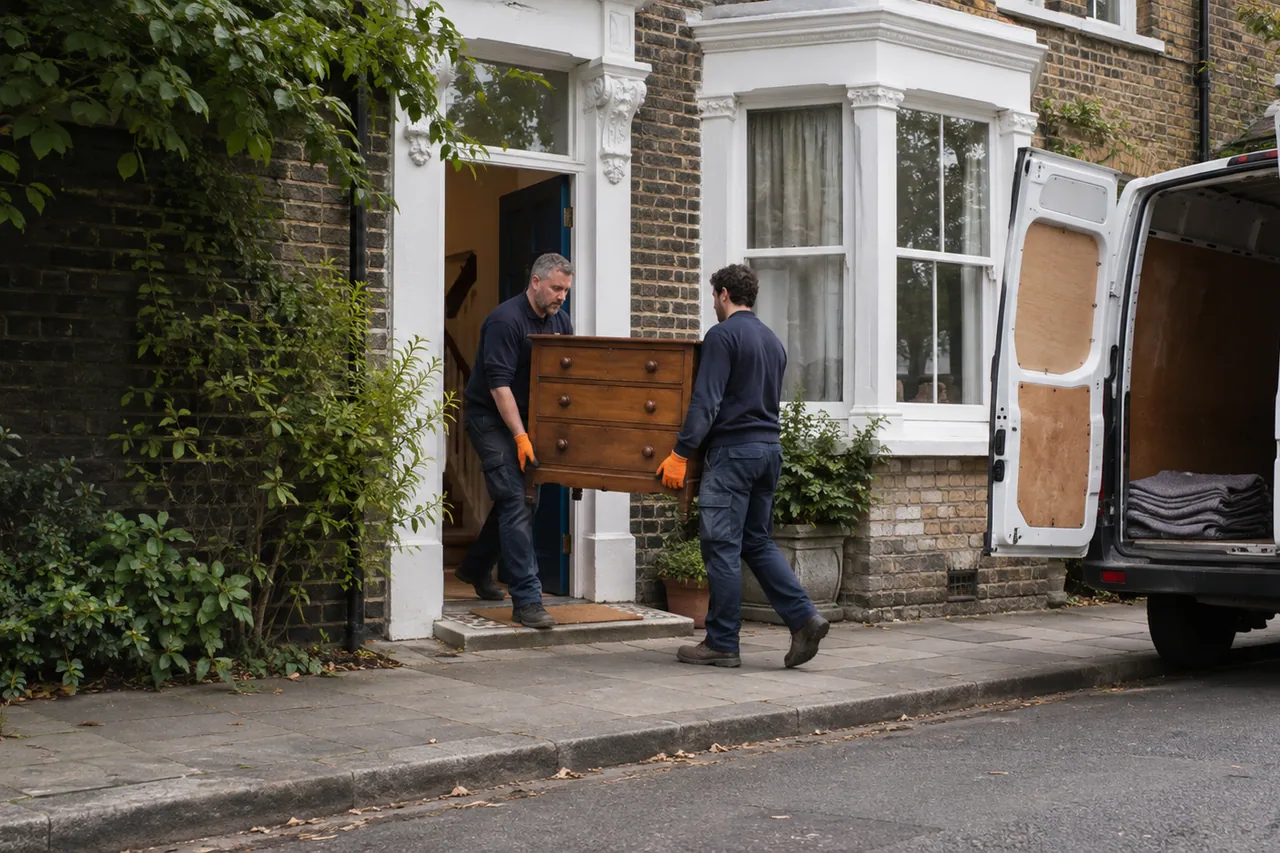

A wider household load needs its own description
If bags, boxes or other possessions also leave, our household waste collection discussion covers those materials. Explain their main contents and approximate amount. They can be considered alongside the furniture without being hidden inside a vague dining-set label or an unstated extra-rubbish allowance.
Where several rooms are included, the house clearance service provides the wider context. The collection still needs an inventory and access discussion. Electrical equipment or unusual material is identified before acceptance, and any particular additional requirement is raised before the arrangements are confirmed. Following removal, recycling or reuse is pursued where suitable to the materials and available onward route rather than one claimed outcome for every piece of the load.
The Eastcote address and collection confirmation
Eastcote is the mapped centre reference within Hillingdon, with HA5 an indicative nearby postcode district. We use the full property address to locate the enquiry and discuss availability. The area reference does not show the table’s room, doors or practical loading position; those are discussed with the contact for the premises.
Eastcote: collection location and area map.
Map of Eastcote
Load the interactive area map from OpenStreetMap. This connects your browser to the map provider.
Open map in a new tab ↗ © OpenStreetMap contributors
Area orientation only. This map does not mark a company office or a confirmed loading point.
Eastcote collection questions
Is a six-seat table a six-chair collection by definition?
We ask for the furniture which actually leaves. Give the chair count and identify the table and accompanying parts, regardless of its former seating capacity. Some chairs may have gone elsewhere or be retained. The quote can then describe the physical load rather than a label which does not show what is present at the property.
How should I explain a table which is already in parts?
List the top, base or legs and other components leaving, with approximate dimensions and current locations. That is the presentation to discuss, even if an older image shows an assembled table. Include any additional task still requested before carrying so the scope and price are tied to the furniture as it will be collected.
Can extension pieces stay when the main table is unwanted?
Yes. Identify the components leaving and those being retained. Matching or associated pieces do not all have to share the same instruction. The entry contact should understand the same inventory as the person arranging removal, including any leaves or other parts held away from the main table rather than visible in the first photograph.
Will carrying include changing the table or the building to fit the route?
Raise any additional work before agreement. We need the furniture’s current form and the access details to understand the request. A carrying and loading arrangement should not rely on another task which has never been discussed. The team clarifies the scope so the customer knows what work the price covers.
Can chairs from another floor be included with the dining furniture?
Describe their quantity and location when discussing the load. Their association with the table does not explain the carrying required from another starting point. We connect those chairs with the overall furniture inventory and premises route, rather than assume all the pieces are together in the dining room or already beside the exit.
What if we decide to include household boxes too?
Tell the team their main contents, approximate amount and current collection points. We discuss material acceptance and the whole carrying job alongside the furniture. The earlier table description is not an unlimited allowance for smaller contents, so the quote and available arrangements should be reviewed against the full collection now being requested.
Arrange your Eastcote collection.
Discuss the unwanted items, full postcode and route to the vehicle with the collection team.