

HOLBORN COLLECTIONS
Rubbish Removal in Holborn
Our Holborn rubbish collection brings together the removal list, access to the premises and the work of carrying and loading. We discuss home and workplace contents individually, distinguishing the accepted waste from furniture, documents, stock and other belongings that need to stay in use.
Holborn collections, explained.
How do you define a Holborn workplace clearance?
We establish which furniture, equipment and other contents have been authorised for removal, where they stand and how they can reach the loading point. The enquiry separates working assets from waste. Once the contents and premises arrangements are understood, the team discusses the quote and an available collection rather than assuming an entire office is being emptied.
Can storage furniture leave while its working contents remain?
Identify the cupboards or shelving leaving and distinguish the documents, equipment or stock being kept. We discuss the units in their current form, including any contents still inside and any preparation requested. The organiser defines the furniture selection, and the carrying description connects those units with their room, floor and route to loading.
The furniture and equipment authorised to leave
A workplace removal starts with the inventory that the organiser wants taken away. An office can contain discarded desks alongside furniture being retained, devices still in use and boxes belonging to a separate occupier. We discuss these distinctions before setting the collection scope. Naming the room is useful, but it does not establish that every object in it should be removed.
The same enquiry can concern only selected pieces. For example, a set of unwanted chairs may be separate from a larger storage clearance being considered later. We identify the current request and do not merge future possibilities into the agreed load. Our office clearance service describes the wider workplace removal, including the need to distinguish contents from installed fittings and retained business assets.

A usable inventory for the collection team

We discuss counts and materials as well as photographs. Several desks may have different tops or separate drawer units, while cabinets can hold contents that have not yet been selected. The inventory records what is actually leaving in its current form. That gives the team a meaningful description for quoting and avoids treating all workplace objects as one undifferentiated pile.
Premises access is part of the removal description
We connect each collection area to the entrance and loading position. The discussion covers floor levels, stairs or a usable lift, internal turns and any premises contact needed for entry. These details come from the actual address. We do not assume building arrangements, a particular loading restriction or unrestricted vehicle access because an enquiry says Holborn.
If furniture must be detached, disassembled or otherwise altered before movement, that requirement needs explaining before the quote. Carrying an available desk is different work from removing a fixture attached to the building. Our collection discussion establishes that distinction rather than leaving it for the access contact to discover during the visit. Changes in the route, such as items moving to another floor, should also be raised before the work is confirmed.
How the workplace load becomes an agreed collection
We use the inventory and route together. Photographs of the whole proposed load help explain the quantity, while the organiser clarifies retained belongings and any separate material streams. The organiser and team connect that list with the carrying work and quote. During the collection, the listed contents are carried from their identified positions, loaded and taken away, while working assets remain distinct from the load.


Confirm the removal boundary
The organiser identifies the furniture, boxed contents and other items authorised to leave, keeping working assets and retained belongings separate.

Review movement through the premises
We establish the relevant floors, usable route, bulky dimensions and loading arrangements with the person organising access.

Discuss scope and availability
The team explains the collection quote against the accepted load and handling, then confirms an available visit directly.

Carry, load and remove
The agreed contents are moved from their identified locations to the vehicle and taken away for appropriate onward waste handling.
The contents and carrying behind your Holborn enquiry.

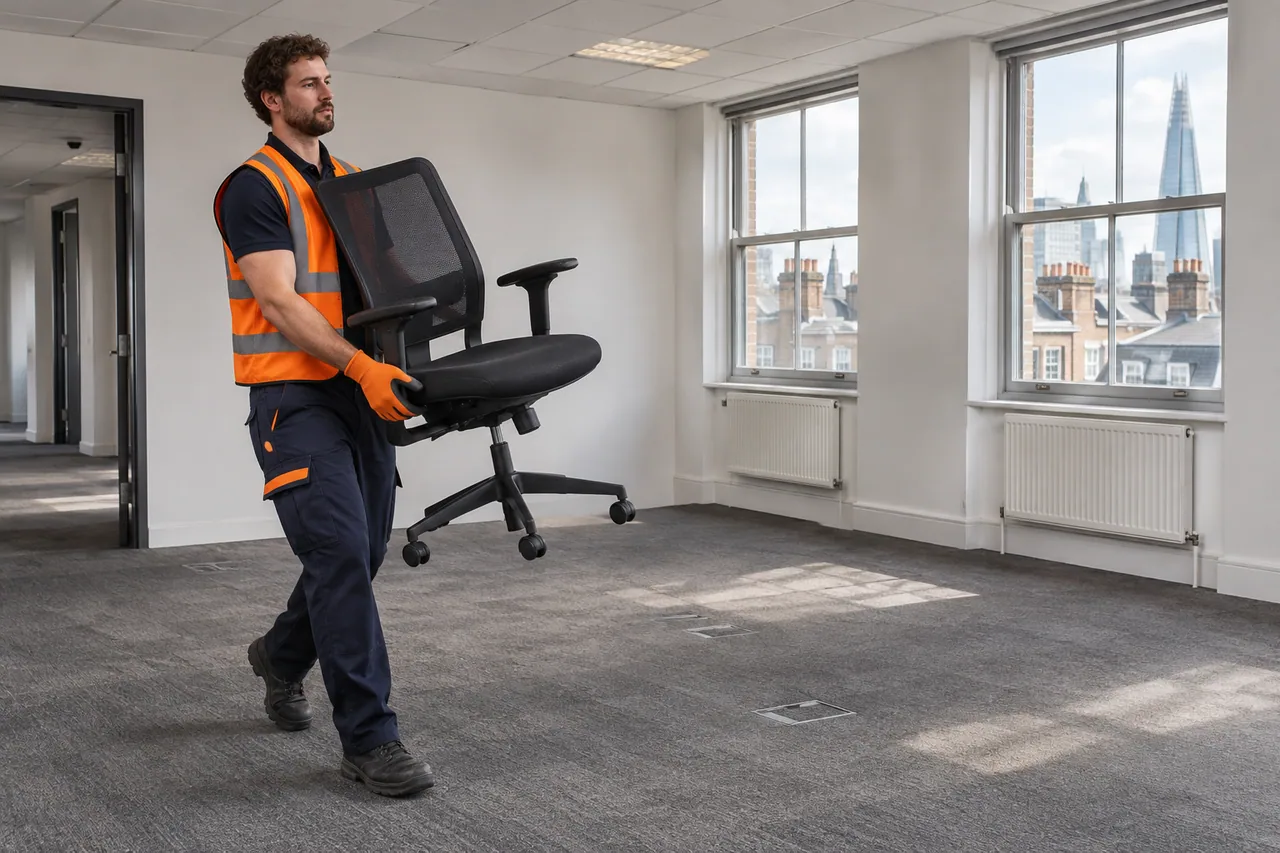

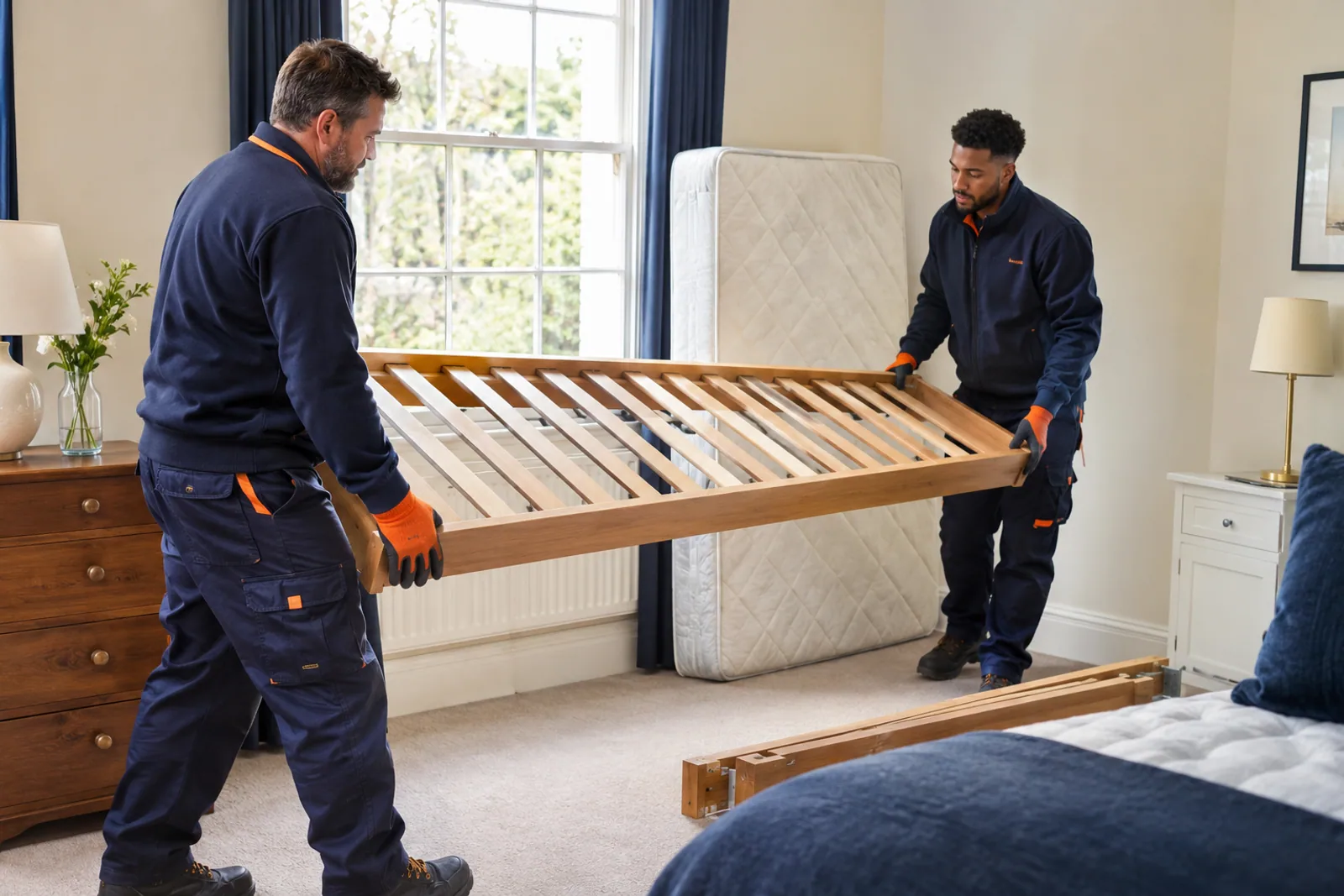
The material groups within the removal.
| Workplace contents | Information identified | What is included when agreed |
|---|---|---|
| Desks and work tables | Number, size, construction and any legs or tops already separated. | Carrying and loading the listed components from the collection locations. |
| Seating | Chair counts and any separate parts included with them. | The authorised seating, without assuming all chairs in a working office are waste. |
| Cupboards and shelving | Freestanding units, their assembly and whether any contents are also leaving. | The accepted storage furniture and expressly included loose items. |
| Boxed business contents | Main materials, quantity and which boxes form part of the removal. | The identified accepted load rather than unknown material elsewhere in storage. |
Electrical equipment needs its own description
A business may request furniture and electrical items in one enquiry, but they remain different material categories. We need to know the device types and quantity rather than assume that every item beside a desk is ordinary mixed rubbish. Any requirement relating to information held on a device needs explicit discussion; a general clearance request is not a promise of certified data destruction.
| Equipment question | Detail discussed before acceptance | What remains distinct |
|---|---|---|
| Which devices are included? | Computers, screens, printers or other identified equipment and their counts. | The listed electrical load is separate from furniture and loose office contents. |
| Where is it held? | Collection room, floor and any separate equipment storage area. | Carrying starts from the locations agreed rather than an assumed single pile. |
| Are accessories included? | Cables, stands and separately boxed components that are also requested for removal. | Accepted accessories are counted instead of being confused with retained equipment. |
| Is another requirement involved? | Any additional handling or information-security request is raised specifically. | Collection and transport do not imply an unagreed certification or technical service. |
For that part of the load, our IT disposal information provides the appropriate service context. Working equipment should not be treated as waste merely because it is near the items selected for collection. We discuss acceptance and the scope that the organiser is actually authorising.
Locating the premises around the Holborn reference
The map centres on High Holborn and Kingsway in Camden, with WC1V and WC2A among the nearby postcode districts. Give the full collection address even when the premises is usually known by a business name. The postal location, occupier and entry contact together help us identify the right property for the removal.
| Address information | How it clarifies the enquiry | Connection to the visit |
|---|---|---|
| Full postcode | Identifies the actual postal location rather than the centre shown on the map. | Collection availability is discussed for the requested address. |
| Building and occupier | Distinguishes the business or home where the removal is needed. | Entry and contact arrangements can be attached to the correct premises. |
| Collection areas | Lists the rooms or storage spaces holding the accepted items. | The team discusses the complete carrying requirement instead of one visible room. |
| On-site contact | Identifies who can provide entry and clarify the agreed selection. | The removal list is connected to somebody authorised to explain it. |
Household contents and mixed-use enquiries
Our removal work is not restricted to office furniture. A Holborn address may require a domestic collection, or an organiser may need to discuss household belongings alongside a separately identified business load. We define those contents by their use and materials rather than assume the nature of the property from the neighbourhood name.
For domestic contents, the enquiry identifies furniture, loose belongings, selected boxes and the areas included. Our household waste removal service is relevant where accepted domestic items form the load. Heavy renovation debris, garden material or unidentified substances are not absorbed into an ordinary contents description: they need their own acceptance discussion. The purpose is a collection plan that reflects what the vehicle will actually take away.
Price factors and an agreed end point
The quote considers quantity and material as well as carrying and loading. A group of light chairs and a smaller number of heavy, rigid cabinets do not describe the same removal. Nor does a room name tell us the amount hidden in cupboards or boxes. We explain the quote against the described work and review changes that alter it before treating them as included.
| Part of the quote | Description used | Scope clarified for the customer |
|---|---|---|
| Accepted inventory | Furniture counts, device types and the main contents of boxes. | The waste being removed is identifiable rather than open-ended. |
| Size and construction | Bulky dimensions, heavy components and present assembly. | Carrying and vehicle loading can be discussed around the real pieces. |
| Access and handling | Floors, entrance, route and distance to the vehicle loading point. | The work at the premises forms part of the collection conversation. |
| Visit and changes | Requested date, access contact and any additions before the visit. | An available collection is confirmed against an up-to-date scope. |
The service takes the listed contents away for appropriate onward handling, with furniture and electrical equipment identified as different material streams. The customer receives a defined removal arrangement, with the contents, carrying work and visit discussed clearly enough to organise entry and distinguish the load from the assets remaining at the premises.
Holborn: collection location and area map.
Map of Holborn
Load the interactive area map from OpenStreetMap. This connects your browser to the map provider.
Open map in a new tab ↗ © OpenStreetMap contributors
Area orientation only. This map does not mark a company office or a confirmed loading point.
Holborn collection questions
Can your team remove chairs while the office remains occupied?
We can discuss a selected seating collection rather than an entire office clearance. Give the chair count, location and access arrangements, and distinguish the chairs staying in use. The collection scope then concerns the authorised pieces and their movement through the premises, not every chair visible on the day.
Are documents included in a desk collection?
Not automatically. Explain whether drawers or boxes contain material requested for removal and identify the main contents. Paper records and other business information should be addressed explicitly. A furniture collection does not by itself establish confidential destruction, certification or permission to remove documents that the organiser has not selected.
Can a home collection use the same Holborn enquiry route?
Yes. Tell us that the load is domestic and describe the furniture or belongings selected. We discuss the actual premises route and accepted materials just as we would for other property contents. The area label does not cause a household enquiry to be treated as commercial waste.
What if an item has moved to another floor after quoting?
Tell the team before the visit so that the carrying description can be updated. A different floor or route may change the handling involved even if the item count stays the same. The collection should be confirmed against the current location, not an earlier description that no longer applies.
Do you disconnect installed office equipment?
Work beyond carrying and loading needs separate clarification. Identify anything attached, connected or built into the premises when requesting the removal. We do not assume that a general office clearance includes disconnection, detachment or technical work, and those requirements must be resolved before they become part of an agreed scope.
How should boxes from separate workplace occupiers be identified?
Explain which boxes the organiser is authorised to release, their main contents and where each group stands. A shared storage area can contain more than one collection selection, so the list needs to identify the load clearly. The team connects those groups with the carrying route while boxes belonging to another occupier remain outside the removal request.
Arrange your Holborn collection.
Discuss the unwanted items, full postcode and route to the vehicle with the collection team.
Discuss your Holborn collection
Open our booking form to arrange your collection.
Continue to our booking form to confirm your items and contact details.