
ROMFORD COLLECTIONS
Rubbish Removal in Romford
We arrange removal of accepted contents from Romford homes and business premises. This guide explains a retail-led collection: taking away selected freestanding shop furniture, unwanted stored items and described packaging while keeping stock, reusable equipment and installed shop fittings outside the removal unless their inclusion has been expressly discussed.
Romford collections, explained.
How do you separate a shop collection from the business stock?
We define the removal against an authorised list, identifying the freestanding furniture, packaging and other accepted contents leaving the premises. Stock and working equipment are described as retained unless expressly included. The person arranging the collection confirms the selection and its locations, so a pile near a sales or storage area does not become an unrestricted clearance instruction.
Can a Romford shop request a single removal rather than regular collections?
Yes. A one-off accepted load is discussed around its contents, quantity, carrying route and available visit. Any recurring waste requirement is a separate arrangement. Give the complete premises address and postcode; the Romford town-centre reference in Havering, with RM1 nearby, provides orientation rather than an automatic appointment or a business collection schedule.
The boundary between retail contents and the premises itself
Our removal discussion distinguishes things held in the premises from the fabric of the shop. Freestanding display furniture, unwanted chairs and loose storage contents can be described as a proposed load. An attached counter, wall-mounted unit or connected installation presents an additional requirement. Detachment and other work beyond carrying and loading need clarification before they can be considered part of the service.
Our shop clearance service provides the relevant context for taking away accepted retail contents. The organiser should be able to identify the items authorised to leave, not simply point to the business address. We do not make commercial decisions about whether stock is still saleable, who owns equipment or what a business intends to retain. Those decisions define the removal list before the team agrees the work.

A retail inventory organised around the actual objects
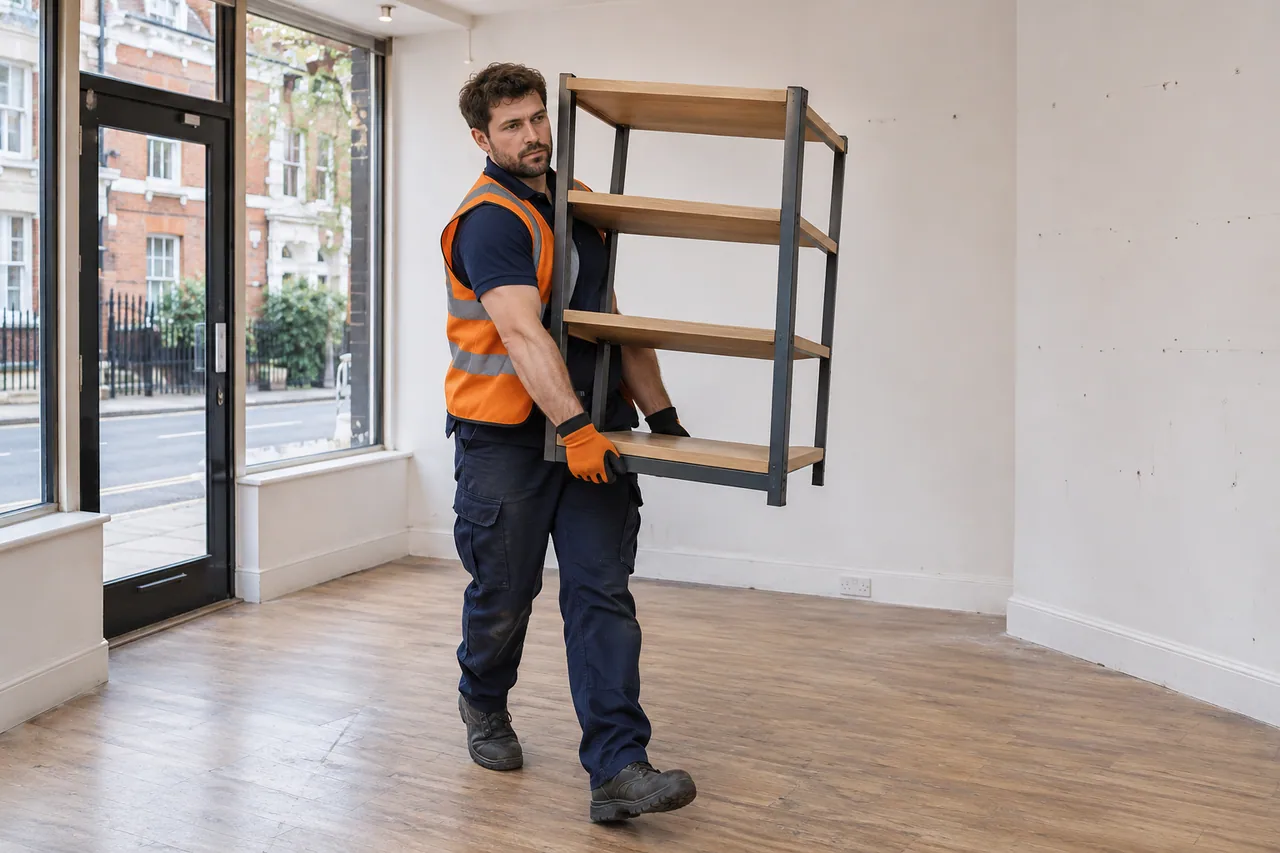
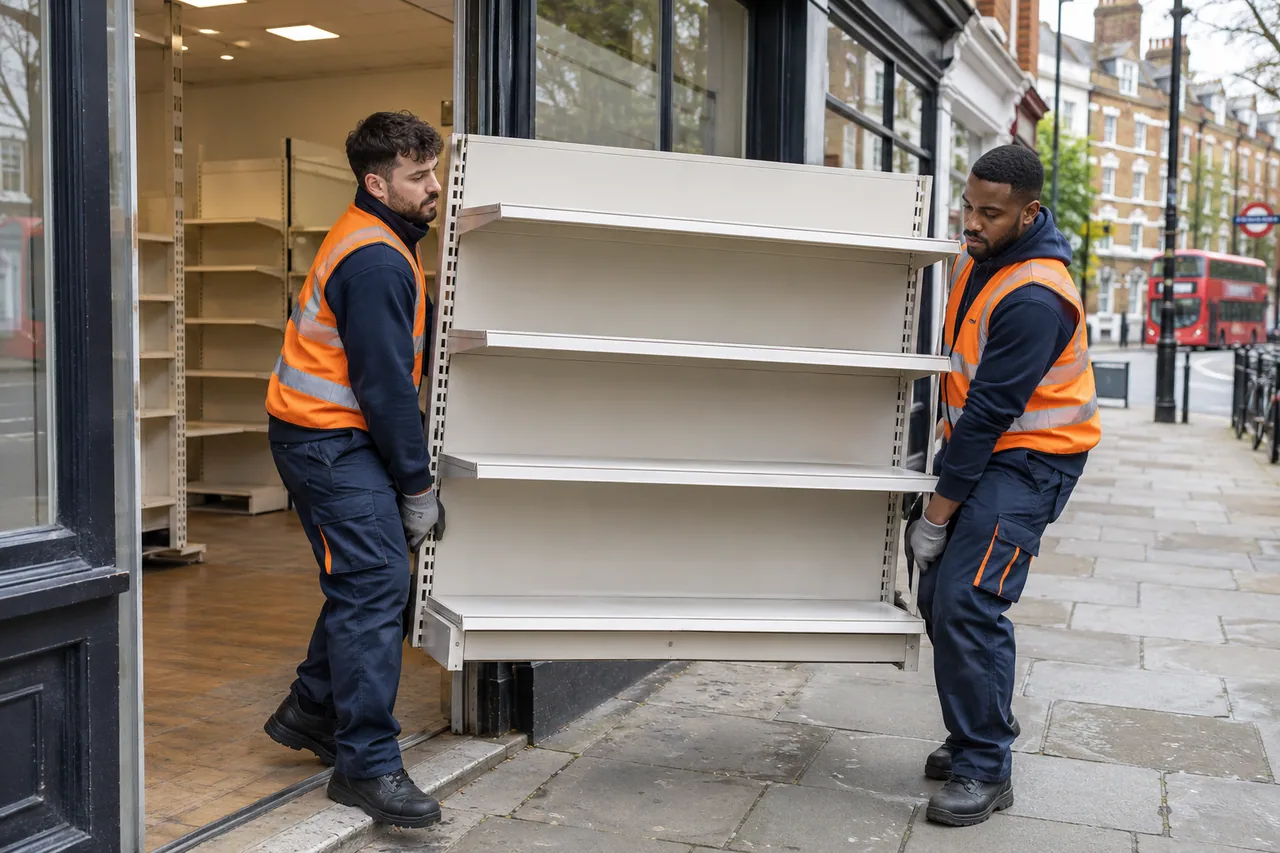
Display units can have separate shelves, racks may hold products and cupboards may contain mixed supplies. We discuss the object and its contents separately. That distinction prevents a furniture collection from unintentionally becoming a stock or records removal. Photographs showing the selection in its present form support the description, particularly where components have already been separated.
Packaging and other loose shop waste
Loose material can form a substantial part of a retail enquiry, but packaging is not one uniform category. We identify cardboard, other packing materials and anything mixed through the proposed load. A sealed carton can contain retained goods, electrical items or unfamiliar material, so its outer appearance alone does not establish what is being collected. We discuss the main contents and amount before accepting the load.
| Loose collection material | Details used in the removal discussion | Difference from a general shop clearance |
|---|---|---|
| Empty cartons | Overall amount and whether they contain any other selected material. | The packaging load is identified independently from merchandise or boxed business assets. |
| Other packing material | Principal materials and the extent of each pile or container. | Acceptance reflects the actual waste rather than an assumption based on cardboard nearby. |
| Unwanted stored objects | Item types, quantities and the places where they are held. | The selected loose contents are included without opening the scope to all storage. |
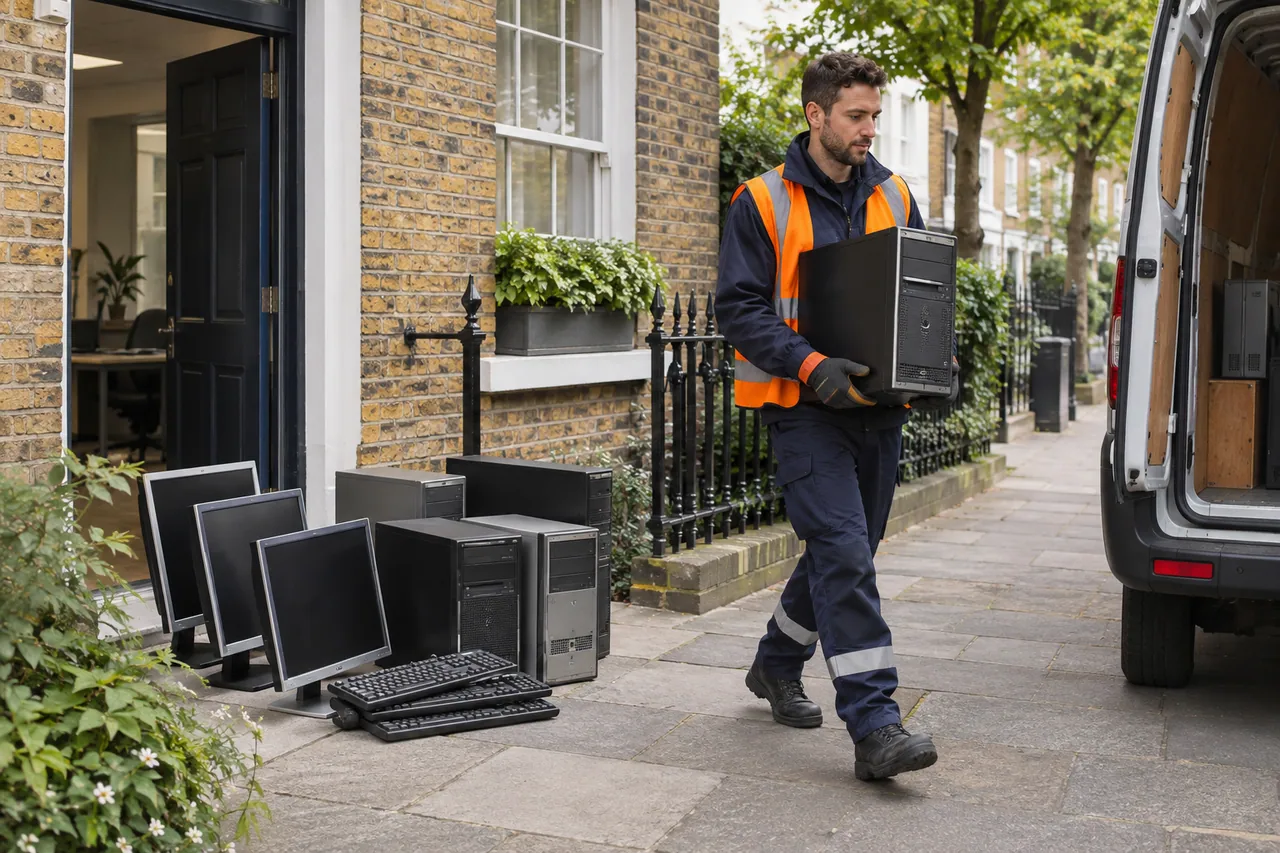
| Electrical devices | Device type, count and any separately requested handling requirement. | Equipment remains a distinct waste stream instead of being concealed within packaging. |
An electrical request does not automatically include a technical service or a promise of data destruction. We discuss any such requirement specifically. Similarly, unidentified material or anything unusual is raised before acceptance rather than added to an ordinary mixed load because it was discovered during the premises clearance.
Moving contents out of a working or empty shop
The route to the vehicle is discussed for the actual collection locations. If unwanted items are held in both a sales area and a separate stockroom, we identify each starting point. Floor level, doorways, stairs or a usable lift and the loading connection inform the carrying work. We do not assign a standard shop layout, loading restriction or vehicle entitlement to every Romford business.
Where a shop remains in use, the organiser identifies retained contents and the access arrangements relevant to moving the accepted load. Where it is no longer in use, an entry contact is still needed and the removal selection still needs to be clear. An empty trading floor does not establish that every fitting is available to detach or that the team has authority to remove items belonging to somebody else.
The stages of an authorised retail removal
We join the selection, material descriptions and premises route before discussing the quote and available collection. The visit should be understood as the removal of accepted contents from the stated locations, not a commitment to dismantle the business premises or take any further waste later found within them.


Define the business selection
The organiser identifies furniture, packaging and loose contents authorised to leave, separating stock, working equipment and retained supplies from the removal.

Distinguish fittings and materials
We discuss what is freestanding, any additional detachment requirement and separately identified electrical or unusual material before acceptance.

Agree the carrying arrangement
Collection locations, floors, entrance and loading connection are considered with the quote, then an available visit is confirmed with the access contact.

Load the accepted shop contents
The agreed removable items are carried to the vehicle and taken away for appropriate onward handling according to their identified material streams.
The contents and carrying behind your Romford enquiry.

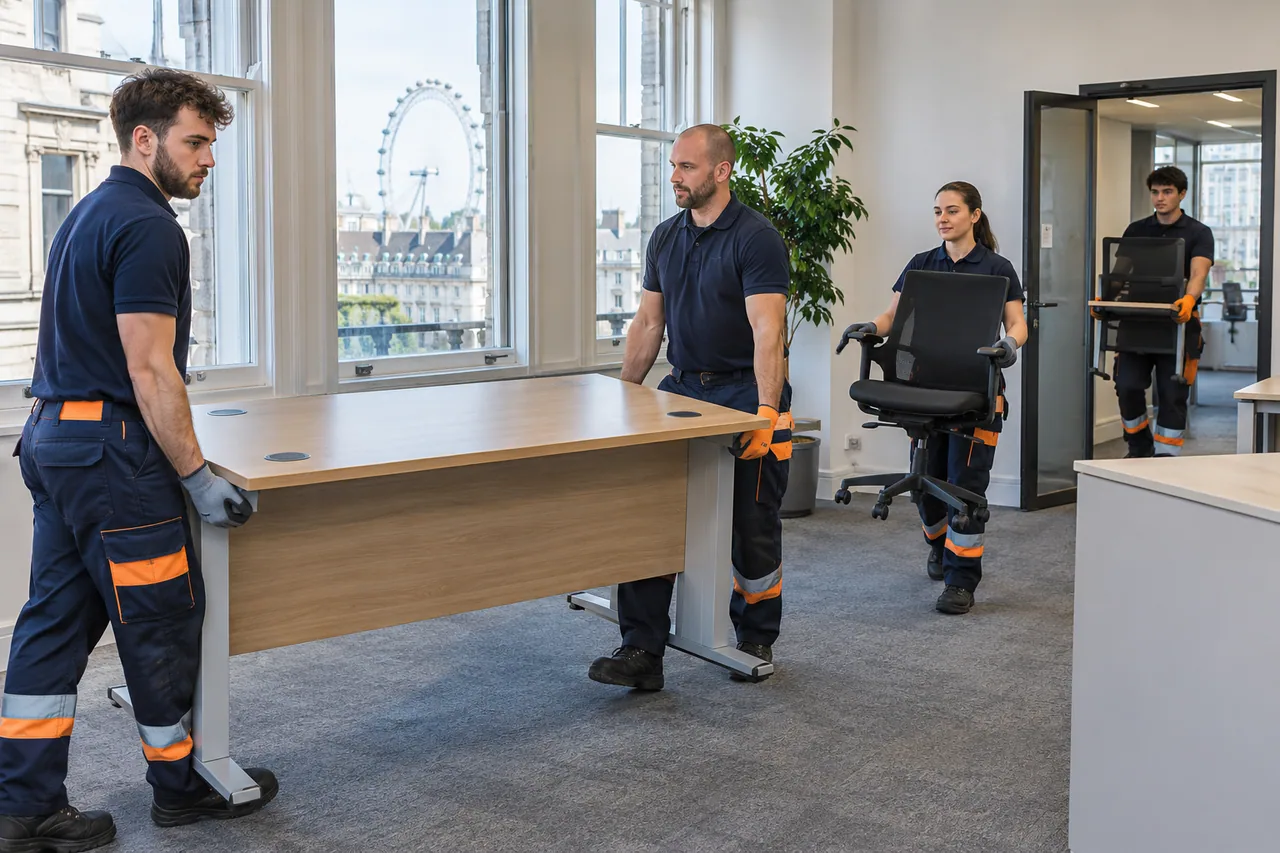
The material groups within the removal.
| Retail item selection | What we distinguish before agreement | What the collection can concern |
|---|---|---|
| Freestanding displays | Furniture construction, loose shelves and any products remaining on or inside them. | The accepted display components, without assuming displayed stock is being discarded. |
| Racks and movable shelving | Complete units, separated frames and the quantity requested for removal. | The listed freestanding pieces rather than attached fittings elsewhere in the premises. |
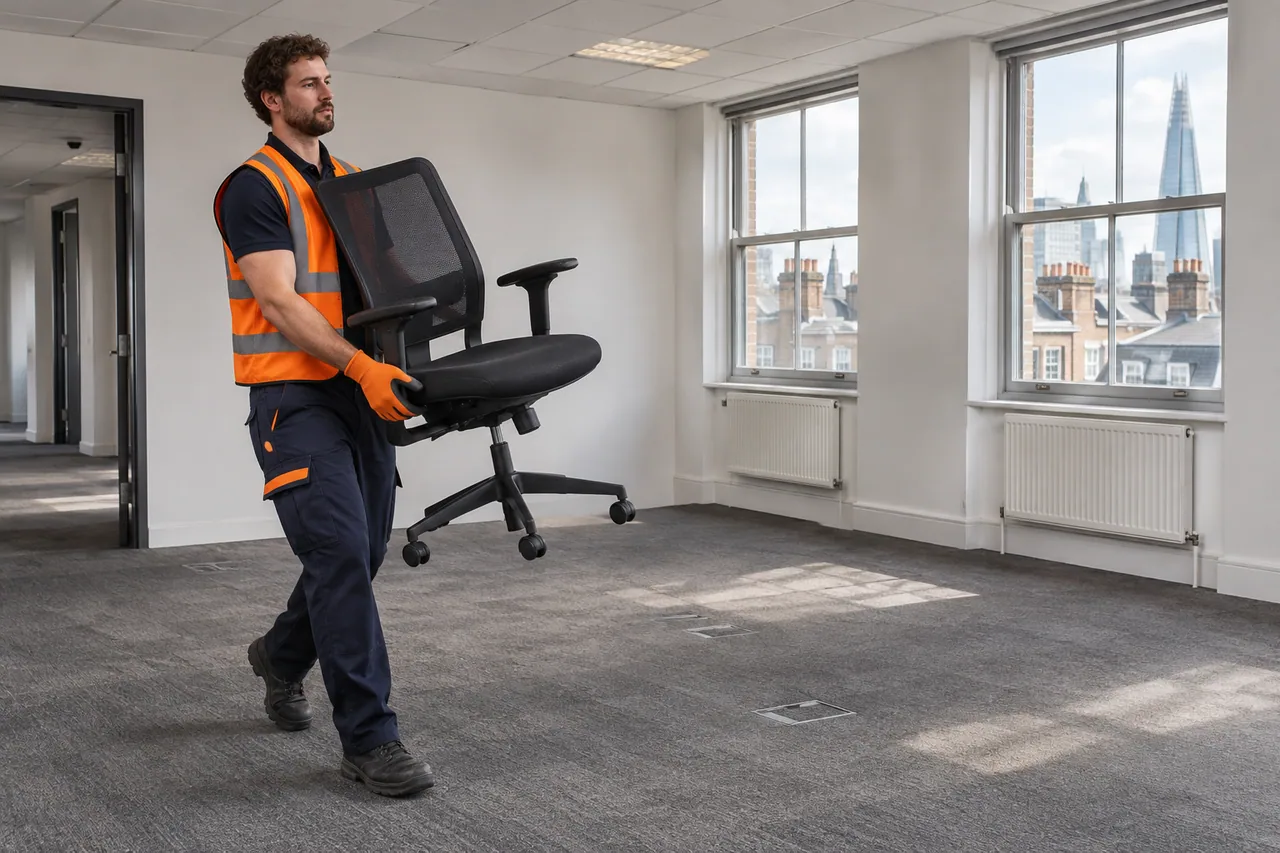
| Seating or staff furniture | Chairs, tables and other pieces specifically authorised to leave. | A selected furniture load, kept separate from equipment still needed by the business. |
| Storage cupboards | The unit itself, loose contents selected and any retained supplies. | Accepted furniture and separately described contents, rather than everything within a storage room. |
Arranging access and decision-making at the premises
The person providing entry may not be the person who owns the business or selected the waste. We discuss that arrangement so the removal list can be understood when the team attends. Uncertain items should not be left for the entry contact to guess about, especially where unwanted displays stand beside retained stock or equipment awaiting another use.
| Organising detail | What is established | Why it belongs in the collection scope |
|---|---|---|
| Authorised removal list | Which furniture and loose contents have been selected to leave. | The team is not asked to decide what the business should discard. |
| Entry contact | Who will provide access to the agreed collection locations. | The visit can be connected with somebody able to explain the premises arrangements. |
| Retained items | Stock, equipment and fittings excluded from the proposed load. | The removal remains a selection rather than an unrestricted emptying of the shop. |
| Additional requirements | Attachment, unusual materials or work beyond carrying and loading. | Acceptance and scope are clarified before an available collection is confirmed. |
The quote for this particular retail load
We consider the amount and material of the accepted contents alongside handling and access. A few large display units can involve different carrying and vehicle space from a larger number of empty cartons. Furniture dimensions, loose components and dense material therefore form part of the discussion rather than a simple price based on the shop’s floor area.
| Quote input | Retail information considered | What the organiser receives |
|---|---|---|
| Complete inventory | Display units, furniture components and loose waste included in the request. | A defined load that can be checked against the removal list. |
| Physical form | Size, material, assembly and whether large pieces are already separated. | A carrying and loading discussion tied to the objects actually leaving. |
| Premises route | Starting locations, floor, entrance and connection to the vehicle. | The work at the particular shop is considered rather than assumed from its address. |
| Timing and revisions | Preferred visit, access contact and additions to the contents before collection. | An available visit and any revised scope can be agreed directly with the team. |
For a broader ongoing requirement, our commercial waste collection information distinguishes the service discussion from this one-off removal. New waste produced after the agreed selection is not automatically part of the same quote. The team reviews additions or changes to the carrying route before treating them as included.
Romford location and the completed removal arrangement
The map reference is Romford town centre in Havering, with RM1 an indicative nearby postcode district. Give the shop’s full address, postcode and useful building or occupier details. We use those with the entry contact and collection areas to discuss the requested premises and an available removal visit.
The contents are carried, loaded and taken away for appropriate onward handling, with recycling or reuse pursued where suitable to the items and available route. For a request involving household furniture instead of shop contents, our furniture disposal page provides the relevant alternative service context. Describe that requirement in the enquiry so the team can discuss the appropriate removal scope.
Romford: collection location and area map.
Map of Romford
Load the interactive area map from OpenStreetMap. This connects your browser to the map provider.
Open map in a new tab ↗ © OpenStreetMap contributors
Area orientation only. This map does not mark a company office or a confirmed loading point.
Romford collection questions
Will unwanted display shelving be collected with the goods on it?
Only the contents expressly described and accepted form part of the removal. Identify the shelving, its loose components and whether any goods are also selected. We do not treat displayed or stored stock as waste simply because the furniture holding it is being removed from the shop.
Can installed counters be included without further discussion?
No. Explain whether a counter or other unit is freestanding, attached or connected before agreement. Detachment and work to the premises are not assumed from a shop clearance request. The team needs to clarify that additional requirement separately from carrying and loading already removable furniture.
Can the shop stay open while selected contents leave?
That can be discussed through the actual premises arrangements. Identify the items leaving, their locations and the usable carrying route, together with the access contact. We do not assume a particular trading layout or unrestricted access; the collection scope should distinguish the accepted load from the working business.
What if the keyholder did not select the removal items?
Make the authorised selection clear before the visit and identify who can resolve an uncertainty. Providing entry does not necessarily mean the keyholder can decide which business assets should be discarded. We discuss access and the removal boundary so the collection does not depend on guessing about ownership or retention.
Are old card-payment devices just part of a furniture load?
Electrical devices should be identified separately by type and quantity. Discuss any additional technical or information-related requirement expressly rather than infer it from a general shop clearance. Working equipment remains excluded unless specifically selected and accepted, and collection does not itself establish an unagreed certification service.
Can a stockroom discovered later be added to the visit?
Explain its contents, quantity and carrying route before considering it included. Another room can change both the load and the work at the premises. The team reviews the updated request against the agreed scope and quote instead of treating a one-off removal as unlimited clearance of all storage.
Arrange your Romford collection.
Discuss the unwanted items, full postcode and route to the vehicle with the collection team.
Discuss your Romford collection
Open our booking form to arrange your collection.
Continue to our booking form to confirm your items and contact details.